


Balancing IB Film can feel like carrying a camera rig in one hand and a stack of textbooks in the other. The trouble isn’t that Film is “extra.” It’s that Film work expands to fill whatever space you give it: another take, another export, another tweak to sound. If you’re searching How to Balance IB Film with Other IB Subjects, you’re really asking how to stay creative without letting deadlines (and guilt) run your entire week.
This guide gives you a calm system you can repeat--even when Math, Sciences, Languages, TOK, and coursework all start shouting at once.
A quick checklist for How to Balance IB Film with Other IB Subjects
-
Put Film on the calendar like a “core” subject, not a hobby.
-
Map every deadline in one place, then work backward.
-
Separate Film into research, production, post, and reflection blocks.
-
Keep reflections tiny and frequent (so they don’t become a weekend-eating monster).
-
Use exam-week habits for every subject: short, timed practice + review.
For broader planning, borrow the structure from What’s a Realistic IB Study Plan for a 6 in Each Subject?.
Treat IB Film like it counts (because it does)
A quiet mistake many students make is mentally ranking subjects. Math feels “serious,” Film feels “creative,” and so Film gets pushed to the edges of the week. Then production time arrives, and Film suddenly becomes a crisis.
If you want How to Balance IB Film with Other IB Subjects to be real (not motivational), your schedule has to respect Film’s real workload: planning, shooting, editing, and writing. RevisionDojo’s Film support can help you stay aligned with assessment expectations, especially when you’re building portfolio quality and not just “finishing.” Start by scanning Common Mistakes in IB Film Portfolios and How to Fix Them so you don’t waste hours on avoidable errors.
Build a single deadline map (then reverse-engineer it)
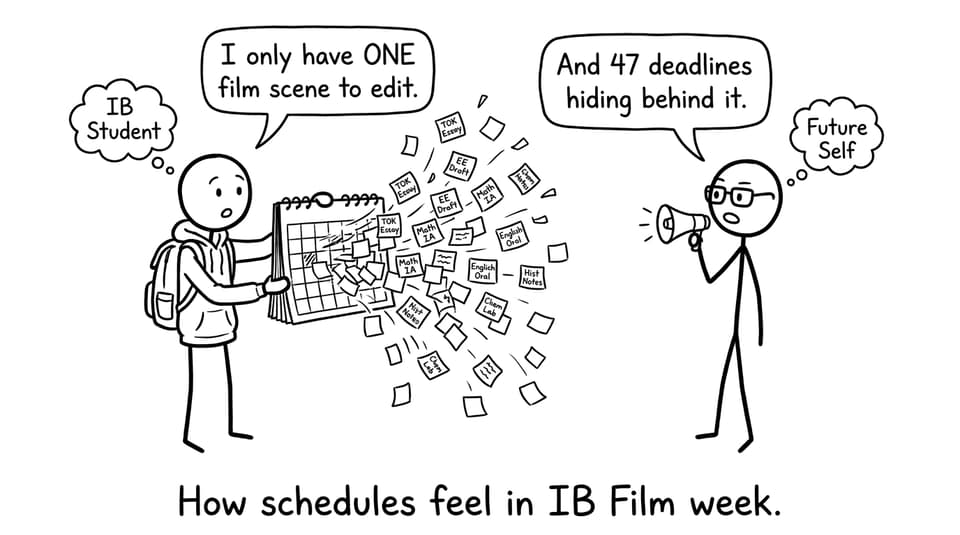
Here’s the move that changes everything: put all deadlines in one calendar--Film milestones, science labs, language writing, TOK checkpoints, mock exams. You’re not trying to be intense. You’re trying to be honest.
Then work backward:
-
Lock production dates early (actors disappear, weather changes, group members get sick).
-
Schedule editing buffers (exports fail at the worst time).
-
Plan reflection writing within 24 hours of each major session.
If exam season is close, anchor your weeks using an exam survival rhythm like the one in IB Exam Week-by-Week Survival Guide.
Use “weekly Film blocks” so Film stops ambushing you
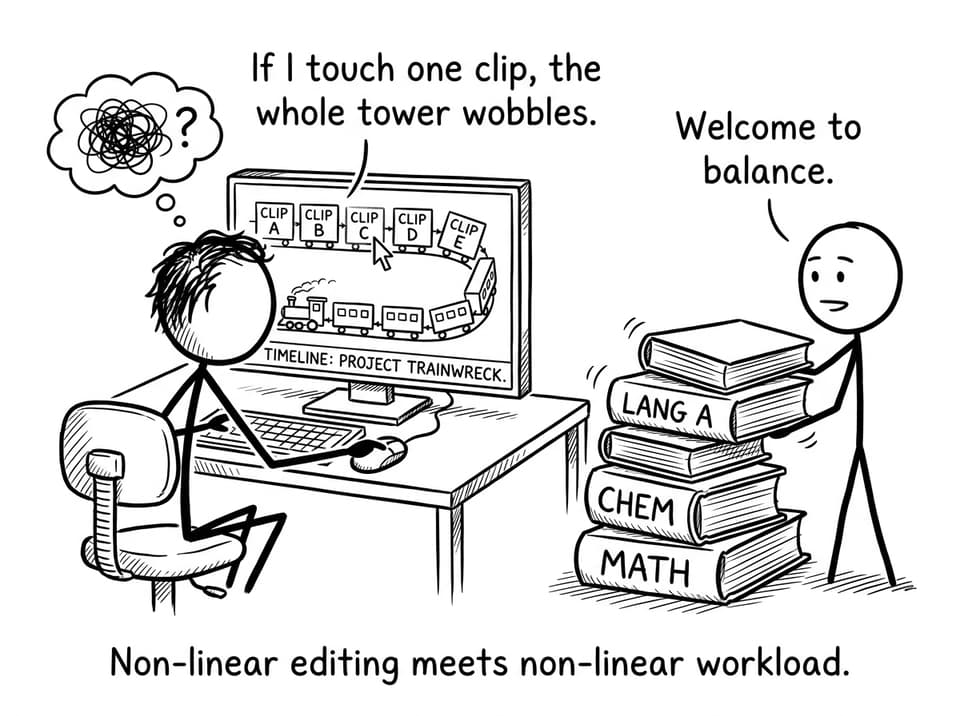
Film is easiest to balance when it’s predictable. Try a steady split:
Short weekday blocks (30--45 minutes)
Use these for tasks that don’t require a full setup:
-
research notes
-
shot list tweaks
-
reflection bullet points
-
organizing footage folders
One longer weekend block (2--3 hours)
Use this for the heavy lifting:
-
filming
-
editing timelines
-
sound cleanup
Need technical efficiency? Keep a practical checklist open while you work, like Tips for Recording and Editing Your IB Film Project.
Make Film support your “academic” subjects (instead of competing)
The best answer to How to Balance IB Film with Other IB Subjects is to stop treating Film as separate. You can cross-train skills:
-
Film analysis strengthens essay clarity for Language A and humanities.
-
Reflection habits improve TOK-style thinking and justification.
-
Production planning (call sheets, roles, version control) mirrors science method discipline.
For analytical depth and cultural context (which also speeds up writing), use guides like How to Choose Films for IB Film Comparative Analysis and How to Analyze World Cinema in IB Film Coursework.
Use RevisionDojo to keep every subject moving
When Film gets busy, other subjects usually die by neglect. This is where a single platform helps.
RevisionDojo can hold your week together with:
-
Study Notes for quick clarity when you’re tired
-
Flashcards for daily recall (even on shoot days)
-
AI Chat to fix one confusion fast instead of doom-scrolling forums
-
Questionbank to keep exam skills sharp in Math, Sciences, and Languages (Questionbank feature)
-
Grading tools for rubric-aligned feedback, including Film workflows like the IB Film: Collaborative film project Grader
-
Mock Exams and Predicted Papers when you need pressure practice without chaos
-
Coursework Library and exemplars for quality benchmarks, like IB Film Exemplars
-
Tutors when you need a human to untangle the mess quickly
Conclusion: balance comes from systems, not willpower
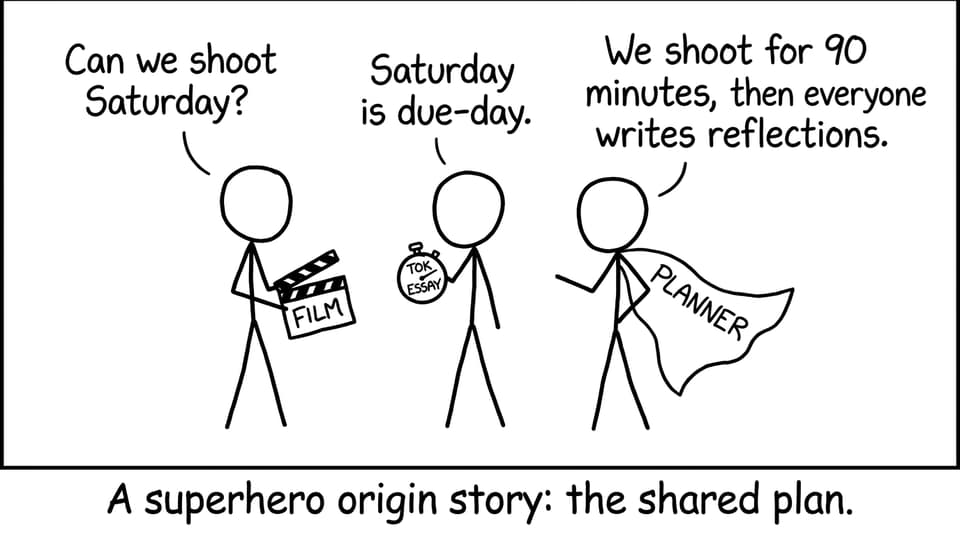
If you remember one thing about How to Balance IB Film with Other IB Subjects, let it be this: Film doesn’t need more motivation. It needs earlier scheduling, smaller reflection habits, and protected exam practice for everything else.
When you’re ready to make that system easy to run, use RevisionDojo as your home base--Study Notes, Flashcards, AI Chat, Questionbank, Grading tools, Mock Exams, Predicted Papers, Coursework Library, and Tutors--so Film stays creative, and the rest of the diploma stays under control.