


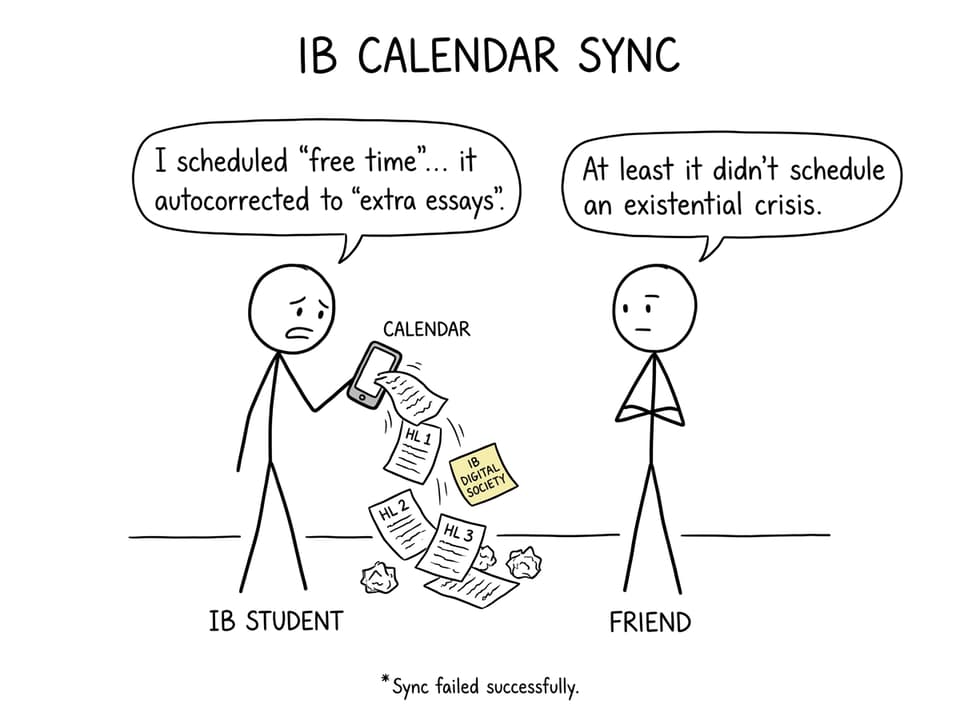
When your calendar is full, every subject starts to feel like it wants to be the main character.
That’s the quiet stress of the Diploma Programme: you’re not just learning content, you’re managing competing deadlines, different assessment styles, and the constant feeling that you’re always “a little behind.” If IB Digital Society is one of your HLs, you might worry it will compete with heavy hitters like Biology, History, or Economics.
But here’s the twist: IB Digital Society is often the subject that teaches you how to manage the others, because it trains research habits, argument structure, and flexible case-study thinking. Balance isn’t about doing more. It’s about building a system that makes your effort count.
A quick checklist to balance IB Digital Society with other HLs
Use this as your weekly “reset” before you plan anything else:
-
Block 2-3 short IB Digital Society sessions per week (45-60 minutes) instead of one long one.
-
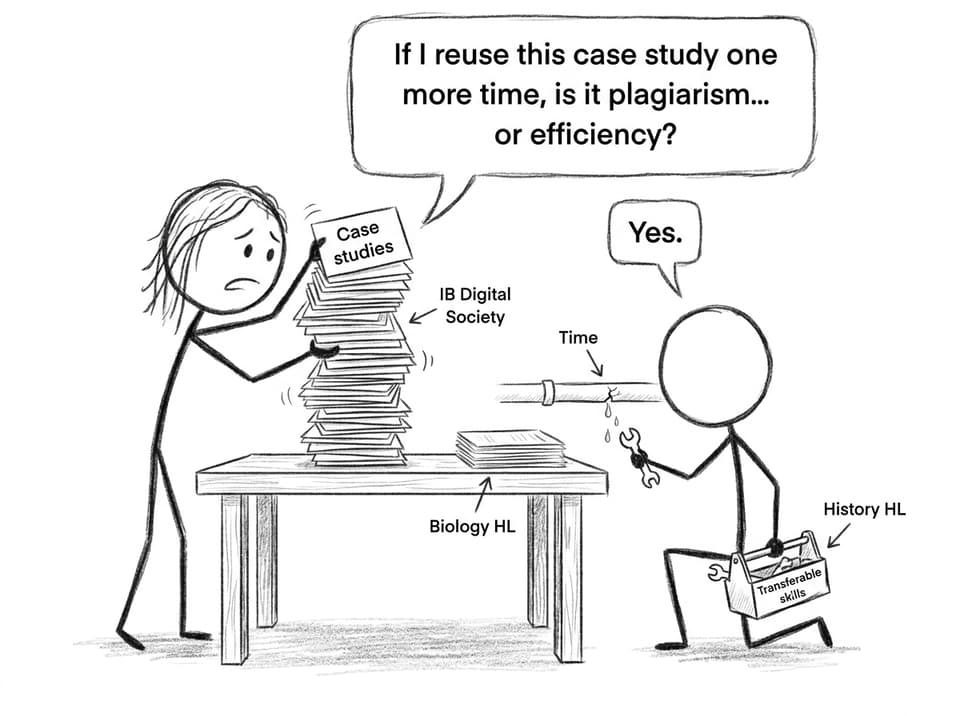
Keep one shared “case study bank” you can reuse across HLs (with clear notes on where it fits).
-
Split big writing tasks into: outline, evidence, first draft, polish.
-
Pair every reading session with a tiny output (one paragraph, one plan, or one evaluation).
-
Protect predicted grades by practicing the same skills under timed conditions.
If you want a single home base for the course, start with IB Digital Society Resources and build your routine around what’s actually assessed.
Why IB Digital Society feels hard to balance (and why it’s still doable)
The workload in IB Digital Society is different from memorization-heavy HLs. It’s not mainly about storing facts; it’s about making judgments, comparing perspectives, and writing clearly. That difference can be disorienting when your other HLs reward repetition and recall.
It also means “cramming” works poorly. If you leave IB Digital Society until the last minute, you’re forced to invent structure, evidence, and evaluation all at once. Spacing your work avoids that.
If you’ve ever wondered whether the subject is secretly harder than it looks, Is IB Digital Society Hard? Honest Expectations Explained breaks down what the course actually demands.
Build a weekly rhythm that respects all your HLs
A realistic schedule isn’t a perfect schedule. It’s a schedule you’ll still follow when you’re tired.
Try this simple rhythm:
Two “thinking” blocks for IB Digital Society
In two sessions each week, do something that produces a decision: a mini-argument, a short evaluation, or a paragraph that answers a focused question. This is where IB Digital Society improves faster than most HLs, because quality comes from repeated judgment.
Use RevisionDojo’s Study Notes and Flashcards to keep key concepts and definitions close, then convert them into writing. If you like studying from anywhere, Digital IB Study Notes: Access Anywhere, Anytime shows how to keep revision portable.
One “case study maintenance” block
Spend 30 minutes updating your case study bank: what happened, who it affected, what the benefits/harms were, and which concepts it links to. You can reinforce this with RevisionDojo’s Questionbank and AI Chat by testing how the same case study could answer different prompts.
For inspiration on how themes connect (and how you can organize examples), revisit Key Themes in IB Digital Society Explained.
Use overlap without turning every essay into the same essay
Smart overlap is not copy-pasting. It’s reusing thinking.
Here’s how IB Digital Society can reduce pressure in other HLs:
Shared skills that transfer
-
Argument structure: claims, evidence, counterclaim, judgment.
-
Evaluation habits: benefits vs limitations, stakeholders, unintended consequences.
-
Research discipline: choosing sources that actually support your line of argument.
Shared examples (used ethically)
A single case study (for example, algorithmic bias, platform moderation, surveillance, digital inequality) can often support:
-
Digital Society concepts
-
TOK discussions
-
Economics market outcomes
-
History change over time
To keep yourself sharp on how “change” works as a lens, Understanding Change in Digital Society: IB Concept Explained is a strong anchor.
Protect predicted grades by treating writing like training
Predicted grades tend to reward consistency. Teachers can’t “predict” a peak you only reach the week before exams. They predict patterns.
That matters because predicted grades often shape conditional offers and early applications. If you want clarity on how big the stakes can be, read Do IB Predicted Grades Matter for Conditional Offers?.
To raise (or protect) your predicted grade in IB Digital Society, focus on repeatable outputs:
-
One planned response per week (even if it’s short).
-
One timed practice every two weeks using RevisionDojo Mock Exams or Exam builder.
-
One feedback loop using RevisionDojo’s Grading tools (so you’re not guessing what “evaluation” looks like).
Make command terms your shortcut across every HL
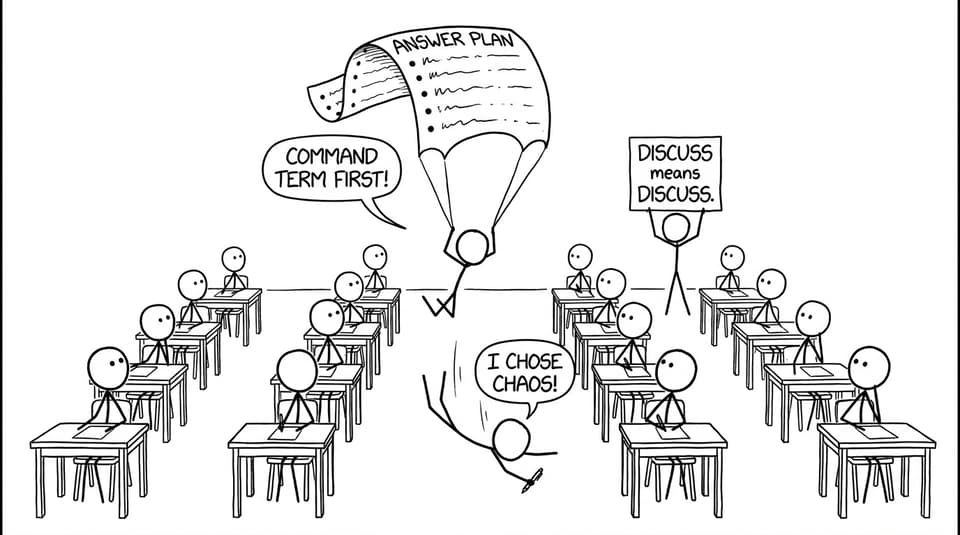
Command terms are the fastest way to stop wasting effort. If the question says “discuss” and you “describe,” you can know a lot and still score less than you deserve.
Build one habit: circle the command term, then write a 10-second plan that matches it.
RevisionDojo’s guide How to Use Command Terms Effectively in IB Exams is worth revisiting before any timed session in IB Digital Society and beyond.
Closing: balance isn’t a personality trait, it’s a system
Balancing IB Digital Society with other HLs isn’t about being “naturally organized.” It’s about building a small routine you can repeat when life gets busy: short sessions, constant output, a living case study bank, and command-term discipline.
If you want that system in one place, RevisionDojo brings it together with Questionbank, Study Notes, Flashcards, AI Chat, Grading tools, Predicted Papers, Mock Exams, a Coursework Library, and Tutors, so IB Digital Society supports your other HLs instead of competing with them.
Open your plan for the week, choose your next 45-minute block, and make IB Digital Society the subject that steadies the rest of your schedule.