
A tiny switch with a big consequence (IB Biology)
You can study gene expression for hours and still miss the quietest control point: the moment a cell decides, “Not this protein. Not today.” In IB Biology, microRNAs are that decision made visible. They do not rewrite DNA. They do not “turn off” transcription like a classic repressor. Instead, they work in the space where students often rush, specifically after transcription but before translation, adjusting how much protein actually gets made.
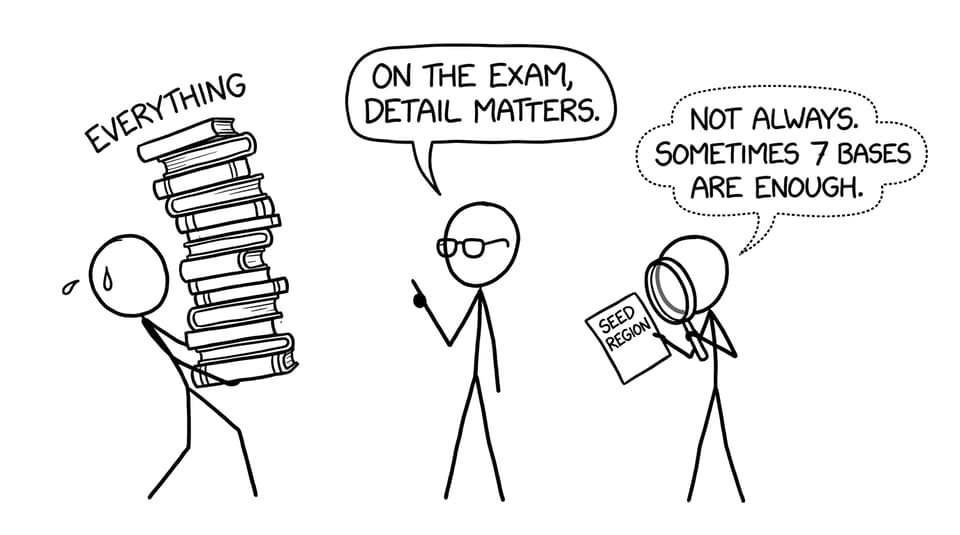
That’s why microRNAs feel like the kind of detail IB examiners love: small, precise, and disproportionately powerful.
MicroRNA regulation checklist (what to remember fast)
For IB Biology exam answers, you rarely need every molecular detail. You do need the sequence and the consequence:
-
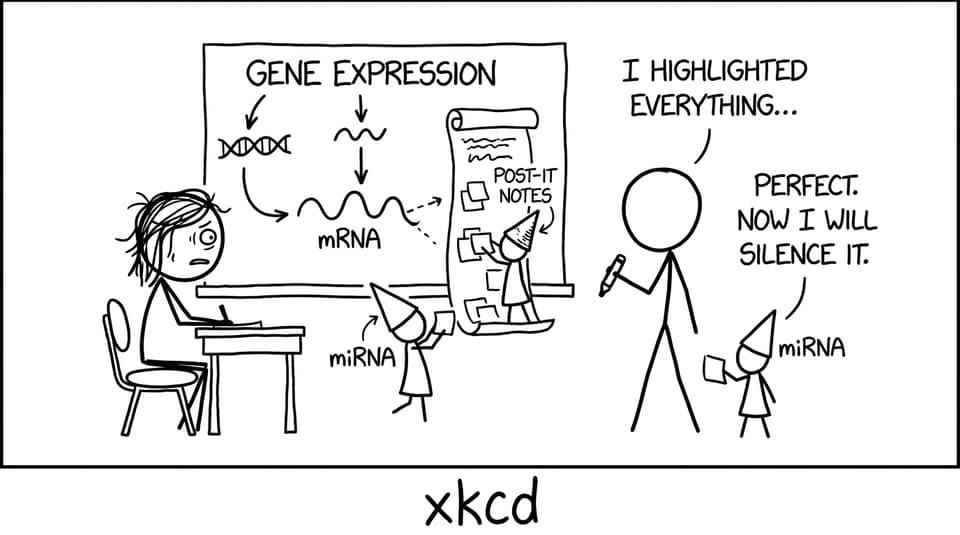
miRNAs are ~21-23 nucleotides, non-coding RNAs.
-
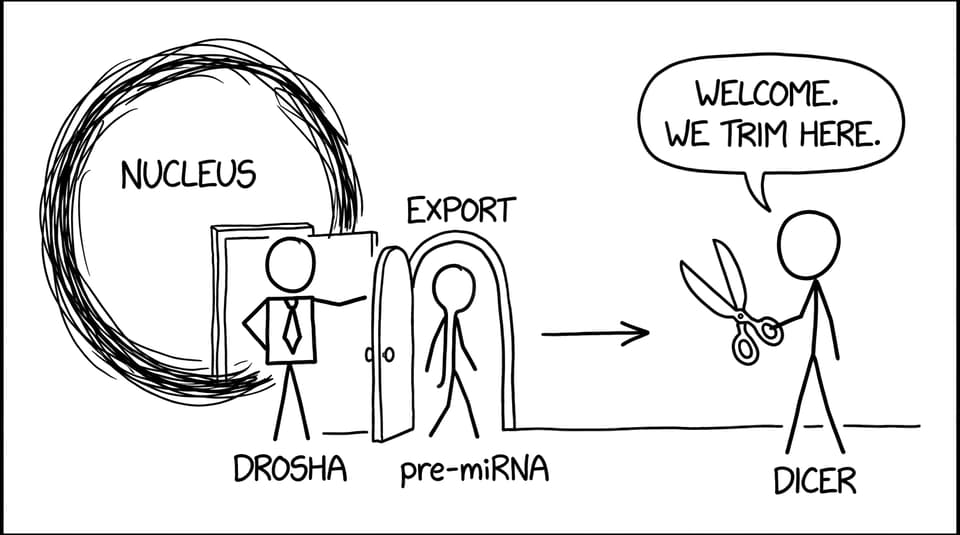
They’re made as pri-miRNA (hairpin), processed to pre-miRNA.
-
Drosha trims in the nucleus; Dicer trims in the cytoplasm.
-
Mature miRNA loads into RISC.
-
miRNA guides RISC to target mRNA via base pairing.
-
High complementarity: mRNA cleavage and degradation.
-
Partial complementarity (common in animals): translation is blocked or reduced.
To refresh the bigger picture around transcription and translation, use 2.7 DNA replication, transcription and translation and the IB Biology Topic D1.2: Protein Synthesis.
How microRNAs are made: from pri-miRNA to RISC
MicroRNAs start life as a longer transcript called pri-miRNA, produced by RNA polymerase II. That pri-miRNA folds into a hairpin, and in the nucleus an enzyme called Drosha trims it into pre-miRNA.
The pre-miRNA is exported to the cytoplasm, where Dicer cuts it into a short double-stranded RNA. One strand becomes the mature miRNA and is loaded into the RNA-induced silencing complex (RISC).
This is classic IB Biology “process writing”: clear steps, correct locations (nucleus vs cytoplasm), and named enzymes. If you want the surrounding gene expression framework, RevisionDojo’s D2.2.1 Gene expression page and D2.2.1 Gene expression notes help you anchor miRNAs inside the syllabus storyline.
How microRNAs regulate gene expression (the exam-friendly mechanism)
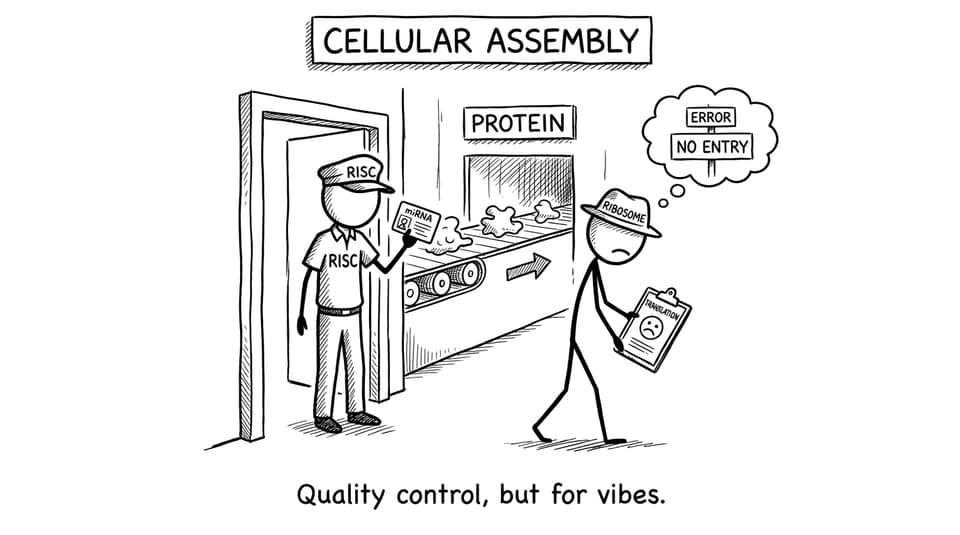
Once in RISC, the miRNA acts like a guide. It finds target mRNA sequences by complementary base pairing.
Here’s the key fork in the road for IB Biology answers:
-
If pairing is almost perfect, RISC can cleave the mRNA. The mRNA is then degraded quickly, so protein levels drop fast.
-
If pairing is imperfect (typical in animals), RISC tends to block translation: ribosomes bind less effectively, or translation is stalled. The mRNA may remain but produces far less protein.
In other words, microRNAs regulate gene expression by controlling protein output, not by changing the gene.
Why miRNAs matter: networks, not single genes
A subtle reason miRNAs show up in IB Biology questions is that they highlight biology’s “many-to-many” logic.
One miRNA can target multiple mRNAs (especially with partial complementarity). And one mRNA can be targeted by multiple miRNAs. That creates a regulatory network that fine-tunes pathways: development, differentiation, metabolism, immune responses, and stress adaptation.
If you’re revising regulation more broadly, connect this to gene regulation examples like internal and external control of gene expression and classic prokaryote regulation in how the lac operon shows inducible expression.
Quick RevisionDojo plan (15 minutes)
If microRNAs feel “too small to test,” practice like they’re guaranteed:
-
Read the core flow in IB Biology Topic D2.2: Gene Expression.
-
Drill exam phrasing with the Gene Expression Questionbank (HL) and use AI feedback to tighten explanations.
-
Lock definitions using Flashcards for D2.2 Gene expression (HL).
This is where RevisionDojo’s ecosystem matters: Questionbank, Study Notes, Flashcards, AI Chat, Grading tools, Predicted Papers, Mock Exams, Coursework Library, and Tutors all support the same skill: writing accurate biology under time pressure.
Closing: make microRNAs an easy mark
MicroRNAs are small enough to overlook, which is exactly why they’re worth mastering. In IB Biology, they sit at a high-yield checkpoint: after transcription, before translation, controlling how much protein gets made and how fast a cell can adapt.
If you want this topic to feel automatic, use RevisionDojo’s Study Notes and Flashcards, then pressure-test your wording in the Questionbank with AI feedback. That combination turns microRNAs from “extra detail” into reliable exam marks, and makes gene expression feel like a system you can actually control.