

When your IB calendar is already full of mocks, IAs, and the quiet pressure of predicted grades, UCAS can feel like one more decision you’re supposed to get “right” on the first try.
But course choices aren’t a personality test. They’re closer to packing a bag for a long trip: you want enough options to handle changes in weather, but not so many that you’re dragging suitcases you don’t even like.
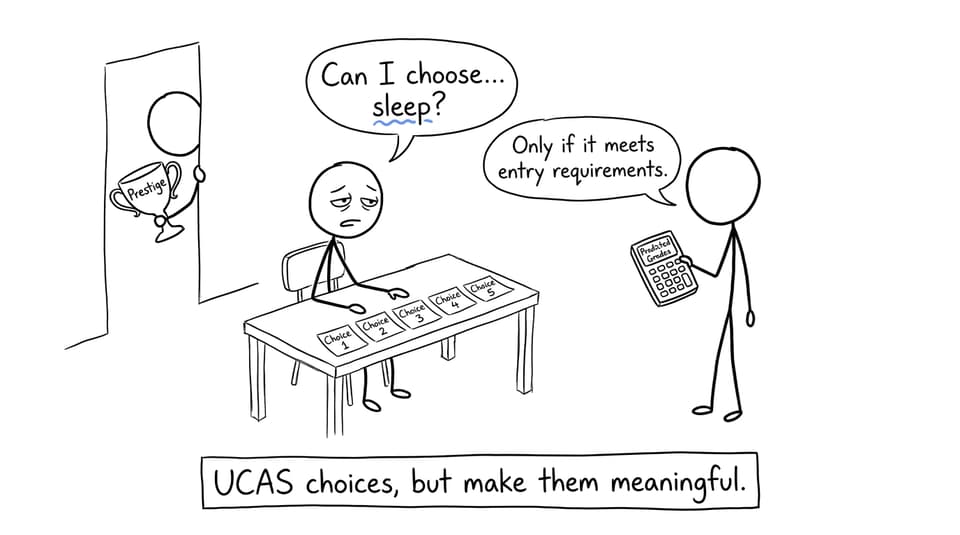
So, how many UCAS choices should you make? UCAS lets most applicants choose up to five. The smart move isn’t automatically using all five. The smart move is using the right number of meaningful choices that match your academic evidence and the life you’d actually be happy living.
UCAS choices quick checklist (IB-friendly)
Before you lock in your UCAS choices, run this fast checklist:
-
You can apply for up to five courses through UCAS.
-
Medicine, Dentistry, and Veterinary Science: up to four in that subject, plus one different option.
-
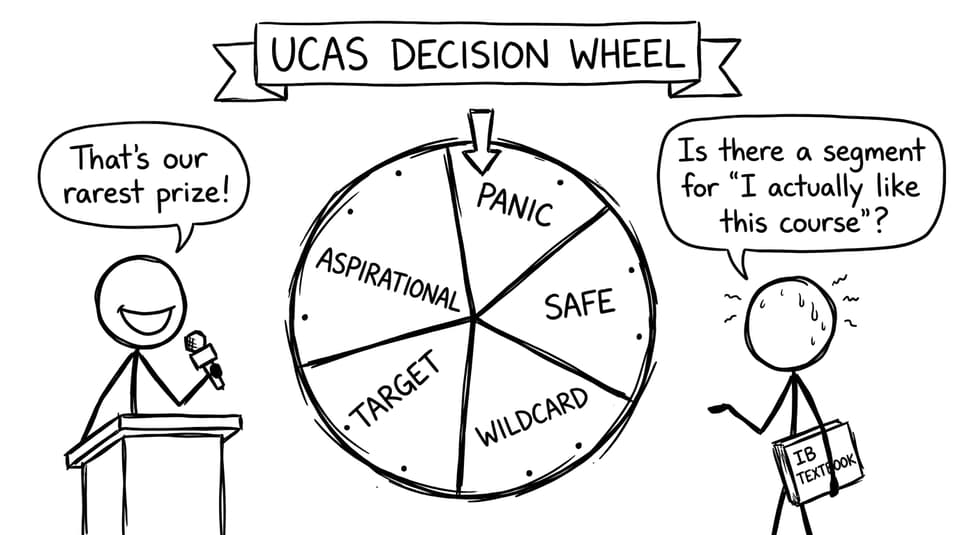
Aim for a mix: aspirational, target, and safe.
-
Don’t include any course you wouldn’t attend if it became your only offer.
-
Check prerequisites (IB HL requirements) before you fall in love with a prospectus.
-
Make sure your personal statement can genuinely fit all choices (because it goes to every UCAS option).
If you want the wider context of what universities evaluate, read How Universities Assess UCAS Applications.
The UCAS limit explained (and why it exists)
Most students can make five UCAS choices. Those choices can be:
-
Five similar courses at different universities
-
A mix of course titles that share a theme (e.g., Economics, Management, PPE)
-
Sometimes more than one course at the same university (depending on that university’s rules)
There’s also a special cap: if you’re applying for Medicine, Dentistry, or Veterinary Science, UCAS allows four choices in that area, plus a fifth choice in a different subject if you want.
If you’re still mapping your shortlist, How to Choose the Right UCAS Courses for You is a useful companion.
Should you use all five UCAS choices?
In most cases, yes: use five UCAS choices if you can fill them with courses you’d genuinely accept.
Here’s why five tends to work well for IB students:
-
Competitive courses can be unpredictable, even with strong predicted grades.
-
Universities weigh different signals: subject fit, entry requirements, and how convincing your statement is.
-
Your final results can land slightly above or below expectation, and five choices give you breathing room.
But there’s a catch.
If you’re adding a fifth choice that you’d never attend, you aren’t increasing safety. You’re increasing noise. And noise is expensive in UCAS because every choice must still align with your story, your subjects, and your predicted grades.
A simple strategy for 5 UCAS choices: ambition + realism + calm
A balanced UCAS set usually looks like this:
Aspirational (1-2 choices)
These are courses where the entry requirements sit a little above your predicted grades, or where competition is intense.
Aspirational choices are not “delusional choices.” They are calculated bets. You’re saying: if my final exams go well, I want this door to be open.
Target (2-3 choices)
These roughly match your predicted grades and prerequisites. They are the backbone of your UCAS strategy.
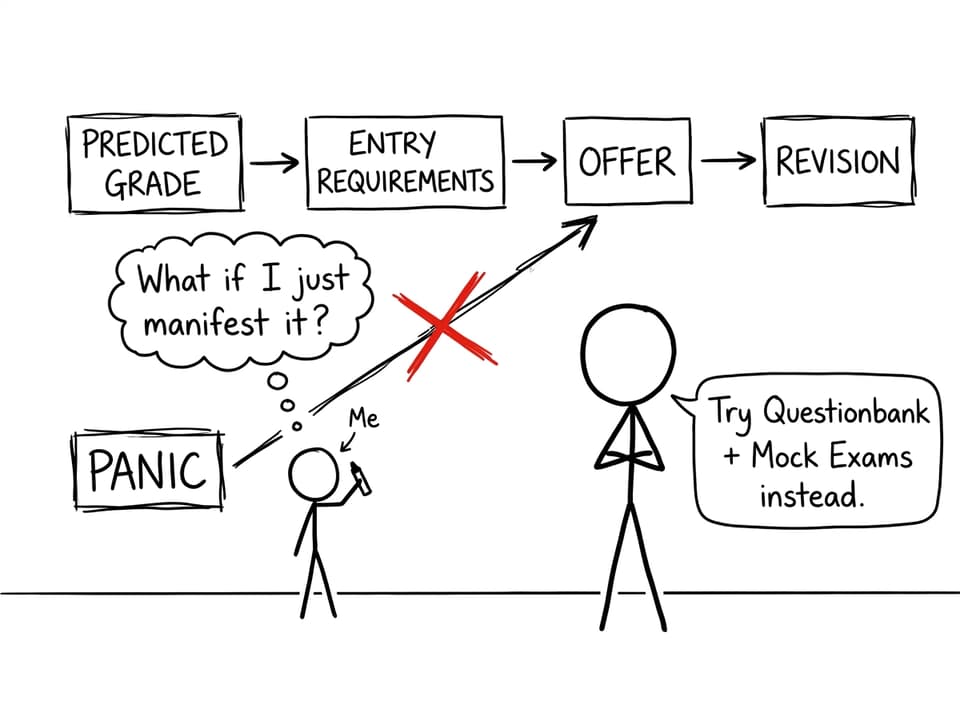
This is where IB students do best when they treat predicted grades as evidence, not a wish. If you’re unsure how predictions work and why they matter so much, How Much Do Predicted Grades Actually Matter? is worth reading.
Safe (1 choice)
Lower entry requirements than your predictions, but still a course you would honestly accept.
A safe choice isn’t “settling.” It’s building a floor beneath your plan.
UCAS for Medicine: why your fifth choice matters
Medicine (and similar capped courses) forces a strategic tradeoff: you get up to four in-subject choices, and your fifth choice is where you protect your future self.
Many IB students pick something adjacent for that fifth UCAS option: Biomedical Science, Pharmacy, or a related life science route that still fits their interests and HL subjects.
The goal isn’t pessimism. It’s optionality. The best applicants plan like optimists and prepare like realists.
Common UCAS mistakes IB students make
Even strong students can quietly sabotage their UCAS choices. Watch for these:
-
All prestige, no balance: five highly competitive choices with no realistic floor.
-
Forgetting prerequisites: ignoring required HL subjects or specific grade profiles.
-
Choosing courses your statement can’t support: your UCAS personal statement is one document for all choices.
-
Filling slots just to reach five: extra choices that you wouldn’t attend.
If your personal statement needs tightening, start with How to Write a Standout Personal Statement for UCAS and then review Common Personal Statement Mistakes to Avoid.
How RevisionDojo helps you choose smarter (while you revise)
The awkward truth is that UCAS decisions often happen while you’re still trying to raise your grades.
That’s where RevisionDojo becomes more than a website. It becomes your feedback loop.
-
Use the IB Grade Calculator to sanity-check where your performance is trending against typical university targets.
-
Build consistency with the Questionbank so your predicted grades aren’t just “hope,” they’re backed by repeated exam-style performance.
-
Add realism with IB Predicted Papers and timed [Mock Exams] tools inside RevisionDojo.
-
Tighten weak areas using Study Notes and Flashcards, then pressure-test them with exam questions.
-
When you’re stuck, use AI Chat for quick clarity, and Grading tools to understand exactly why you lost marks.
-
If you need deeper direction, the Coursework Library and Tutors can help you turn effort into outcomes.
If you want a practical study structure alongside UCAS planning, read How to Study for IB Exams: Step-by-Step Guide.
Conclusion: choose five UCAS options, but only the ones you’d live with
UCAS gives you up to five choices, but the real decision is deeper: how many choices actually serve your future self.
For most IB students, the best answer is to use five UCAS choices with intention: 1-2 aspirational, 2-3 target, 1 safe. Keep prerequisites tight, keep your personal statement believable, and keep every option one you’d accept if it became real.
If you want to make those choices with more confidence, build the academic foundation underneath them. RevisionDojo helps you do that with Questionbank practice, Study Notes, Flashcards, AI Chat support, Grading tools, Predicted Papers, Mock Exams, the Coursework Library, and Tutors.
Your UCAS list is a strategy. Your revision is the engine. Make both work together.