
A small number that quietly causes a lot of panic
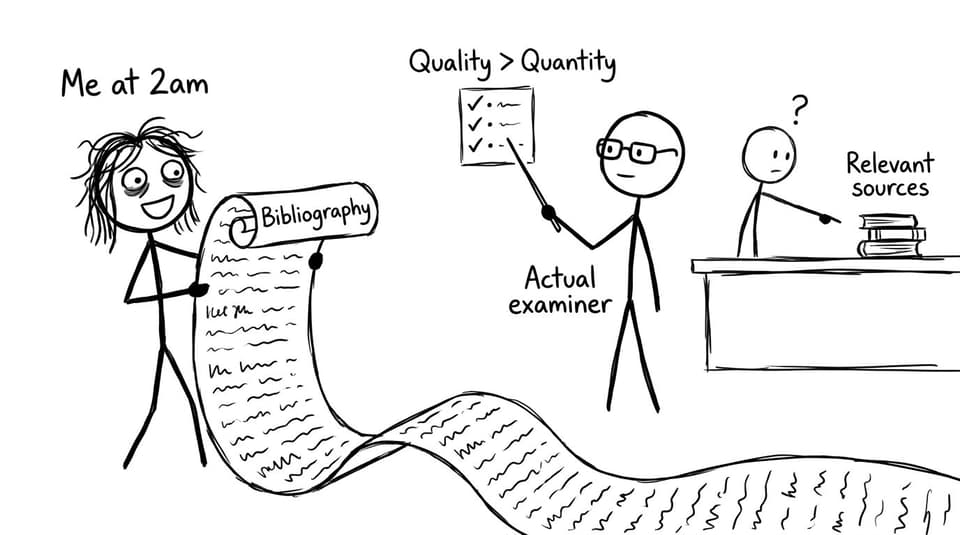
The first time most IB students ask, "How many sources should an IA have?", it isn't because they suddenly love academic research. It's because they've reached that familiar moment: the draft is almost done, the bibliography looks either embarrassingly short or suspiciously long, and the brain starts bargaining.
If I add five more sources, will my IA feel more 'serious'?
If I keep it at six, will an examiner assume I didn't work hard enough?
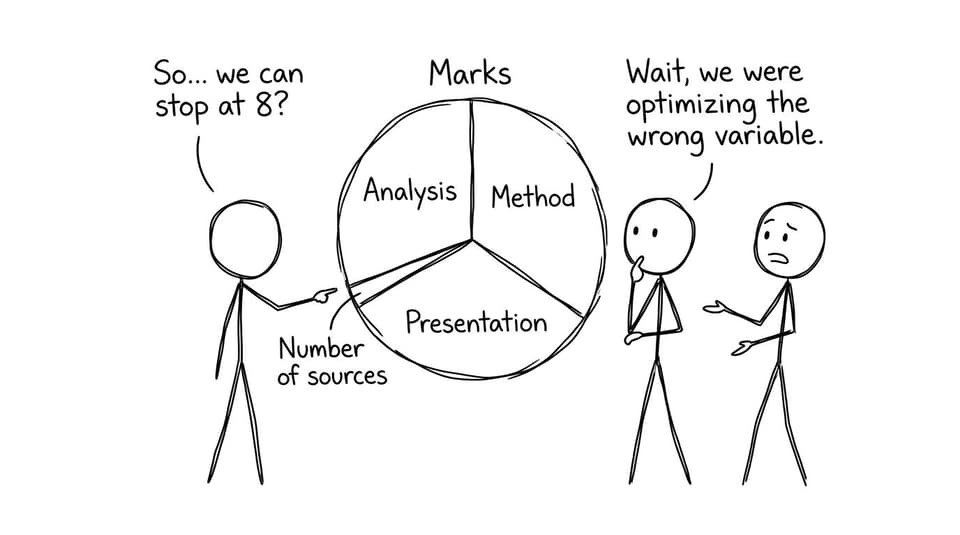
The uncomfortable truth is that the IA isn't marked by a source counter. The comforting truth is that there are still clear, practical ranges that keep you safe, credible, and efficient.
This guide will help you decide how many sources your IA should have, what "enough" really means, and how to choose sources that actually lift your marks instead of just lengthening your reference list.
IA sources: a quick, examiner-friendly checklist
Before we talk numbers, use this fast checklist to judge whether your IA is properly supported:
- You have enough sources to justify every major claim (especially in the introduction/background).
- Your method choices are supported (where relevant) by a standard protocol, textbook, or credible methodology source.
- Your analysis connects to theory (not just what you observed).
- Your sources are varied (not 12 websites saying the same thing).
- Your citations are consistent and traceable (an examiner can find what you used).
If you want a structured way to build this, RevisionDojo's IB Internal Assessment Guides help you map evidence to criteria, so the "source question" becomes a strategy question, not a panic question.
How many sources should an IA have? A realistic range
For most subjects, a strong IA typically lands in these ranges:
A safe general range for an IA
- Sciences IAs (Biology, Chemistry, Physics, ESS): 8-15 sources is common.
- Math IA: 5-12 sources is common (often fewer, but higher quality, with textbooks or papers supporting models/techniques).
- Individuals & Societies (Economics, Business, Geography, History): 10-20 sources is common (because context and real-world data often matter more).
- Psychology IA: often 8-15 sources, including key studies and methodology/ethics references.
These are not rules. They're "typical" because they reflect what it takes to build a coherent argument, justify choices, and show academic honesty.
If you're hunting for high-scoring patterns, it helps to read real models. RevisionDojo's Coursework Library makes it easy to compare exemplars and see how many sources strong students actually used.
Why the IA source count isn't the real game
Examiners don't reward an IA because you collected sources like trophies. They reward it because your thinking looks grounded.
A helpful way to picture this: sources are not decorations. Sources are scaffolding. Once the building stands, no one claps because you brought extra scaffolding. They clap because the building is stable.
In practice, examiners tend to notice three things:
Relevance
A source is only useful if it supports a decision you made in the IA: your research question framing, variable choices, sampling method, model selection, assumptions, or interpretation.
Credibility
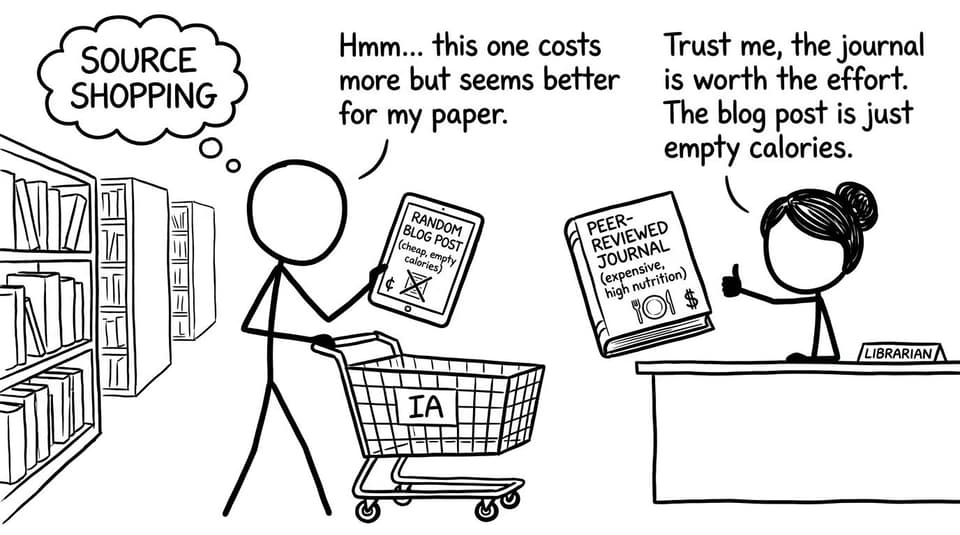
A few strong sources (peer-reviewed articles, textbooks, reputable organizations, official datasets) can do more for your IA than a long list of generic websites.
Integration
Your IA should not read like: "Here are five citations I found." It should read like: "Here is a claim, and here is the evidence that makes it reasonable."
If you're trying to strengthen integration, RevisionDojo's Study Notes can help you tie background theory directly to what you measured or modeled, which naturally clarifies what you need to cite.
What "enough sources" looks like in different IA situations
When your IA uses primary data (common in sciences)
If your IA is driven by your own experiment, you may need fewer sources overall, but you need the right types:
- 2-5 sources for background theory and definitions
- 1-3 sources for methodology/standard procedures/safety (as appropriate)
- 2-5 sources to support interpretation (why your trend makes sense, what aligns or conflicts with established theory)
That often lands you around 8-15 sources without trying to inflate anything.
When your IA uses secondary data (common in Economics/Geography/ESS)
If your IA uses databases and real-world statistics, the bibliography can grow because you're citing:
- the dataset source(s)
- supporting context sources (reports, policy documents)
- theory sources (textbook, academic articles)
Here, 10-20 sources is normal because the task is partly about showing you chose data responsibly.
When your IA is mathematical modeling
A Math IA can be excellent with a relatively compact bibliography, because the value is in your process and reflection. But you still need to cite:
- the origin of a model or method (textbook, journal, reputable math resource)
- data sources (if you used real data)
- any software/tool references if required by your school
A great Math IA often has 5-12 sources, but they tend to be substantial.
To see what this looks like in reality, read RevisionDojo's Using IA/EE Exemplars to Improve Your IB Math IA.
The biggest mistake: using sources to compensate for unclear thinking
A long bibliography can hide a weak IA the way loud music can hide awkward silence. It feels busy, but it doesn't fix the underlying problem.
If your research question is too broad, or your analysis is descriptive, adding sources rarely rescues it. It just adds weight.
Instead, try this:
The "claim to citation" audit
Open your IA and highlight every sentence that:
- defines a key concept
- gives factual context
- cites a numerical statistic
- claims something is "known," "proven," or "significant"
Now ask: Can I point to a source for this? If not, you either need a citation or you need to rewrite the claim as your own observation.
RevisionDojo's How to Finish an IA Strong (Not Just Fast) is excellent for this stage, because it focuses on refining what actually earns marks.
Quality signals: what counts as a "good source" in an IA?
A good IA source usually has at least one of these qualities:
- Authority: written by experts or reputable institutions
- Traceability: clear author/date/title, stable access, reliable publication
- Specificity: directly answers a question your IA raises
- Appropriate level: not too shallow for IB, not so advanced you can't explain it
Examples that usually strengthen an IA:
- peer-reviewed journal articles (use selectively, and explain simply)
- textbooks and course companion texts
- official databases (government, UN, World Bank, WHO, etc.)
- reputable scientific organizations and universities
Sources that often weaken an IA (unless used very carefully):
- anonymous webpages with no author/date
- "study help" sites that paraphrase without depth
- overly general encyclopedic summaries used as your main evidence
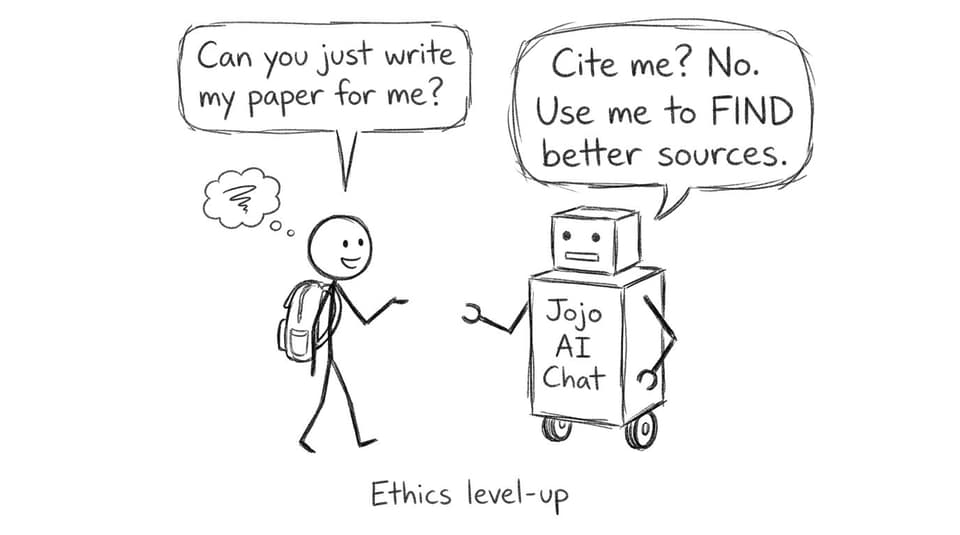
If you're not sure whether a source is "good enough," use RevisionDojo's AI Chat to sanity-check credibility indicators, then confirm with your teacher's guidance. (Use AI to find better sources and improve reasoning, not as something you cite.)
A practical strategy to hit the right IA source count (without overthinking)
Here's an approach that consistently produces the right number of sources for an IA:
Start with "foundation sources" (3-6)
Pick the sources that define your topic and justify your approach:
- 1-2 for core theory
- 1-2 for methodology (if relevant)
- 1-2 for context/data origins
Add "argument sources" (3-10)
These are sources you use to interpret your results, compare outcomes, or justify assumptions.
Stop when every important paragraph is supported
Not when the bibliography "looks long." When the reasoning looks complete.
If you want a system for building evidence and then drilling exam skills after your IA is submitted, RevisionDojo's Notes + Flashcards + Question Bank (Free) flow helps you move smoothly from coursework mode to exam mode.
Closing: your IA doesn't need "more sources": it needs the right ones
When you ask how many sources an IA should have, you're usually trying to protect yourself from uncertainty. That's reasonable. But the safest path isn't chasing a magic number. It's making sure every important idea in your IA is supported by a credible source, and that those sources are genuinely used in your thinking.
If you want to level up quickly, do two things this week: read one high-scoring model in the Coursework Library, then run a citation audit on your own IA draft. After that, switch gears into exam prep with RevisionDojo's Questionbank, Study Notes, Flashcards, Mock Exams, Predicted Papers, Grading tools, and Tutors so your coursework effort converts into exam confidence.
Because the best feeling isn't having 18 sources in your IA. It's knowing you could defend every one of them in a single calm sentence.