

Introduction: the moment you realize "IA" isn't one thing
There's a specific kind of silence that happens when someone asks, "How many IAs are there in IB?"
Not because the question is hard. But because the answer forces you to look at your calendar honestly.
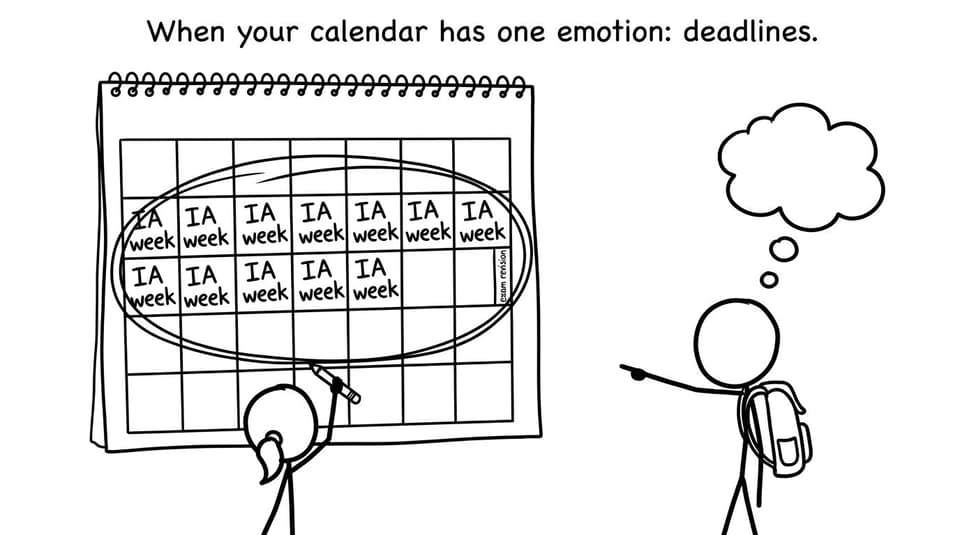
An IA isn't one big project hiding in the corner of the Diploma Programme. It's a repeating responsibility: one per subject, each with its own format, rubric, and deadline logic. The trick isn't just knowing how many IA tasks exist. It's realizing they're spread out, they overlap, and they quietly shape how much time you'll have for exam revision.
This guide breaks down what an IA is, how many you typically have, what "counts" as an IA in each IB group, and how to plan your workload so you don't end up doing coursework with one hand and timed Paper practice with the other.
Quick answer checklist: how many IAs are there in IB?
Use this as your fast, practical baseline:
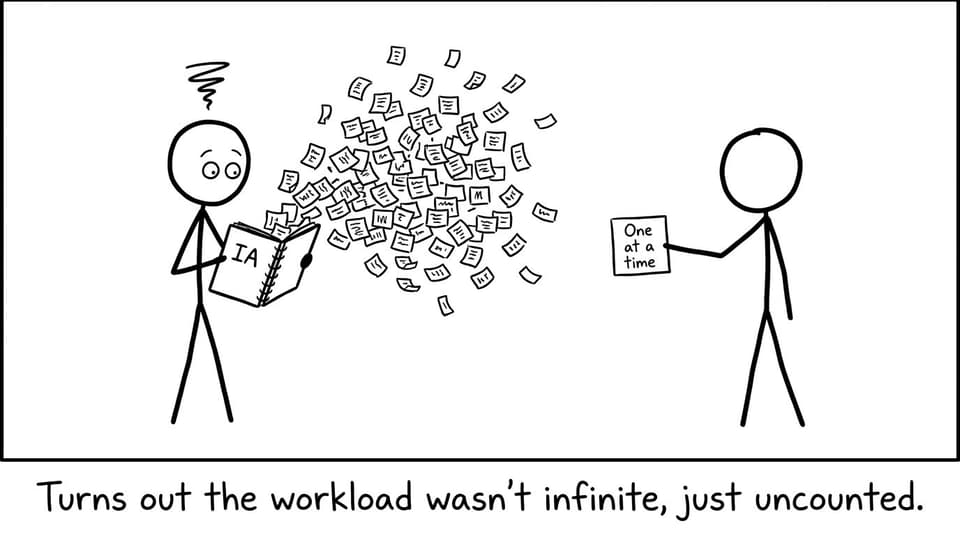
- In the IB Diploma Programme, you typically complete one IA per subject.
- Most students take 6 subjects, so you usually have about 6 IA components.
- Some subjects have more than one internal component (for example, multiple assessed pieces that together act like the IA requirement).
- In addition to subject IAs, you also complete core work (EE and TOK), which feels "IA-like" in workload but is not usually called an IA.
If you want a fuller overview of what an IB IA is and how it's assessed, start with IB Internal Assessment: A Complete Guide.
What an IA actually means (and why students miscount them)
An IA is an internal assessment component: work that your teacher marks, then the IB moderates. The important part is that the IA is assessed using a published rubric, and it contributes a meaningful percentage of your final grade.
Students miscount IAs for three common reasons:
- They assume IA means "a written report." It doesn't. An IA might be an oral, a portfolio, a performance, an investigation, or a project.
- They confuse "class assignments" with the official IA component.
- They group the core (TOK, EE) into the IA pile because it creates the same deadline pressure.
The good news: once you name the components clearly, planning gets easier. The bad news: clarity often arrives right when you were hoping for reassurance.
So how many IAs are there in IB? The real answer
For most students:
- 6 subjects = ~6 IA components
But the "real" answer is:
- You have one IA requirement per subject, but the format and number of assessed pieces varies by course.
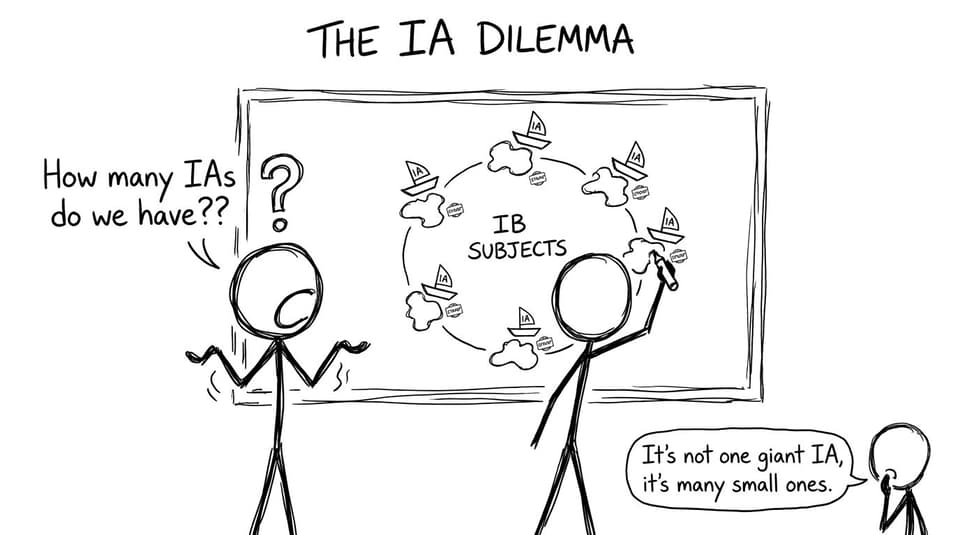
That's why two students can both say "I have six IAs" and still be living very different weeks. One might have a single written investigation for their IA. Another might have an IA that is split into several assessed tasks (common in arts and some language courses).
To stay accurate, think of your IB workload like this:
- Count IAs by subject (one official IA requirement per subject)
- Plan time by deliverables (how many drafts, recordings, practicals, reflections, and final submissions your IA actually requires)
If you're trying to reduce uncertainty, RevisionDojo's Coursework Library is useful because it lets you see what strong student work looks like across different IA formats, not just the ones your school has on hand.
Group-by-group: where the IA usually shows up
Below is a student-friendly map. It's not a replacement for your subject guide, but it will help you understand why "how many IAs" is both simple and strangely personal.
Group 1: Studies in Language and Literature
In Group 1 courses, the IA is often oral-based. That matters because the workload isn't only writing time. It's practice time. It's re-recording time. It's the mental energy of speaking clearly when you're tired.
A strong approach is to treat oral prep like exam technique: short repetitions, feedback, refine, repeat. RevisionDojo's AI Chat can help you rehearse explanations and tighten your line of argument before you record.
Group 2: Language Acquisition
Similar story: the IA is typically an internal oral or interactive format. Students underestimate these because they don't look like a "project" at first. Then the rubric shows up and suddenly every minute of speaking feels expensive.
Your IA prep here benefits from spaced repetition: vocab, structures, and theme-specific phrases. That's where RevisionDojo Flashcards fit naturally, especially when you build decks from mistakes you keep making in practice.
Group 3: Individuals and Societies
Group 3 IA tasks vary widely. They often involve research, analysis, and structured writing, which means the process can balloon if your question is too broad.
If you're stuck, use Jojo AI Chat as a "rubric translator" first: ask what the criteria reward, then shape your IA plan around evidence and evaluation.
Group 4: Sciences
In the sciences, the IA is typically an investigation with data, analysis, and evaluation. Students often assume more complexity equals more marks. The opposite is usually true. A clean design and a sharp evaluation often beat a chaotic "cool experiment."
If you want feedback loops that feel less subjective, try rubric-based tools. For example, RevisionDojo has graders like the IB Psychology IA Grader and the IB ESS (new) IA Grader that break criteria down into plain English so you can revise with direction.
Group 5: Mathematics
Math IA work is usually an exploration. The hidden challenge is coherence: not just doing mathematics, but telling a mathematical story that stays aligned to your aim.
If you're working on flow, this is worth reading: How to Maintain Mathematical Flow and Coherence in the IB Math IA. And if you need models, the Math AI IA Examples page can help you calibrate what "appropriate depth" looks like.
Group 6: The Arts (or an additional Group 3/4)
Arts IA components can involve portfolios, process journals, performances, comparative studies, and reflections. This is where students most often feel like they have "more than one IA," because there are multiple assessed pieces.
The key is to plan the IA around production cycles: draft, feedback, refine. RevisionDojo's Grading tools are designed for this kind of iterative work, where you're improving against criteria, not guessing what the teacher wants.
What about TOK and the EE? Are those IAs?
Students often ask this because TOK and the EE take up real oxygen.
Strictly speaking, TOK and the Extended Essay are part of the core, not your subject IA count. But practically, they behave like an IA because:
- they require long-form thinking,
- they demand drafts and feedback,
- they collide with exam prep.
If your stress comes from "too many IAs," sometimes the truth is: the core deadlines are what tipped your schedule from busy into unstable.
RevisionDojo's Coursework Library and Tutors can help here because you can get clearer examples and faster feedback, which reduces the endless loop of rewriting without confidence.
Planning your IA workload (so it doesn't eat exam season)
A useful rule: your IA shouldn't be a permanent background app running in your brain.
Here's a calm structure you can actually follow.
A simple IA timeline that works for most students
Choose and commit (1 week)
- Confirm the requirements and rubric
- Lock a research question or investigation aim
- Define what "done" looks like (word count, sections, deliverables)
Build the messy draft (1-2 weeks)
- Produce something complete enough to get feedback on
- Don't optimize yet
- Use RevisionDojo AI Chat to sanity-check structure and criterion alignment
Upgrade using criteria (1 week)
- Revise one criterion at a time
- Use a rubric-based grader when available
- Turn recurring mistakes into RevisionDojo Flashcards (yes, even for coursework wording)
Final polish (2-4 days)
- Formatting, citations, labeling, clarity
- One last read where you check: does every paragraph earn marks?
If you need a broader exam prep system that fits around an IA, IB Exams Without Pausing Your Life is a good blueprint.
How RevisionDojo helps when you're juggling IA and exams
The hard part of an IA isn't only writing it. It's context switching: coursework brain to exam brain, then back again.
RevisionDojo reduces that switching cost by keeping everything in one loop:
- Study Notes to quickly patch content gaps that appear while writing your IA
- Questionbank to keep exam skills warm while coursework ramps up (Questionbank feature)
- Flashcards to stop repeating the same terminology and evaluation mistakes
- AI Chat to unblock you when you're stuck between "I understand this" and "I can say it in IB language"
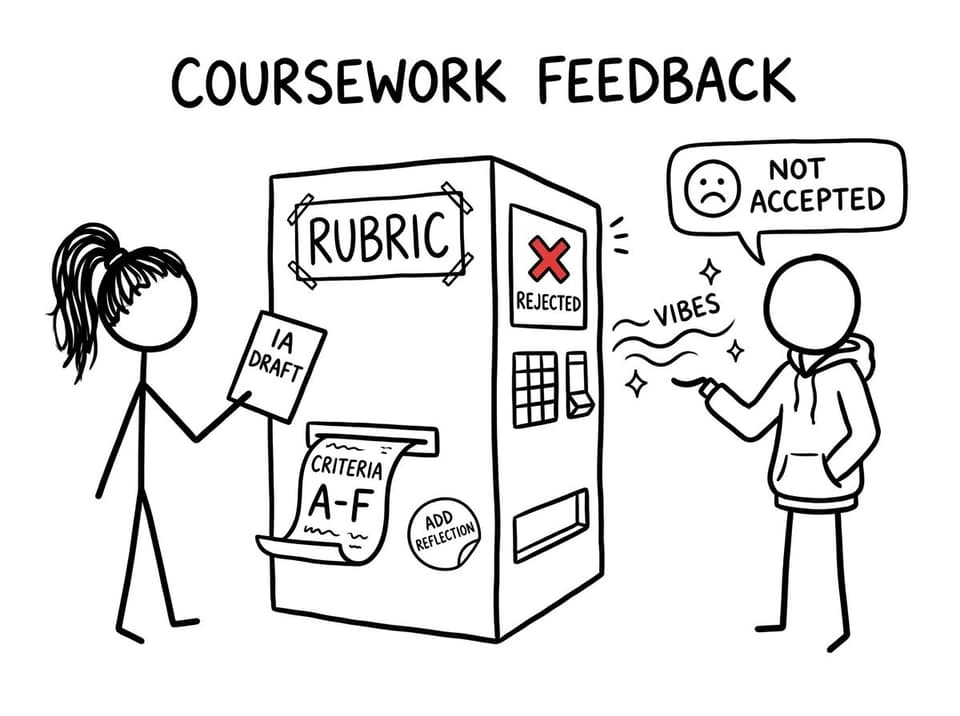
- Grading tools to revise the IA against criteria rather than vibes
- Mock Exams and Predicted Papers to protect your timing and stamina when coursework tries to take over
- Coursework Library to see real examples and raise your quality bar
- Tutors when you need a human to turn feedback into a plan
If you want the all-in-one overview of how the platform fits exam prep, see RevisionDojo for IB and RevisionDojo App: The Smarter Way to Prep for IB Exams.
Closing: count your IA, then control it
So, how many IAs are there in IB?
For most students: about six, one per subject. But what matters more is the second question you're really asking: "How do I survive the overlap?"
The calm answer is structure. Name each IA. Break it into deliverables. Give it a timeline that ends, not one that drifts. Then protect your exam prep with small, repeatable practice blocks.
If you want one place to do that without juggling ten tabs, make RevisionDojo your control panel: Study Notes when you're patching gaps, Flashcards for daily recall, Questionbank for exam skill, AI Chat when you're stuck, Mock Exams and Predicted Papers for timing, plus Grading tools, the Coursework Library, and Tutors when your IA needs real feedback.
Your IA count isn't the problem. The unplanned hours are. Start planning them now.