
The question every IB student asks (usually at 11:47 pm)
There's a specific kind of silence that only an IB student knows. It's late. Your desk is crowded. Your brain is loud. And you're doing the mental math that feels both responsible and terrifying:
"How many hours should IB students study?"
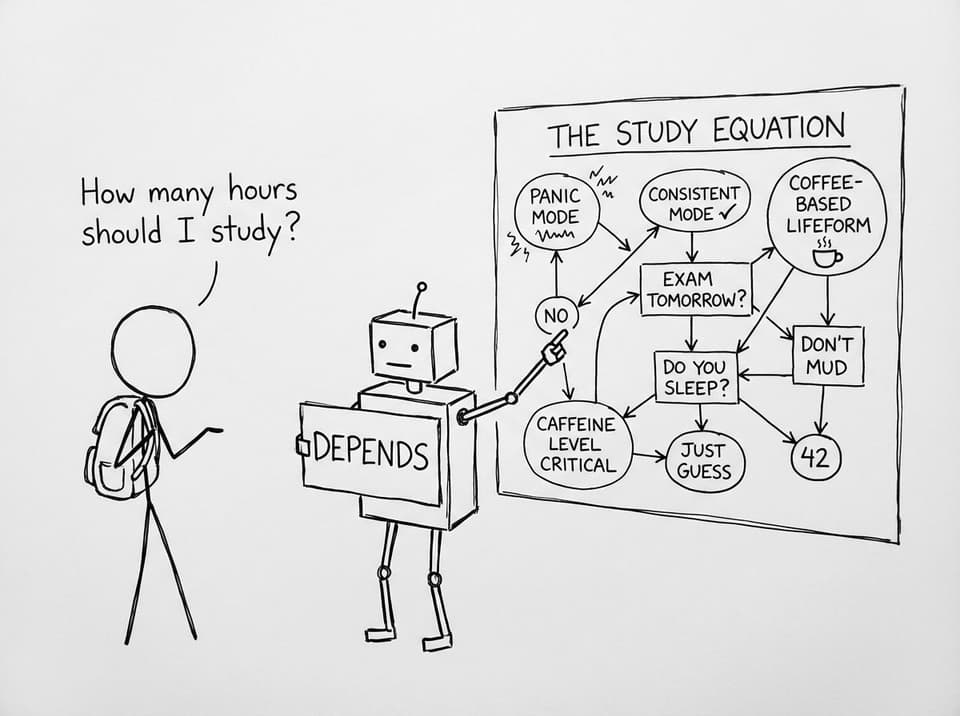
The honest answer is inconvenient: it depends. Not because adults enjoy being vague, but because IB isn't one subject. It's a moving system of six subjects, different levels, different skills, coursework deadlines, and exam technique. Two students can both "study 3 hours" and get completely different results.
So instead of chasing a magic number, this guide helps you build a realistic IB study hours plan that works with your energy, your timeline, and your goals. We'll talk about weekly targets, daily structure, what "counts" as studying, and how RevisionDojo helps you turn IB hours into IB points.
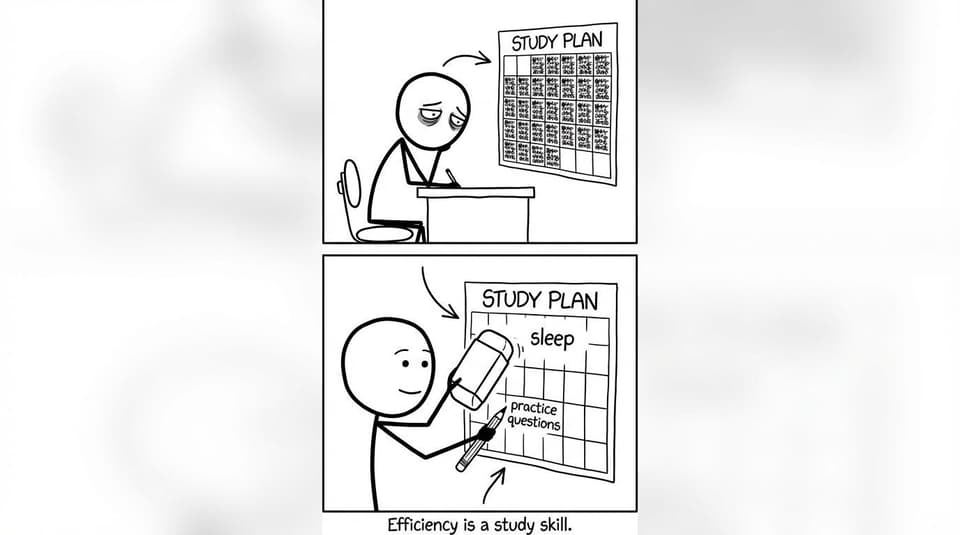
Quick checklist: the IB study hours plan that actually works
If you want the fast version before the deeper reasoning, use this checklist.
- Pick a weekly IB hours target (not a heroic daily number).
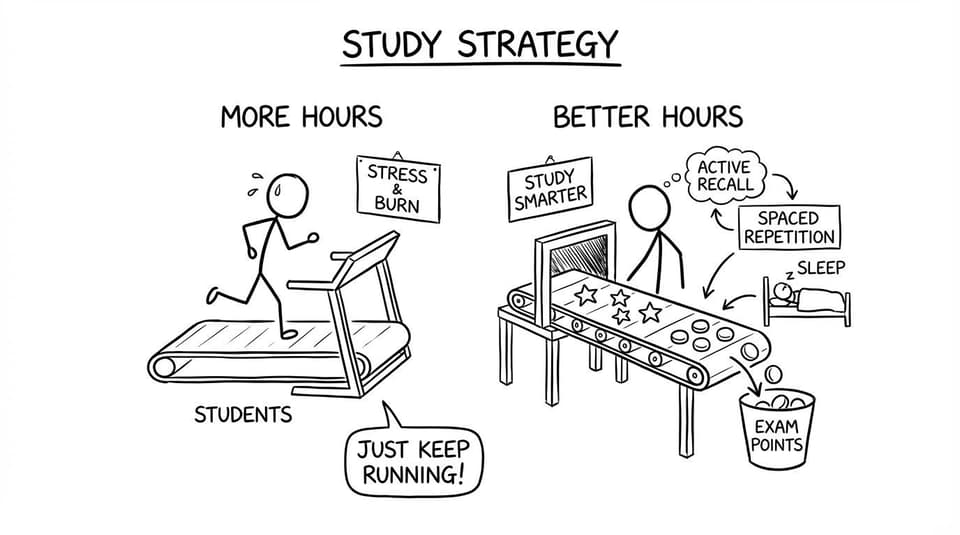
- Split hours into "Better Hours" vs "More Hours."
- Aim for 60-70% practice, 20-30% review, 10% planning.
- Use active recall (Flashcards, short quizzes, closed-book blurts).
- Use timed sets weekly to build exam pacing.
- Track weak topics so hours follow your gaps, not your anxiety.
To make that easier, start from the RevisionDojo IB hub: RevisionDojo for IB.
How many hours should IB students study per week?
Most IB students don't fail because they didn't work hard. They fail because they spent hours doing things that felt like work but didn't create exam readiness.
A useful way to think about IB study hours is to set ranges by season:
During normal school weeks (far from exams)
For many IB students, 8-15 hours per week outside class is a sustainable baseline. That's roughly 60-120 minutes on most weekdays, plus a longer weekend block.
This is where you build consistency. You're not trying to "finish the syllabus." You're trying to prevent panic from becoming your default personality.
8-12 weeks before exams
This is when IB study hours rise because your work becomes more exam-shaped. A common effective range is 15-25 hours per week, depending on how many HLs feel heavy and how strong your foundations are.
2-6 weeks before exams
For many students, this becomes 25-35 hours per week in short cycles: practice, feedback, targeted repair.
If you're thinking "That sounds impossible," remember: this is temporary, and it only works if sleep and recovery are protected. Burnout is not a badge.
Final 7-10 days
Some students push higher, but the best performers usually get stricter, not longer. The focus becomes timed exam sets, error review, and calm repetition.
The truth: in IB, "better hours" beat "more hours"
IB rewards a specific kind of thinking. You can't highlight your way into a 7. You need recall, structure, and markscheme awareness.
The easiest trap is adding time when you should be adding feedback. A student might do 4 hours of rereading and feel productive, while another does 90 minutes of targeted practice and learns twice as much.
That's why RevisionDojo is built around doing the work that produces marks:
- Practice with Questionbank
- Learn fast with examiner-written Study Notes
- Lock recall with Flashcards
- Fix misconceptions using AI Chat (Jojo AI)
- Build realism with Mock Exams and timed practice
- Improve writing with Grading tools for coursework drafts
A simple formula for IB study hours (that reduces guilt)
Instead of asking "How many hours should I study today?" ask three questions:
What is my baseline score right now?
If you're currently at a 4 and aiming for a 6, your IB study hours need more practice and more feedback loops. If you're already at a 6 aiming for a 7, you need fewer total hours but higher precision: timing, markscheme phrasing, and consistency.
How many weeks do I have?
Time changes everything. Ten hours a week for ten weeks is 100 hours. Twenty hours a week for five weeks is also 100 hours, but the stress profile is completely different.
What subjects demand the most "output"?
IB subjects that require writing, data response, proofs, or structured essays consume more energy than content-heavy memorization. Your IB study hours plan should reflect that.
What "counts" as studying for IB?
If it moves you closer to exam performance, it counts. If it only makes you feel calmer, it might be entertainment.
Here's a practical breakdown of what counts as high-quality IB study:
High value (do more of this)
- Exam-style practice questions with feedback
- Timed mini sets to build pacing
- Error logs (writing down the rule you missed)
- Active recall Flashcards, blurting, self-quizzing
RevisionDojo makes this loop easy by combining practice with instant feedback and tracking. See how strategic drilling works in Comprehensive IB Question Bank: Thousands of Practice Questions.
Medium value (use carefully)
- Rereading notes (only as a quick bridge)
- Watching videos (only when you can't move forward)
- Rewriting notes (only if it becomes recall prompts)
If you're spending lots of IB hours on rewriting notes, consider switching to a tighter system using Digital IB Study Notes and then immediately applying them in questions.
Low value (limit this)
- Highlighting without retrieval
- Making "pretty notes" under pressure
- Passive scrolling for "study motivation"
A weekly IB study hours plan you can copy
This is a template, not a prison. But templates reduce decision fatigue, and IB students suffer from decision fatigue more than they admit.
The 12-hour week (steady and sustainable)
- 4 hours Questionbank practice across 2-3 subjects
- 3 hours Study Notes refresh on weak topics
- 2 hours Flashcards (spaced repetition)
- 2 hours timed sets (short)
- 1 hour review and planning
The 20-hour week (serious exam build-up)
- 9 hours practice questions (topic-filtered)
- 4 hours review notes + create short recall prompts
- 3 hours Flashcards
- 3 hours Mock Exams/timed work
- 1 hour planning + error log consolidation
To get more precision with your practice time, use targeted systems like Custom IB Question Banks: Focus on What You Need Most.
How to adjust IB study hours by subject type
Not all IB hours are equal because not all subjects punish mistakes the same way.
Math and Sciences
These reward repetition with variation. More IB hours help if they are question-driven. The fastest improvement often comes from:
- Short topic drills
- Immediate feedback
- Reattempting missed questions after 48 hours
If you want a clear workflow, borrow the structure from How to Use the Questionbank for Targeted Math Revision.
English, Humanities, Economics, Business
These reward structure and phrasing. Extra IB hours should go into:
- Outline practice
- Timed paragraphs
- Markscheme language
- Reviewing feedback like it's a map
This is where RevisionDojo's AI Chat and Grading tools become a quiet advantage: you can submit responses, get rubric-aware feedback, and fix pattern mistakes before they harden.
Language acquisition
Consistency beats intensity. Fifteen minutes daily often outperforms two hours once a week. Flashcards, short writing, and quick listening loops keep the language "alive."
The most common IB study hours mistakes (and how to avoid them)
Studying evenly across all subjects
IB does not reward fairness. It rewards accuracy. Your hours should follow your weaknesses, not your timetable.
RevisionDojo's progress tracking helps you see what needs attention so you don't guess. When you can tag questions and track accuracy by topic, your IB hours stop floating.
Waiting too long to do timed work
Timed practice feels uncomfortable because it reveals the truth: pacing, stress, and clarity. But that's the point. Add a timed component early, even if it's small.
Confusing stress with productivity
A stressed three-hour session can produce less learning than a calm 45-minute loop with feedback. Your nervous system is part of your study plan.

Closing: the right IB study hours are the ones you can repeat
The most reliable IB advantage isn't studying the most. It's studying in a way you can repeat tomorrow.
Set a weekly target. Protect sleep. Build sessions around practice and feedback. Let your IB hours follow the data, not the fear.
If you want that loop in one place, start here: RevisionDojo for IB. Use Questionbank to drill what's tested, Study Notes to rebuild foundations fast, Flashcards to make recall automatic, AI Chat to clear doubts, Mock Exams to make timing familiar, and Grading tools plus the Coursework Library and Tutors when you need higher-stakes feedback.
Because in IB, time matters. But what you do with time matters more.