When IB revision turns into background noise
By the time IB revision season arrives, most students have learned a strange survival skill: looking busy while their mind quietly leaves the room. Not because they are lazy. Not because they do not care. But because revision can start to feel like the academic version of eating the same meal every day: technically nutritious, emotionally draining.
The frustrating part is that both students and teachers want the same outcome. IB students want confidence and momentum. Teachers want students to walk into exams calm, prepared, and able to earn marks under pressure. When revision becomes repetitive, the bridge between effort and results gets shaky.
The good news: the fix is rarely “more content.” It is smarter engagement, the kind that makes practice feel like progress.
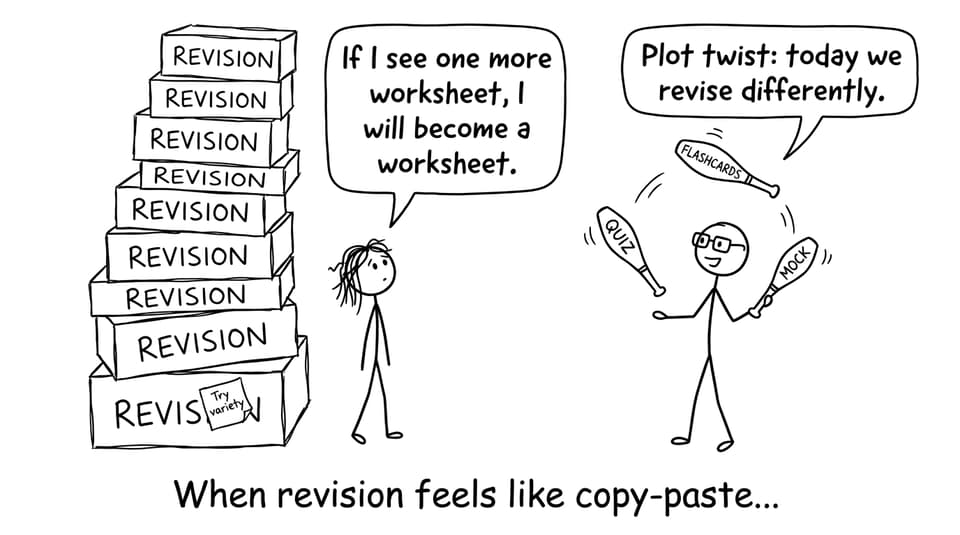
Quick checklist: make IB revision feel new again
If you only change a few things in your next IB revision lesson, change these:
-
Start with a 5-minute “curiosity question” (a misconception, a surprising result, a common trap).
-
Rotate the format every 15-20 minutes (solo, pair, whole-class, timed, reflective).
-
Make feedback immediate (students should know what to fix before the bell).
-
Track errors by pattern, not by question number.
-
End with one tiny win students can repeat at home.
To support that rhythm outside the classroom, tools like RevisionDojo matter because they reduce setup time and make practice loops easier to repeat.
Why IB revision feels repetitive (and how teachers can interrupt it)
Repetition is not the enemy. Unchanging repetition is.
In many IB classrooms, revision defaults to one mode: teacher explains, students listen, students do a set of questions, then corrections happen later (sometimes much later). That delay is where motivation leaks.
A more engaging model is a tighter loop:
-
Attempt
-
Get feedback
-
Fix one mistake
-
Reattempt
This is why a structured platform can help teachers create variety without creating chaos. For example, RevisionDojo’s Questionbank feature makes it simple to run short, topic-focused sets where students practice, see what went wrong, and immediately try again.
Strategy shifts teachers can use tomorrow (that students actually feel)
Turn “review” into IB skill training
Students often revise content like they are stocking a pantry: more notes, more highlights, more pages. But IB exams reward performance under constraints: command terms, structure, timing, and method.
Try this in class:
-
Pick one micro-skill (define, evaluate, calculate, annotate, compare).
-
Do 3-5 exam-style prompts.
-
Mark fast, then rewrite one answer together.
If students need a system outside lessons, point them toward an article like Countdown to IB Exams: Use IB Resources That Work, then connect it to your classroom loop.
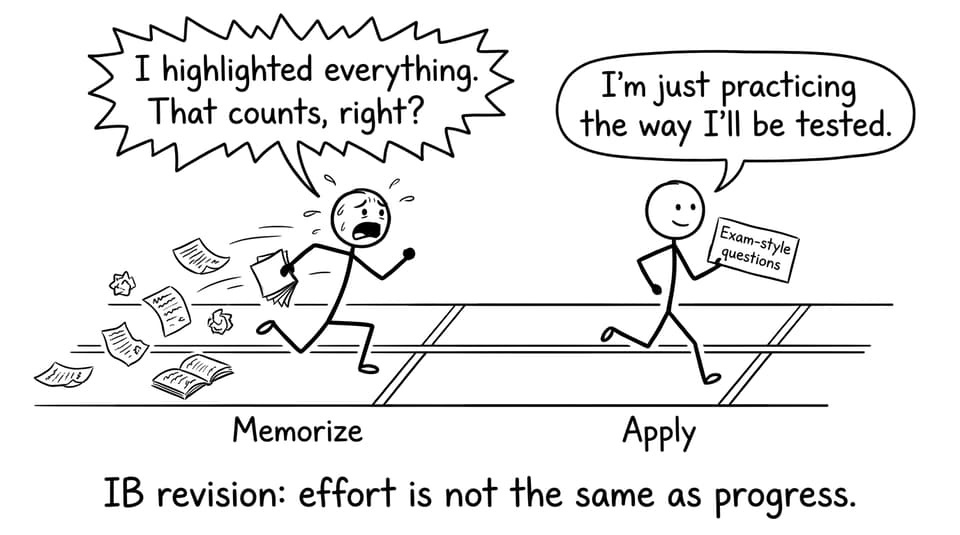
Add variety without losing structure
Variety is not random activities. It is planned rotation.
A simple IB revision rotation that keeps attention high:
-
Warm-up (5 min): 3 retrieval questions (no notes).
-
Main set (20 min): timed questions by topic.
-
Debrief (10 min): students write “error rules” (one sentence per mistake).
-
Finish (5 min): one reattempt question to prove the fix.
RevisionDojo supports this because students can move from learning to application quickly using RevisionDojo for IB, combining Study Notes, Flashcards, and targeted questions in one flow.
Make feedback fast and personal
Students disengage when they cannot tell if they are improving.
This is where RevisionDojo’s ecosystem helps teachers keep revision engaging: students practice in the Questionbank, use AI Chat to clarify confusing steps, and tighten their answers with Grading tools. Add Mock Exams and Predicted Papers when students need stamina and timing practice. (And when coursework overlaps with revision stress, the Coursework Library and Tutors keep things moving.)
If your class struggles with “studying a lot but remembering little,” share: IB: I Study All Day but Remember Nothing.
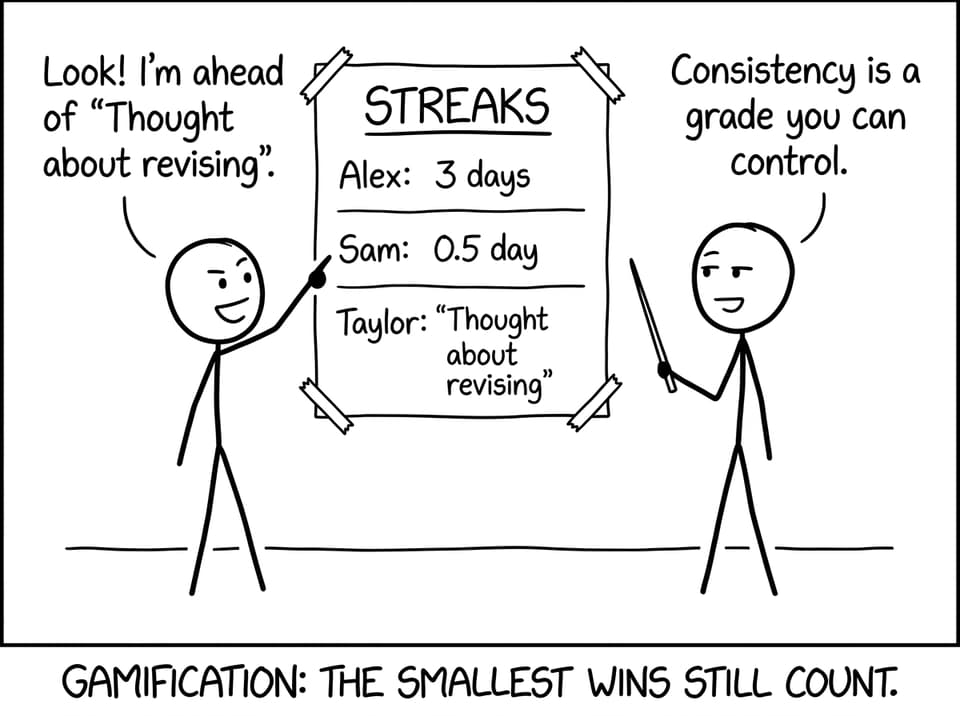
Use light gamification (the kind that builds consistency)
Gamification works when it rewards repeatable effort, not just top scores.
Teachers can run:
-
streak goals (3 short sessions per week)
-
“beat your last score” targets
-
team accuracy challenges
Students who like a gamified feel can also read How to Keep Math Revision Fun and Engaging and borrow the same principles for any IB subject.
A quick classroom example (how repetition turns into momentum)
Imagine an IB Chemistry class after a mock exam. The old pattern is familiar: students receive scripts, corrections take forever, and the same mistakes show up again next week.
A teacher changes one thing: every revision lesson begins with a short, topic-filtered question set, then a rapid feedback loop. Students log their most common error pattern and reattempt a similar question before leaving.
The atmosphere shifts. Students can feel improvement because each lesson contains a complete loop: attempt, feedback, fix, proof. Revision stops being a fog and becomes a series of small wins.
For teachers who want students to keep that rhythm at home, this pairs well with The Science Behind Effective IB Revision and 10 Proven Study Techniques for IB Students.
FAQ
How can IB teachers make revision more engaging without adding extra workload?
Start by changing the shape of the lesson, not the amount of content. A 5-minute retrieval warm-up followed by a short timed set and a fast debrief often replaces a full worksheet while achieving more. Engagement increases when students can see what to fix immediately, so shorten the feedback delay as much as possible. You can also rotate activity modes (solo, pairs, mini-whiteboards, quick teach-back) without creating new resources every time. Platforms like RevisionDojo reduce prep because the Questionbank, Study Notes, Flashcards, and AI Chat already create ready-to-run practice loops. The teacher’s job becomes steering: choosing the topic and reading the patterns in student mistakes.
Why does IB revision feel repetitive even when we are covering different topics?
Because the brain responds to format as much as content. If every revision session looks like “teacher explains, students write, homework happens later,” students experience it as one long, same-shaped task. The IB also demands application under pressure, so passive review can feel disconnected from what exams actually reward. When students do not get quick feedback, they cannot link effort to outcome, and motivation drops. Repetitive revision is often a sign that the practice loop is too slow or too one-directional. Changing the loop: attempt, feedback, fix, reattempt, creates novelty because students can measure progress. Over time, that measurement is what keeps revision from feeling endless.
What should IB students do at home to keep revision from becoming boring?
Students should aim for short sessions that include active recall and application, not long sessions of rereading. A practical home routine is: 10 minutes of Flashcards, 25 minutes of exam-style questions, then 5 minutes writing an “error rule.” This keeps revision concrete and prevents the common IB trap of feeling busy without getting better. Students can also vary the environment (different location, different time box) while keeping the same loop, because consistency of method beats random “study moods.” If they feel anxious close to exams, structured guidance like What to Do the Night Before IB Exams helps them protect sleep and confidence. RevisionDojo makes the home routine easier because everything is connected: practice, feedback, and targeted next steps.
Closing: make IB revision feel like progress again
The secret to engaging IB revision is not louder motivation. It is quieter structure: shorter loops, faster feedback, and enough variety that students stay awake long enough to improve.
If you want revision that feels less repetitive and more like momentum, build your lessons around active practice and proof-of-fix. Then give students a home base that keeps the same loop going after class.
RevisionDojo is built for that exact purpose: Questionbank, Study Notes, Flashcards, AI Chat, Grading tools, Predicted Papers, Mock Exams, Coursework Library, and Tutors, all designed to help IB students revise with clarity and confidence.
Explore RevisionDojo for schools here: RevisionDojo Schools

