

When you pick IB SEHS, it’s easy to think the subject is mostly about muscles, movement, and memorising processes. Then your first group practical happens. Suddenly, the real curriculum shows up quietly: who takes initiative, who organises the data, who keeps the group calm when the numbers don’t make sense.
That’s the hidden gift of IB SEHS. While you’re preparing for exams, you’re also rehearsing leadership and teamwork in a setting that’s structured, measurable, and surprisingly honest. It’s hard to fake collaboration when you’ve got a stopwatch running, a protocol to follow, and results you’ll have to defend.
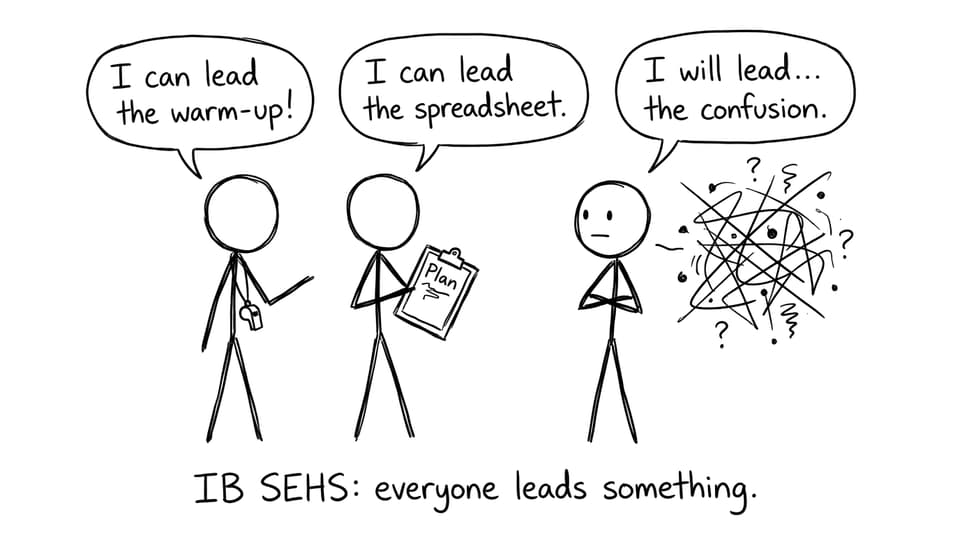
Quick checklist: the leadership and teamwork muscles IB SEHS trains
Use this as a simple self-audit during revision season. If you can point to evidence for each item, you’re building both marks and real-world skills.
-
You can assign roles fast (and fairly) in a lab group
-
You can explain a result in clear language, not just technical terms
-
You can handle disagreement without freezing or dominating
-
You can plan a timeline and stick to it when work gets busy
-
You can solve problems when procedures go off-track
When you practise these deliberately, IB SEHS becomes more than a subject. It becomes a training ground.
Leadership in IB SEHS isn’t loud -- it’s useful
Most students imagine leadership as being the person who talks the most. In IB SEHS, leadership usually looks quieter: planning the method, checking variables, ensuring the group records data consistently, and noticing when the procedure is drifting.
A practical example: in a fitness testing activity, the best “leader” is often the student who calmly says, “Let’s standardise rest time between trials,” or “We need the same warm-up for reliability.” That single sentence can rescue your results and your evaluation.
If you’re revising content right now, it helps to think like a leader when you study too. Instead of rereading everything, choose one subtopic and train it properly using a loop: notes, recall, then exam-style practice. RevisionDojo is built for that workflow with Study Notes, Flashcards, and the Questionbank.
Helpful places to start:
-
Use the main hub for IB SEHS content: IB Sports, exercise and health science resources
-
Practise applied questions with Questionbank
Teamwork is built into the method: roles, constraints, and shared outcomes
Teamwork in IB SEHS is different from “group work” in other classes because the task forces interdependence. In a practical, you can’t finish well unless the group aligns on method, timing, measurement, and recording.
That shared outcome teaches three teamwork habits that also show up in high-scoring exam answers:
Clear roles reduce errors
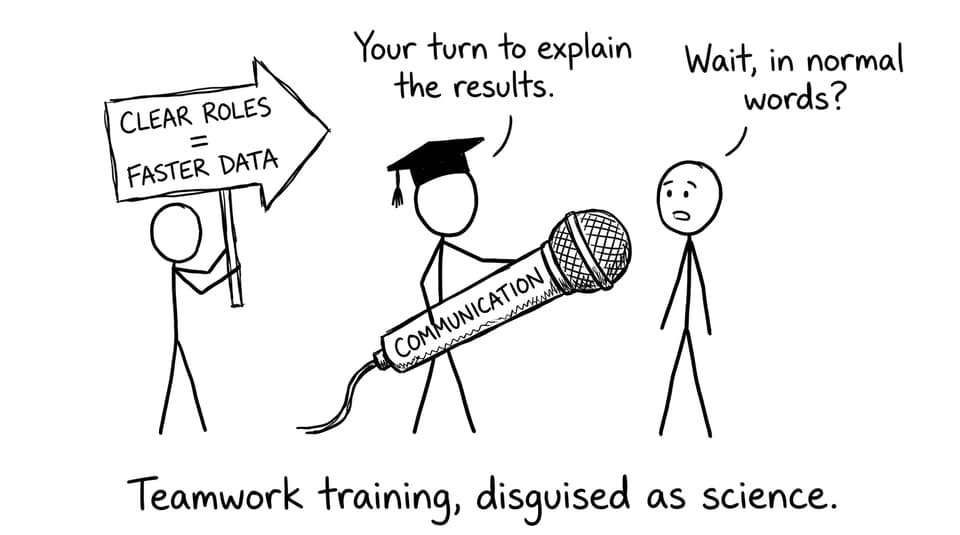
Assign roles like timer, measurer, recorder, and checker. When roles are explicit, mistakes become visible faster. You also learn what it feels like to be accountable to other people, which is exactly what teamwork is.
Shared language improves accuracy
Great teams agree on what terms mean. Even at the revision stage, that matters. If one person says “fatigue” and another means “lactate accumulation,” you can lose clarity in both practical write-ups and exam responses. Building precise shared language is one reason IB SEHS collaboration transfers so well into other subjects.
Feedback becomes normal
In a functioning group, someone will say, “That data point looks off,” and the team responds with curiosity rather than defensiveness. That’s teamwork maturity, and it’s a rare skill in stressed exam environments.
If you want to see how RevisionDojo structures this kind of improvement loop across IB subjects, this guide is worth bookmarking: RevisionDojo App: The Smarter Way to Prep for IB Exams.
Communication is the bridge between knowledge and marks
Communication is where leadership and teamwork become visible. In IB SEHS, you practise communication in three ways that map directly to exam success:
-
Explaining processes (clear chains of reasoning)
-
Presenting results (structured summaries, not rambles)
-
Writing evaluations (balanced, evidence-based judgement)
A simple way to train this is to take one topic and practise teaching it in 60 seconds. If you can’t explain it simply, you probably can’t apply it under time pressure.
To revise communication-related ideas inside the syllabus, you can use: A.1 Communication.
Problem-solving in IB SEHS: when the plan breaks, the team shows
Every student has a memory of a practical that went sideways: equipment issues, inconsistent results, or a protocol that suddenly feels impossible in real time.
In IB SEHS, those moments aren’t failures. They’re where teamwork becomes real. Strong groups do three things quickly:
-
They name the problem clearly (“Our rest time varied between trials”).
-
They choose an adjustment (“We’ll restart with a timer for rest intervals”).
-
They document the limitation for evaluation (“This affects reliability”).
That last step is especially exam-relevant. You’re not just solving the problem, you’re learning to evaluate it like an assessor.
If you’re revising movement topics where application and explanation matter, use these targeted resources:
Project management: the underrated skill that protects your grade
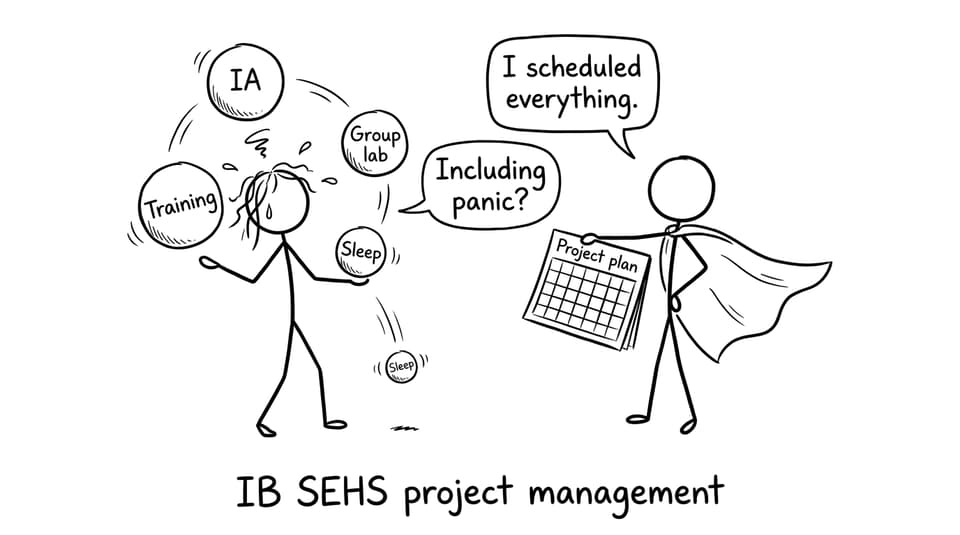
A lot of stress in IB SEHS isn’t caused by difficulty. It’s caused by timing. Labs, revision, and coursework-style planning all collide.
Project management is simply leadership applied to time: deciding what matters, setting deadlines, and protecting focus. You can practise this with simple tools:
-
Break revision into topic blocks
-
Plan one timed practice session weekly
-
Keep an error log and revisit it every 48 hours
This pairs well with RevisionDojo’s ecosystem: Mock Exams for timing practice, Predicted Papers for realistic challenge, AI Chat for quick clarification, and Grading tools for rubric-aware feedback.
For burnout-proof planning, read: How to Study for IB Mocks (Without Burning Out).
Closing: use IB SEHS to train the person who sits the exam
The smartest way to think about IB SEHS is that it trains two things at once: your scientific understanding and your ability to work well with people under constraints. Leadership and teamwork aren’t side effects. They’re built into every practical, every discussion, and every moment you have to align with someone else’s thinking.
If you want to turn those skills into exam marks, build your routine around RevisionDojo’s full loop: Study Notes for clarity, Flashcards for recall, the Questionbank for applied practice, Mock Exams and Predicted Papers for timing, plus AI Chat, Grading tools, the Coursework Library, and Tutors when you need feedback that changes what you do next.
Start here, choose one IB SEHS topic, and run the loop today: IB SEHS resources.