



Water scarcity rarely arrives like a movie disaster. It’s quieter than that. A river that used to run through town becomes a thin ribbon. A tap that used to work becomes a schedule. A wetland that used to feel permanent starts acting seasonal. In IB Geography, that slow change is exactly the point: water scarcity reshapes daily life and ecological stability long before it looks dramatic.
If you’re revising IB Geography Option A (Freshwater: Drainage Basins), think of water scarcity as a chain reaction. The first link is supply vs demand. The rest is human health, food systems, economies, conflict risk, and ecosystem resilience.
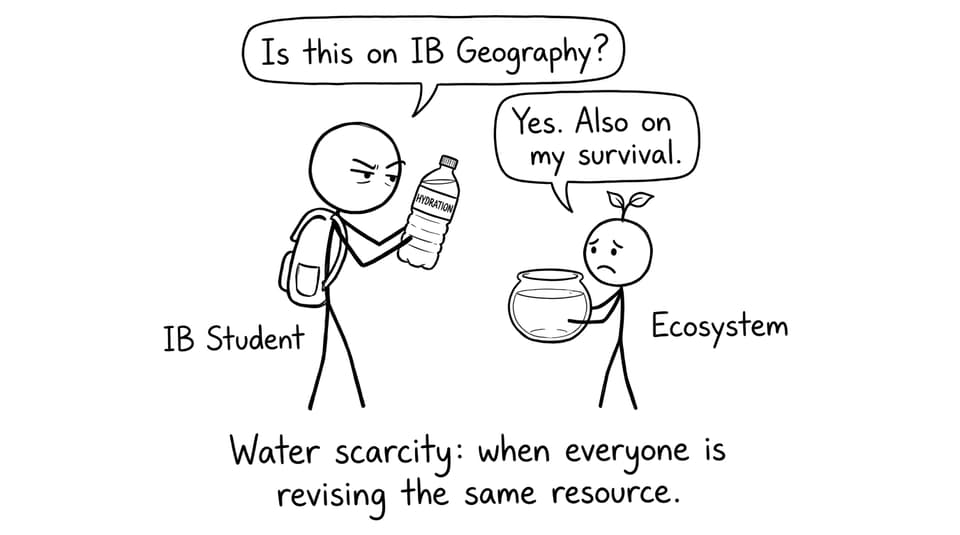
IB Geography snapshot: what water scarcity changes
Use this as a quick checklist for short-answer and essay questions in IB Geography:
-
Health: safe drinking water, sanitation, disease risk
-
Food security: irrigation, livestock, prices, malnutrition
-
Economy: industry, energy production, tourism, jobs
-
Stability: inequality, migration pressures, tension over shared water
-
Ecosystems: river flow, groundwater, wetlands, biodiversity, wildfire risk
For the syllabus framing, start with IB Geography Option A: Freshwater: Drainage Basins and then zoom into IB Geography A.3 Water Scarcity and Water Quality.
How water scarcity affects people
Water scarcity hits people first through access. When clean water is limited, households may switch to unsafe sources, raising the risk of waterborne disease. Even when water exists nearby, economic water scarcity can mean it isn’t reachable because infrastructure, affordability, or governance fail.
Next comes time. In many places, water collection is work, often carried disproportionately by women and children. In IB Geography terms, this is a development issue: time spent securing water competes with education, income, and health.
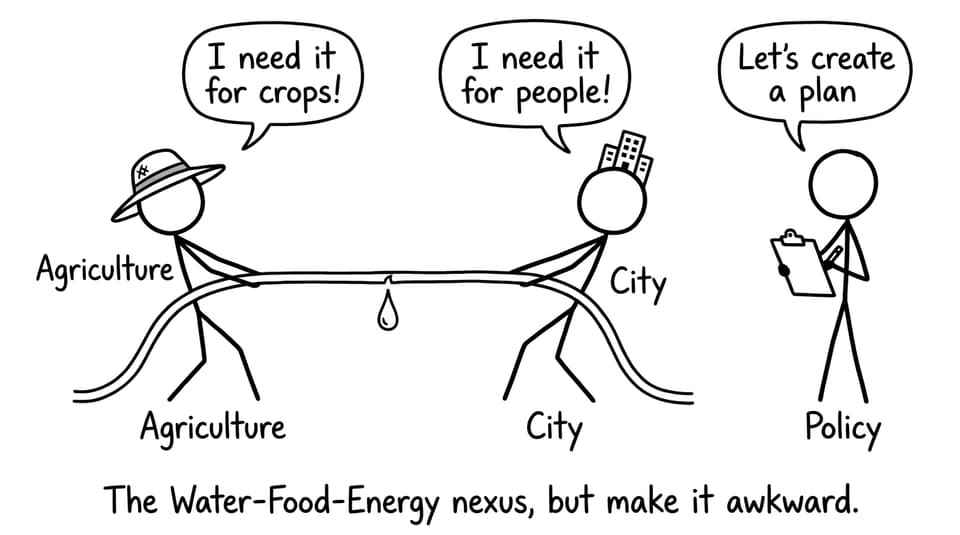
Then comes food. Agriculture is the largest freshwater user in many regions, so scarcity can reduce yields, harm livestock, and push up prices. This is where examiners love the Water-Food-Energy nexus: one scarce input can destabilize multiple systems at once. If you need a clean causes-to-impacts storyline, pair this with What Causes Water Scarcity?.
How water scarcity affects ecosystems
Ecosystems don’t just “lose water.” They lose function.
When river discharge falls and groundwater drops, aquatic habitats shrink. Warmer, slower water can also carry less oxygen, stressing fish and invertebrates. Wetlands can dry, and when they do, you lose a natural system that stores water, filters pollutants, and buffers floods.
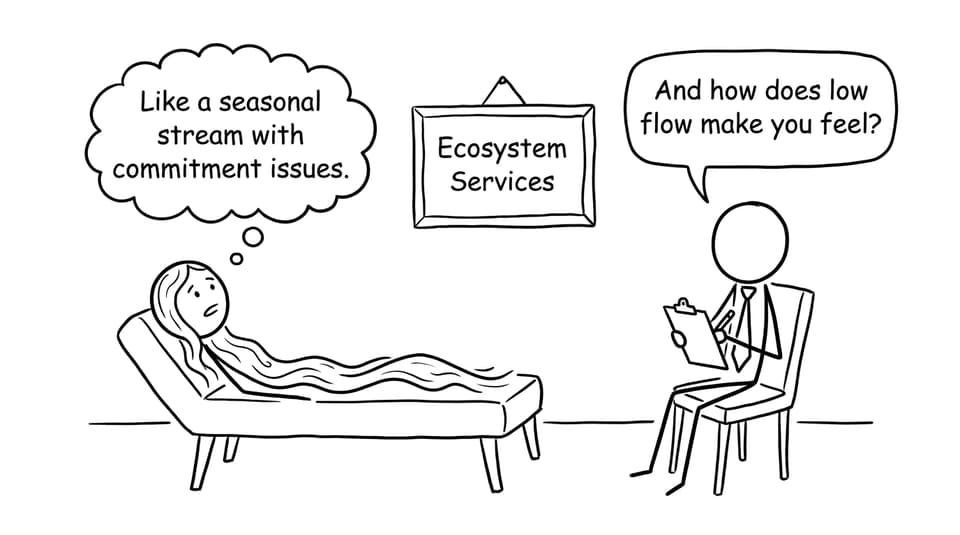
On land, prolonged drought lowers soil moisture, stresses vegetation, and increases wildfire risk. That reshapes food chains and reduces biodiversity. In IB Geography, this matters because ecosystem services are not a bonus detail; they are the bridge between environmental change and human vulnerability.
To connect scarcity back to drainage basin thinking, revise the “systems” language in How Do Drainage Basins Function as Systems?.
Make it exam-ready: how to score with this topic (IB Geography)
In IB Geography, the difference between a 6 and a 7 is often structure. Try this:
-
Define water scarcity (and distinguish physical vs economic)
-
Explain 2 human impacts + 2 ecosystem impacts
-
Link them with a feedback loop (e.g., degraded ecosystems reduce water quality and storage)
-
Evaluate using a management angle (trade-offs, stakeholders, time scale)
Practice the phrasing with exam-style prompts in RevisionDojo’s Questionbank, then tighten definitions with A.3 Water Scarcity flashcards. If you’re building broader exam confidence, Best Geography Mock Exams for IB is a strong next step.
Closing: turn scarcity into a high-scoring explanation
Water scarcity is easy to memorise and surprisingly hard to explain well. The strongest IB Geography answers treat it as a system problem: pressure on water supply triggers human impacts, ecosystem change, and feedback loops that deepen vulnerability.
If you want that system thinking to feel automatic, RevisionDojo is built for it: exam-style practice in the Questionbank, rapid recall with Flashcards, clear Study Notes, targeted help via AI Chat, and realistic Mock Exams and Predicted Papers to rehearse under pressure. When water scarcity shows up in your exam, you shouldn’t be searching for words; you should be selecting them.