




If you have ever watched classmates pick their Group 2 subject like they are choosing a dessert, you know the feeling: everyone has an opinion, nobody agrees, and you are the one who still has to sit the exam.
German Ab Initio often gets described in dramatic terms: “logical but hard,” “the one with cases,” “the one with the really long words.” But the truth is calmer than that. In 2025, the real question is not whether German is objectively harder. It is whether German is a good match for how you learn, what you enjoy, and what you can sustain for two years.
This guide compares IB German Ab Initio with other popular Ab Initio choices through the lens of IB Language B expectations (skills, rubrics, themes, and exam pressure), so you can make a decision like a strategist, not a gambler.
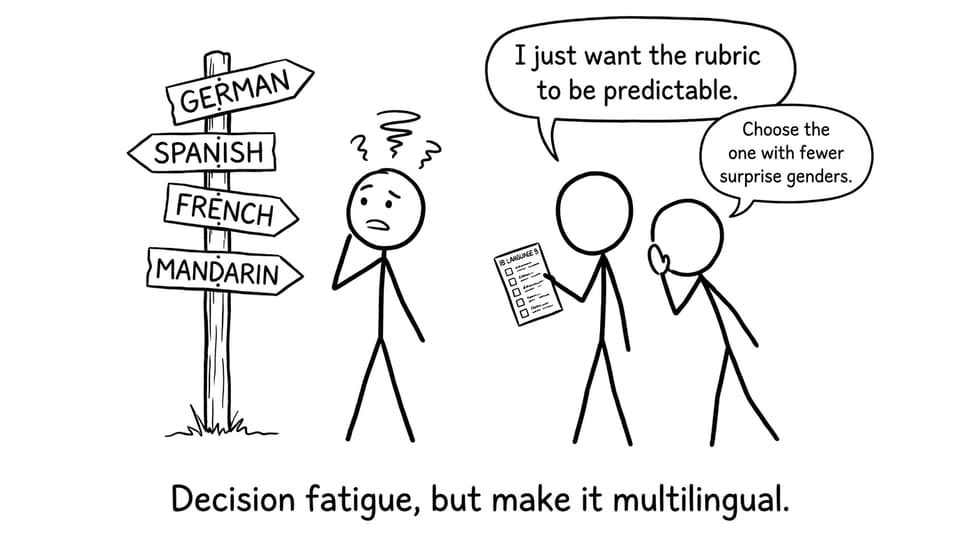
Quick checklist before you compare languages
Before you weigh German against Spanish, French, or Mandarin, use this short checklist. It keeps your comparison grounded in what the IB actually rewards.
-
Do you learn best through patterns and rules (grammar systems) or through exposure and imitation?
-
Are you willing to practice listening weekly, even when it feels slow?
-
Do you want the “most familiar” option, or the one that keeps you curious?
-
Can you commit to short daily practice, not occasional long sessions?
-
Does your school offer strong teaching and feedback for that course?
If you want a quick refresher on how the broader course works, start with What You Need to Know About the Language B IB Syllabus. Even if you are taking Ab Initio, it clarifies the skill balance and the theme-driven nature that sits underneath IB Language B style assessment.
What all Ab Initio languages have in common (and why it matters)
Ab Initio courses share the same skeleton, which means your day-to-day stress often comes from execution, not from surprises.
Across Ab Initio languages, you can expect:
-
Standard Level only, with roughly 150 teaching hours.
-
A beginner pathway aiming around CEFR A2 by the end.
-
Consistent theme coverage: identities, experiences, human ingenuity, social organization, sharing the planet.
-
The same big skill categories: reading, listening, writing, speaking.
The best practical implication is this: if you build habits that work for IB Language B skills (clear structure, theme vocabulary, controlled accuracy, and calm speaking), you can transfer them across languages.
If you are doing German specifically, the clearest breakdown of components is in IB German Ab Initio Exam Format (2025 Guide). It is worth skimming early, because it prevents “studying a lot” from turning into “studying the wrong thing.”
German Ab Initio vs Spanish and French: the “familiarity” trade
Students often compare German to Spanish and French because they feel closer to English in different ways.
German Ab Initio: familiar roots, unfamiliar mechanics
German gives you a surprising number of friendly words, because English and German share Germanic ancestry. That early familiarity can build confidence fast.
But German also asks you to respect structure. Cases and word order rules mean you cannot always “English your way through” a sentence and hope it works.
To focus your effort, review What Grammar Topics Are Most Important in IB German Ab Initio? (2025 Guide). It helps you avoid the classic beginner trap: trying to master everything instead of mastering what scores.
Spanish Ab Initio: momentum through simplicity
Spanish is often described as the “smoothest start.” Spelling-to-sound is consistent, and basic sentence building can feel intuitive after a few weeks.
That does not mean Spanish is free marks. Under exam timing, many students lose points through rushed writing, weak connectors, and repeating the same basic verbs.
If you also take Spanish B later or you want to see how RevisionDojo structures practice, explore IB Spanish B Resources.
French Ab Initio: familiar vocabulary, tricky listening
French vocabulary can feel approachable, but listening often becomes the stumbling block because spoken French compresses sounds in ways beginners do not expect.
If you know you rely heavily on “hearing every word,” French can feel frustrating at first. If you can tolerate ambiguity and focus on gist, it can be a strong choice.
German Ab Initio vs Mandarin Ab Initio: the “distance from English” factor
Mandarin is often the steepest curve for English speakers. You are learning new sounds, tones, and written characters at the same time.
German, by contrast, keeps the alphabet and many pronunciation rules consistent. That makes early reading and writing less intimidating.
So why do some students still prefer Mandarin?
Because motivation is a multiplier. If you genuinely enjoy the language and culture, you often practice more, and practice is the real engine behind Ab Initio success.
A useful way to think about it in IB Language B terms is: the “harder” language is the one you stop practicing.
The three areas where German Ab Initio feels different
German is not harder in every way. It is simply different in where the difficulty shows up.
Grammar load is front-heavy
German asks you to make more grammatical decisions early (articles, cases, word order). The upside is that once those patterns settle, the language starts to feel reliable.
A smart strategy is to practice German grammar the way you practice math: small sets, repeated often, checked quickly. RevisionDojo’s Flashcards and Study Notes make this sustainable because you can keep your “error rules” visible and review them in minutes.
Vocabulary is both friendly and dramatic
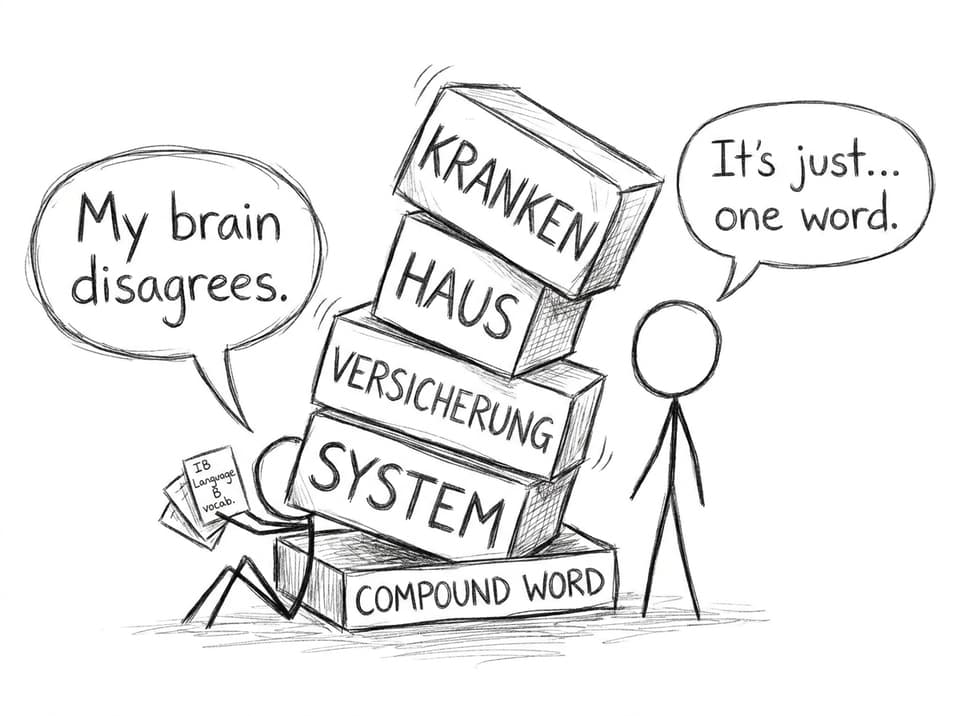
You get cognates. You also get compound words that look like they were built for a crossword puzzle.
The trick is not to fear long words, but to split them. German compounds often reward the student who stays calm.
Listening is about stamina, not mystery
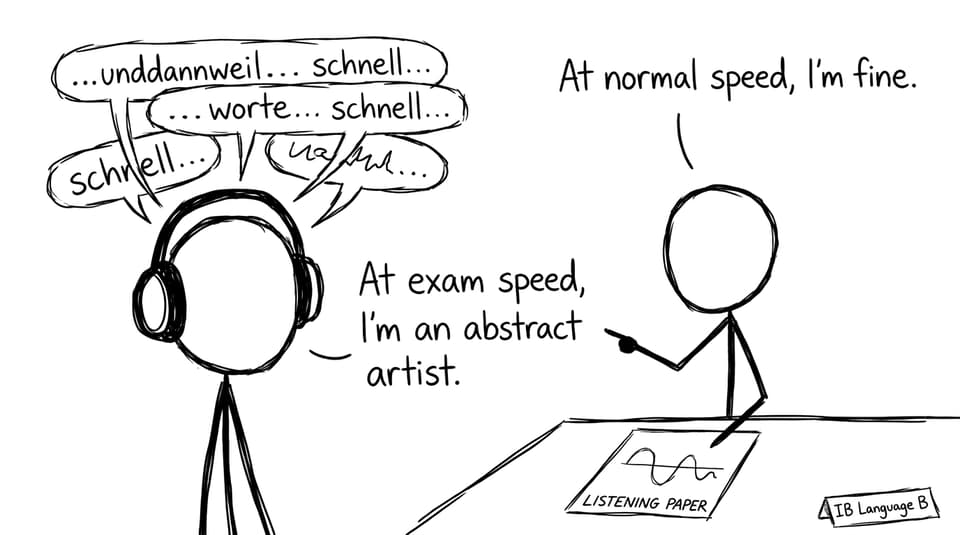
German audio can feel fast because of long words and dense information. But it is rarely “mysterious” the way French can feel at beginner level.
To train this the IB way, use a consistent method. Start with How IB Language Listening Exams Are Structured, then add weekly drills from Best Ways to Practice Listening for IB Language B.
A practical “choose your Ab Initio” decision framework
Here is a simple way to decide without overthinking.
Choose German Ab Initio if you...
-
Like rules and patterns, and do not mind slow early progress.
-
Want European cultural access beyond the usual default choices.
-
Prefer consistent pronunciation rules.
-
Can commit to frequent short practice (vocab + one grammar target).
For a full resource roadmap, use What Study Resources Are Best for IB German Ab Initio?.
Choose Spanish or French Ab Initio if you...
-
Want faster early speaking confidence.
-
Prefer a larger comfort zone of familiar school vocabulary.
-
Are willing to work deliberately on listening (especially in French).
Choose Mandarin Ab Initio if you...
-
Have strong interest that will carry daily practice.
-
Enjoy a challenge that is more about new systems than new rules.
-
Are realistic about time investment.
How RevisionDojo makes any Ab Initio language easier
Most students do not fail Ab Initio because the language is impossible. They struggle because practice is unstructured.
RevisionDojo fixes that by giving you one place to run the whole loop:
-
Questionbank for exam-style reading and listening practice, with clear explanations: Questionbank
-
Study Notes for theme vocabulary and model structures
-
Flashcards to make daily review automatic
-
AI Chat to simulate oral follow-up questions and build confidence under pressure
-
Grading tools to check writing and see what the rubric wants
-
Predicted Papers and Mock Exams to rehearse timing without panic
-
Coursework Library and Tutors when you want examples and human feedback
If writing is where you lose marks, pair your practice with How to Avoid Common Mistakes in Language B Writing. The principles apply cleanly to Ab Initio and keep your work aligned with IB Language B style criteria.
Conclusion: pick the language you can practice like a habit
German Ab Initio is not a “hard” choice so much as a structured one. It rewards students who accept that early progress looks like small wins: one case at a time, one sentence pattern at a time, one listening clip repeated until it stops sounding like a blur.
If you want the most strategic move, choose the Ab Initio language you can practice steadily, then study it with IB Language B discipline: theme vocabulary, exam timing, clean structures, and regular speaking rehearsal.
When you are ready to make that routine easier, RevisionDojo is built for it: Study Notes to learn, Flashcards to retain, Questionbank to apply, AI Chat to rehearse, and Mock Exams to perform. Start with the German Ab Initio IB Resources page and build a plan you can actually keep.