

Globalisation rarely arrives with a loud announcement. It shows up quietly: the same playlist in a cafe thousands of miles from home, a familiar logo on a street corner that used to feel uniquely local. In IB Geography, that quiet change matters because it reveals how flows of money, media, people, and ideas reshape identity at different scales.
This post breaks down how globalisation impacts local cultures in a way you can use in essays and short answers. You will see the key processes (homogenisation, language shift, hybridisation, migration, resistance, and commodification) and how to evaluate them like an examiner.
Quick exam checklist for IB Geography
-
Define globalisation clearly: increased interconnectedness via flows (goods, services, people, capital, information, culture).
-
Identify the cultural impact type: homogenisation, hybridisation, language change, migration-led multiculturalism, resistance, or commodification.
-
Show uneven impacts by scale and place (core vs periphery, urban vs rural, younger vs older groups).
-
Add evaluation: who benefits, who loses, and what policies or community actions shape outcomes.
For syllabus-aligned definitions, bookmark IB Geography Key Definitions.
IB Geography and cultural homogenisation
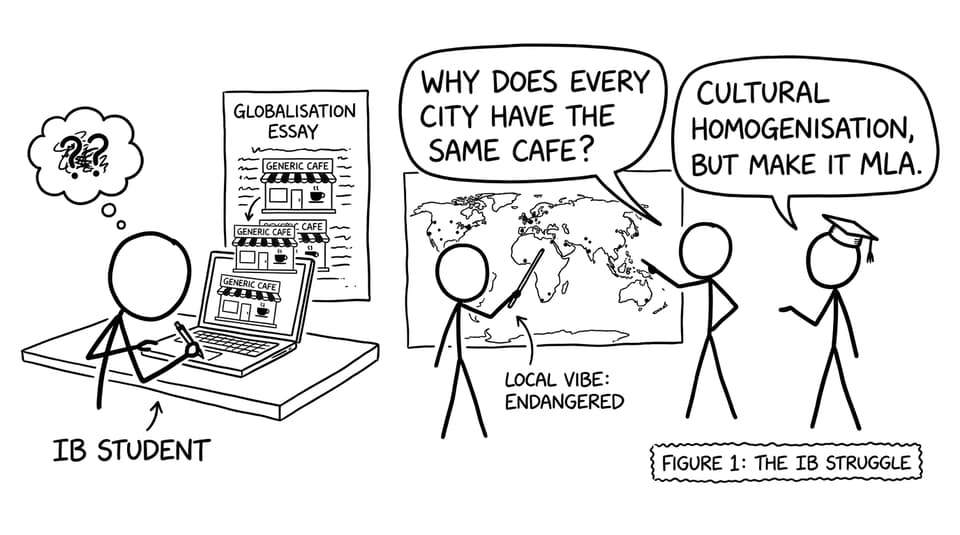
Cultural homogenisation is the idea that places begin to look and feel more similar over time. In IB Geography, you can link this to global brands, transnational media, and consumer culture spreading standardised tastes. The local outcome might be subtle (traditional foods eaten less often) or structural (local businesses displaced by chains and global retail).
To strengthen analysis, connect homogenisation to connectivity and time-space convergence. The faster ideas and products move, the easier it is for a dominant culture to saturate markets and social norms. If you need a clean way to phrase this, the notes on the shrinking world help you describe the mechanism, not just the effect: Technological Innovation and the “Shrinking World”.
Want targeted practice on identity-style prompts? Use 5.2 Changing identities and cultures - IB Questionbank.
IB Geography and language change in a global era
Language is culture with memory built in. Global languages often expand through education, business, and entertainment, while minority and indigenous languages can lose everyday use. In IB Geography, this is a strong example of how cultural change can be both voluntary (students choosing a global language for opportunity) and pressured (local languages seen as less useful).
A high-scoring response avoids moral panic and focuses on processes: status, incentives, and intergenerational transmission. Ask: who uses which language, where, and for what purpose? That turns a general point into geographic analysis.
Cultural hybridisation: global + local, not global vs local
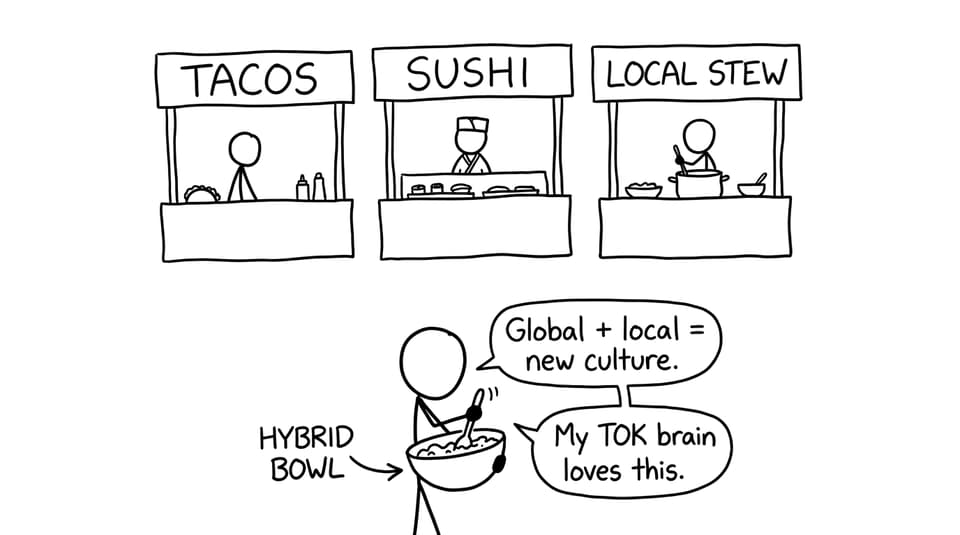
Not every cultural impact is a loss. Hybridisation happens when local communities adapt outside influences into something new and place-specific. Think global music genres remixed with local instruments, or international foods made with regional ingredients. In IB Geography, hybridisation is a great way to show cultures are active agents, not passive victims.
If you want a ready-made structure for evaluation paragraphs (benefits, costs, stakeholders, and scale), RevisionDojo’s case study guide is useful even beyond case studies: IB Geography Case Studies: A Comprehensive Exam Guide.
Migration, multiculturalism, and social tension
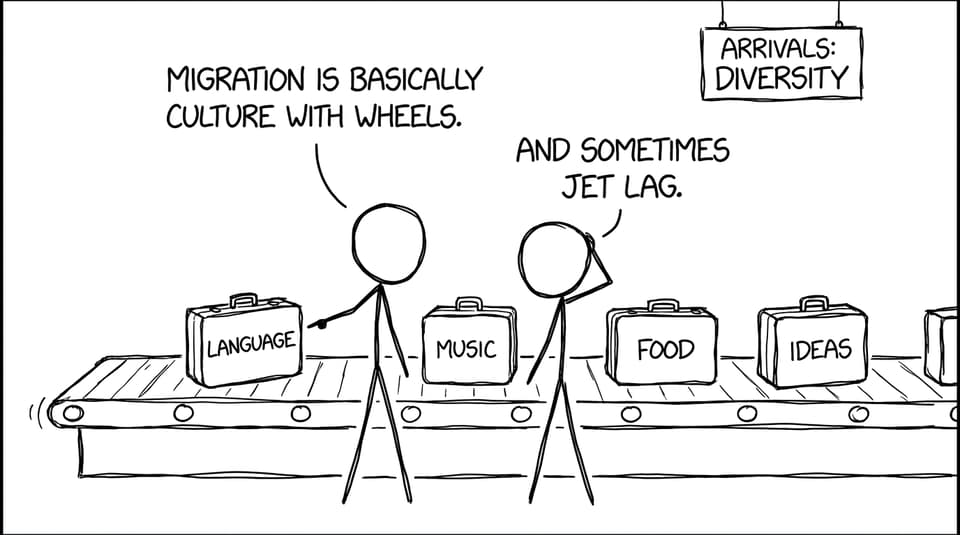
Globalisation increases mobility. Migration can enrich local cultures through new cuisines, religions, languages, and social networks, creating multicultural places with more varied cultural landscapes. But rapid change can also generate tension around identity, belonging, and social cohesion, especially if groups feel excluded from economic gains or political voice.
To connect this to the IB syllabus, frame it as an uneven impact: opportunities concentrate in globally connected cities, while other regions may experience disruption without the same benefits.
Resistance and preservation in IB Geography
A key IB Geography insight is that local cultures can resist. Resistance includes language revitalisation programs, heritage protection, local media, cultural festivals, and policies that limit cultural dominance in education or broadcasting. This is often where your evaluation earns marks: globalisation is not a single outcome; it is a negotiation.
For linked concepts like fragmentation, tribalisation, and renewed nationalism, see Notes for 6.1.3 Globalization vs. Nationalism.
Tourism and commodification of culture
Tourism can turn cultural practices into products. That can generate income and fund preservation, but it can also simplify traditions to match visitor expectations. In IB Geography, call this commodification and evaluate carefully: ask whether communities control the narrative, where profits go, and what changes when culture becomes an economic asset.
To explore tourism strategies as a lens, use E.3.1 Niche National Tourism Strategies.
Closing: use IB Geography to evaluate, not just describe
Globalisation impacts local cultures through sameness, mixing, movement, and pushback. The examiner is not looking for a simple “good vs bad” verdict. They are looking for IB Geography thinking: processes, uneven outcomes, and clear evaluation.
If you want to turn this into higher-scoring exam practice, RevisionDojo is built for it: revise with Study Notes and Flashcards, drill the Questionbank, plan arguments with AI Chat, sharpen writing with grading tools, and pressure-test your timing with Mock Exams and Predicted Papers. Start at RevisionDojo IB Geography and build answers that sound like you understand the world, not just the textbook.