


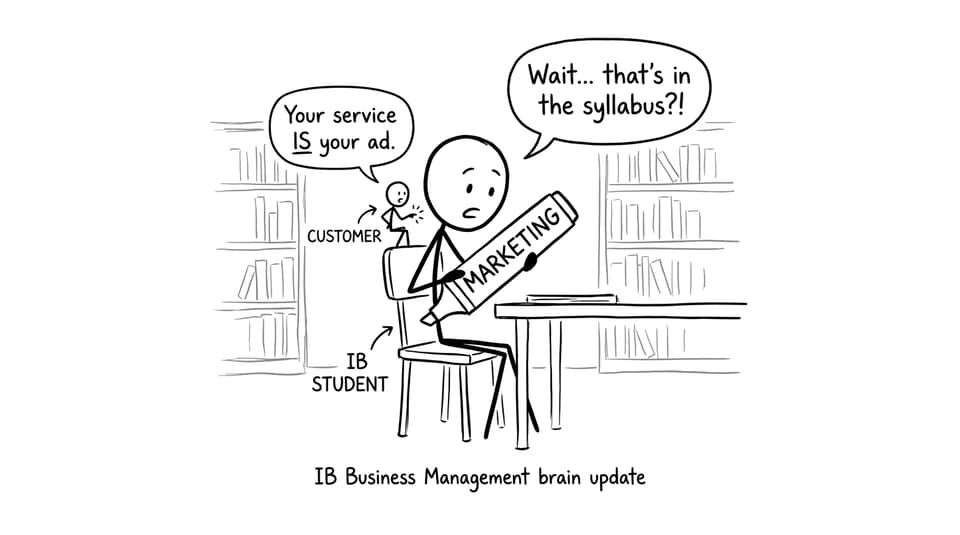
Customer service rarely looks like marketing.
It doesn’t have the glamour of a launch campaign or a billboard. It’s usually one person, one problem, one moment. But in IB Business Management, that’s exactly why it matters: marketing success is often built in quiet interactions that customers remember (and retell).
In exam terms, customer service shapes the customer experience, which then feeds into loyalty, brand perception, and ultimately sales. In real life, it’s even simpler: people don’t just buy products. They buy how the business makes them feel when something goes wrong.
Quick checklist: how customer service boosts marketing success
Use this as a revision hook for IB Business Management essays and short-answer responses:
-
Builds customer loyalty (repeat purchases, retention)
-
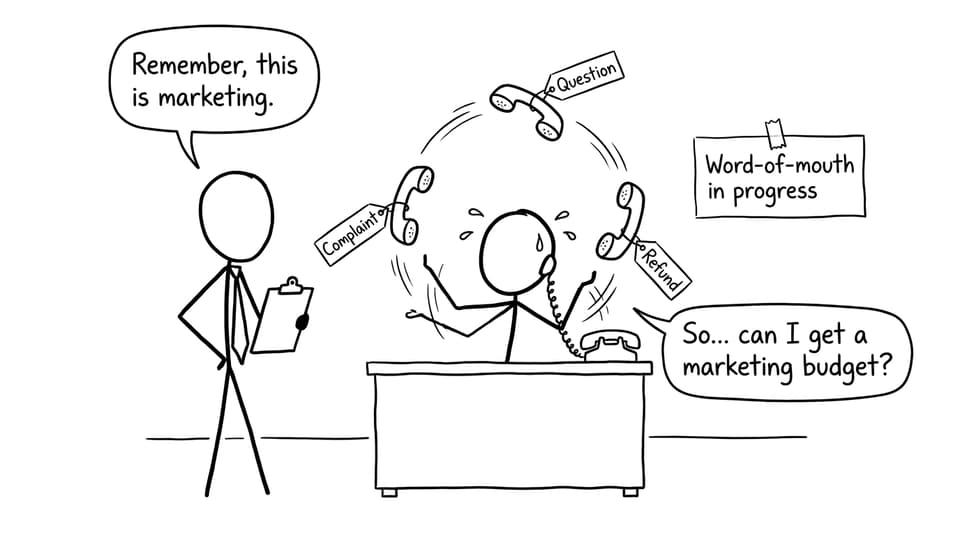
Generates positive word-of-mouth (organic promotion)
-
Strengthens brand reputation (trust, credibility)
-
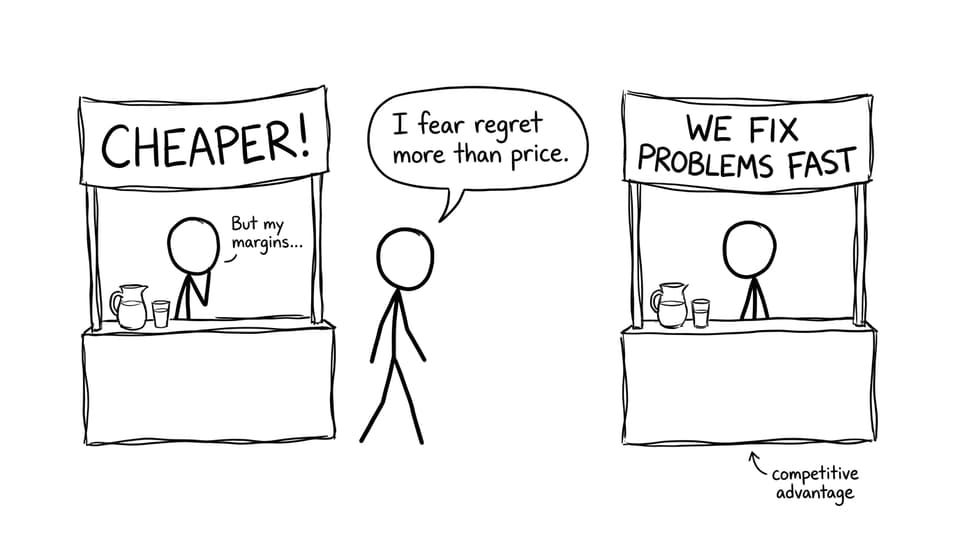
Creates competitive advantage (differentiation beyond price)
-
Produces feedback (improves product + marketing messages)
-
Increases customer confidence (reduces perceived risk)
For the syllabus angle, connect this to Unit 4 marketing content like the 7Ps (especially People and Process) using RevisionDojo’s resources on Unit 4: Marketing Management.
Customer service in IB Business Management: the “invisible promotion”
In IB Business Management, promotion is often taught as ads, PR, and sales promotions. But customer service is promotion that feels believable because it’s experienced directly.
When a business solves a problem quickly, communicates politely, and follows through, the customer learns something: this brand is reliable. That belief then influences future buying decisions far more than a slogan.
To revise the marketing foundations behind this, pair your notes with 4.1 Introduction to marketing Questionbank and the guided 4.1 Introduction to marketing Lessons on RevisionDojo.
Customer loyalty: retention is cheaper than acquisition
Marketing success isn’t only about attracting new customers; it’s also about keeping the ones you already paid to reach. Strong customer service builds loyalty by reducing frustration and increasing satisfaction.
In an IB Business Management exam, you can evaluate loyalty by explaining how repeat customers:
-
buy more frequently
-
cost less to retain than to acquire
-
are more forgiving after minor mistakes (if service recovery is strong)
If you want a clean set of examples and terminology, use RevisionDojo’s Customer Loyalty Programs notes and the IB Business Management glossary to sharpen definitions.
Word-of-mouth: the marketing channel you can’t fully control
Word-of-mouth is powerful because it’s trusted. People assume ads are biased; they assume friends are honest.
Customer service fuels word-of-mouth in two ways: it creates stories worth sharing (good or bad), and it gives customers a reason to recommend the brand confidently. In IB Business Management, link this to brand equity and relationship marketing: each positive interaction increases the probability of referral.
Brand reputation: service interactions become the brand
Brands don’t live in mission statements. They live in moments: the response time to a complaint, the tone of an email, the willingness to fix an issue.
From a marketing perspective, great customer service protects brand reputation. From an IB Business Management perspective, this is a strong evaluative point: a single poor service interaction can undo expensive promotional efforts because trust is hard to rebuild.
Competitive advantage: when products look the same
In many markets, competing products are similar. Price differences are small. Features overlap.
That’s when customer service becomes a differentiator. Customers often choose the business that feels safer to buy from, even if it costs slightly more. For Paper 2 style evaluation, you can argue that service-based differentiation is more sustainable than price cuts, because rivals can copy prices quickly but not culture.
Exam tip: link customer service to the 7Ps
A high-scoring IB Business Management response often connects customer service to marketing frameworks:
-
People: staff training, empowerment, communication skills
-
Process: complaint handling systems, refund policies, response time
-
Physical evidence: receipts, emails, service environment, professionalism
For structured revision, use RevisionDojo’s 4.5 The seven Ps of the marketing mix overview and the targeted 4.5 Questionbank practice. For deeper understanding, add 4.2 Marketing planning notes.
Conclusion: the marketing you can’t outsource
If you remember one idea for IB Business Management, make it this: customer service is where a business proves its marketing promises. It builds loyalty, triggers word-of-mouth, protects reputation, and differentiates the brand when products blur together.
When you revise this topic, don’t just memorize definitions. Practice applying them. Use RevisionDojo’s Study Notes, Flashcards, and Questionbank to lock in the theory, then level up with AI Chat for quick clarifications and Grading tools to refine exam-style evaluation. If you’re ramping up to finals, combine Mock Exams and Predicted Papers for timed practice, and use the Tutors and Coursework Library when you need a human perspective.
Marketing success looks loud. But it’s often built quietly, one customer, one response, one reputation at a time.


