

Break-even analysis sounds like a tidy diagram in a textbook. But in real businesses (and in IB Business Management exam questions), it’s closer to a flashlight in a dark room: it doesn’t solve the problem for you, but it shows you where you’re about to trip.
A manager planning next month’s output or next year’s expansion is really asking one question: How much do we need to sell before this decision stops being risky and starts being sensible? Break-even analysis gives that question a number.
What break-even analysis means in IB Business Management
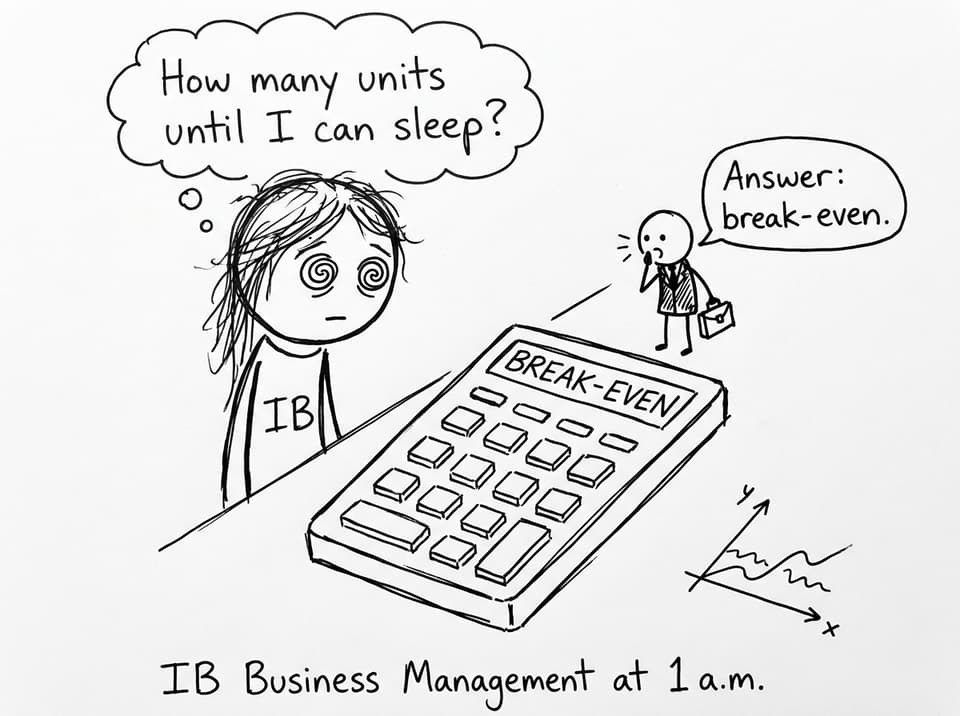
In IB Business Management, break-even analysis identifies the output level where total revenue equals total costs. At that point, the business makes no profit and no loss.
If you want to tighten your exam language and calculations, use RevisionDojo’s syllabus-aligned resources for the full subtopic: IB Business Management 5.5 Break-even Analysis.
Quick checklist for exam-ready break-even planning
-
Know the goal: find the break-even output (or interpret it on a chart).
-
Connect it to decisions: sales targets, pricing, investment, budgeting, risk.
-
Mention assumptions and limits (a favorite evaluation angle in IB Business Management).
-
Use context from the case study: market demand, capacity, competition.
How break-even analysis helps businesses plan for the future
It makes sales targets realistic (not motivational)
Future plans often fail because targets are built on optimism instead of cost structure. Break-even analysis forces honesty: it tells managers the minimum output needed just to survive.
In exam terms, this is where you link the break-even point to feasibility. If demand forecasts don’t comfortably exceed break-even, the plan is fragile. To practice building that chain of reasoning, try exam-style prompts in the 5.5 Break-even Analysis Questionbank.
It sharpens pricing decisions
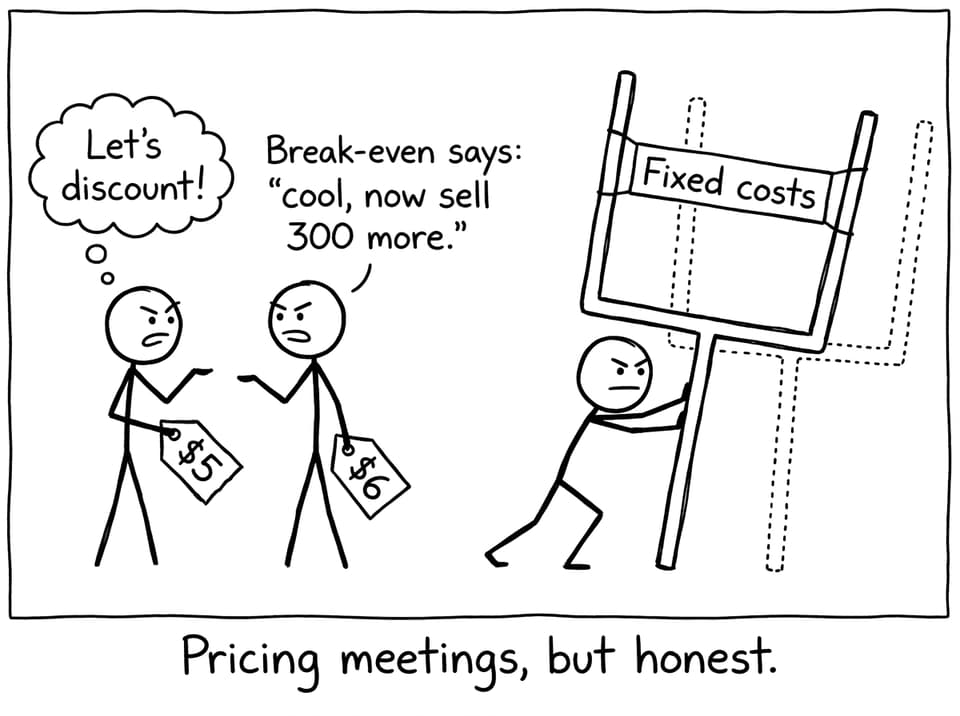
Price changes feel small until you see what they do to the break-even point. A discount might boost demand, but it can also increase the units needed to cover fixed costs. Break-even analysis helps managers compare options: raise price, cut variable costs, or accept a higher risk level.
RevisionDojo’s worked explanations help you describe these effects clearly (especially the “so what?” in Paper responses): 5.5.2 Aspects of a Break-Even Chart Notes.
It tests whether an investment is bold or reckless
New machinery, a product launch, a bigger store: these decisions usually increase fixed costs (and sometimes reduce variable costs). Break-even analysis turns the decision into a planning question: How many extra units must we sell to justify this?
If the new break-even output exceeds likely demand, the investment becomes a strategic risk. That’s a clean evaluation point for IB Business Management answers.
It improves budgeting and cost control
Plans are built on costs that move: rent rises, wages adjust, raw materials spike. Break-even analysis shows how those changes shift the break-even point, prompting managers to negotiate, redesign processes, or adjust output before losses appear.
To add balanced evaluation, pair calculations with limitations: 5.5.4 Limitations of Break-Even Analysis.
It prepares the business for downturns
When the economy slows, break-even becomes a warning system. Managers can compare expected sales to break-even and act early: reduce discretionary spending, change production levels, or revise forecasts.
That’s also how you can weave “margin of safety” thinking into IB Business Management responses (even when it’s not explicitly asked).
How to use this in IB Business Management exam answers
A strong response usually follows this rhythm:
-
State what break-even analysis shows.
-
Apply it to the decision (price, investment, target, budget).
-
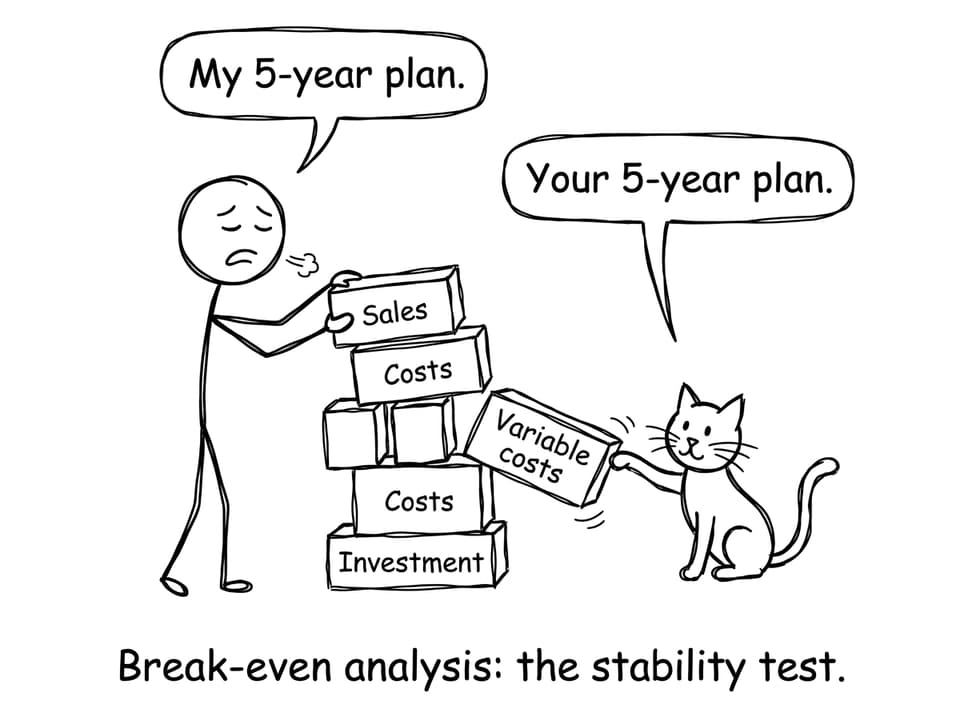
Evaluate with a limitation (assumes constant costs, sales may not be predictable, linear revenue/cost lines, etc.).
If you’re revising beyond one topic, the fastest way to organize your prep is the hub: IB Business Management Resources and Unit 5 Operations Management.
Conclusion: your planning sentence for IB Business Management
Break-even analysis helps businesses plan for the future by turning big decisions into one grounded question: What must be true for this plan to work financially? In IB Business Management, that clarity strengthens sales targets, pricing choices, investment decisions, and budgets.
If you want to turn this into marks, revise the full 5.5 topic with RevisionDojo’s Study Notes, drill calculations in the Questionbank, lock in definitions with Flashcards, and use AI Chat and Grading tools to improve your written evaluation. Start here: IB Business Management 5.5 Break-even Analysis.