When a “profitable” business still panics on payday
A business can look successful on paper and still feel broke in real life. Imagine a company that’s selling well, posting profits, and celebrating growth… then Friday arrives and payroll is due. Suppliers want payment. Rent hits. The bank balance says “good luck.” That gap between profit and cash is exactly why IB Business Management cares so much about liquidity.
Liquidity ratios are the quiet early-warning system in IB Business Management. They don’t just measure numbers, they measure time: Can this business survive the next few weeks without missing payments? And in exams, liquidity ratio analysis is often the difference between a generic answer and a truly evaluative one.
Liquidity ratios checklist (what examiners expect)
For IB Business Management, be ready to do four things quickly:
-
Define liquidity: ability to meet short-term obligations
-
Calculate the current ratio and acid-test (quick) ratio
-
Interpret what “high” or “low” might imply
-
Recommend realistic actions to improve liquidity (and evaluate trade-offs)
If you want the syllabus-aligned version of this topic, start with 3.5 Profitability and liquidity ratio analysis and then go deeper into 3.5.3 Liquidity Ratios.
IB Business Management liquidity ratios: the two you must know
Current ratio (the “can we cover our bills?” test)
The current ratio compares current assets (cash, receivables, inventory) to current liabilities (debts due soon).
-
Formula: Current Ratio = Current Assets / Current Liabilities
-
Interpretation: A ratio above 1 usually suggests the business can cover short-term debts.
In IB Business Management, your evaluation matters: a current ratio that’s too low signals cash pressure, but a current ratio that’s too high might suggest inefficient use of resources (idle cash, excess inventory).
For quick formula revision, bookmark the IB Business Management Data Booklet (formula reference).
Acid-test (quick) ratio (the “what if inventory doesn’t sell?” test)
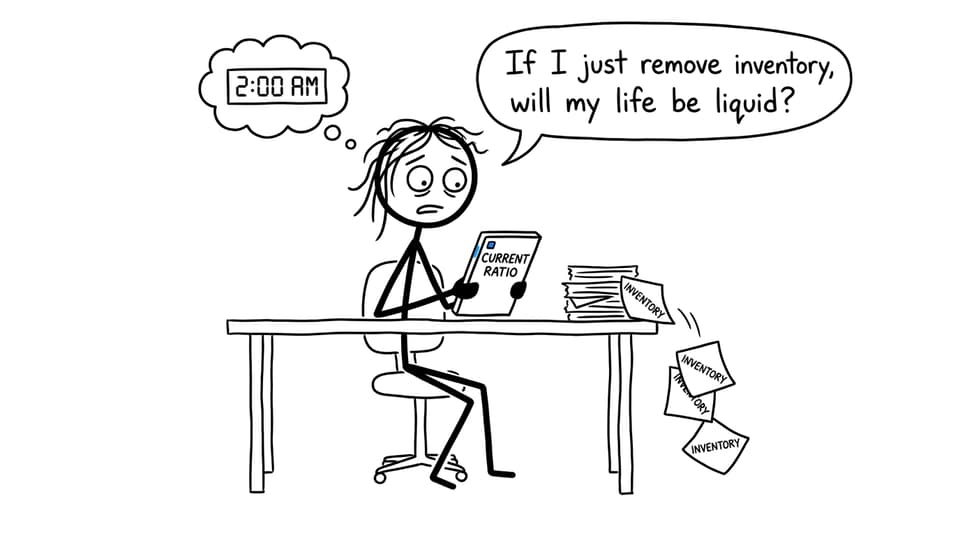
The acid-test ratio is stricter because it removes inventory (stock) from current assets.
-
Formula: Acid-Test Ratio = (Current Assets - Inventory) / Current Liabilities
-
Why it helps: Inventory is not always easily convertible into cash, especially during slow demand or disruption.
A business can look safe with a decent current ratio but still be fragile if its acid-test is weak. In IB Business Management, that’s a classic point for analysis: “liquidity depends on how quickly assets can become cash, not just on their accounting value.”

How liquidity ratios help businesses avoid financial problems
Liquidity ratios help businesses avoid financial problems because they turn “something feels off” into measurable evidence. When ratios weaken over time, managers can intervene early.
In IB Business Management, the most exam-friendly “actions” tend to fall into three buckets:
-
Speed up cash inflows: tighter credit control, faster receivables collection
-
Control cash outflows: negotiate longer supplier credit terms, delay non-essential spending
-
Reduce cash trapped in working capital: better inventory management, fewer slow-moving products
RevisionDojo’s 3.5.4 Strategies to Improve Liquidity Ratios notes and 3.5.4 flashcards are built for exactly these “recommend and evaluate” moments.
Liquidity ratios also shape bigger decisions: whether to expand, buy equipment, or take on short-term finance. If liquidity is weak, the business may pause growth not because the idea is bad, but because timing is dangerous.
To connect this to the wider course, see Unit 3: Financial Management and the related Unit 3 notes.
Why lenders and investors care (and why you should mention it)
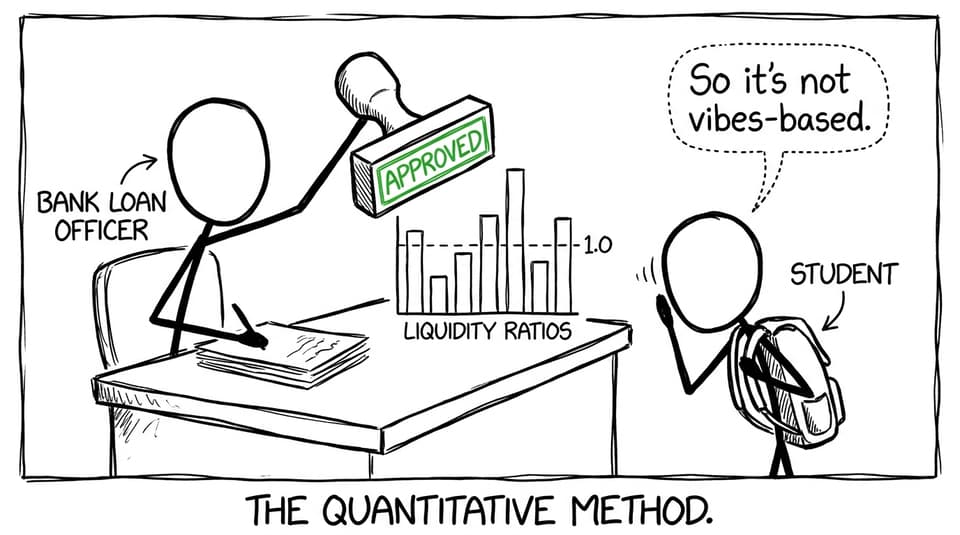
Banks don’t lend based on optimism. They lend based on repayment ability. In IB Business Management, a strong liquidity position builds credibility with lenders and can reduce perceived risk.
That’s also why a ratio analysis question can earn extra marks when you link it to stakeholder relationships: suppliers, employees, and banks all respond to whether a firm pays on time.
A strong ending you can use in exam conclusions
Liquidity ratios help businesses avoid financial problems because they spot cash strain early, before it becomes a crisis. In IB Business Management, the current ratio tells you whether short-term obligations are covered, while the acid-test ratio checks whether that safety depends too heavily on inventory. If you can calculate, interpret, and recommend realistic improvements, you’re writing the kind of answer examiners trust.
To revise this fast, use RevisionDojo’s 3.5.3 Liquidity Ratios notes, drill definitions with the 3.5 topic flashcards, and practice exam-style application in the 3.5 Questionbank. RevisionDojo also supports your full workflow with Study Notes, Flashcards, AI Chat, Grading tools, Predicted Papers, Mock Exams, a Coursework Library, and Tutors, so your IB Business Management finance answers stay calm, structured, and high-scoring.

