


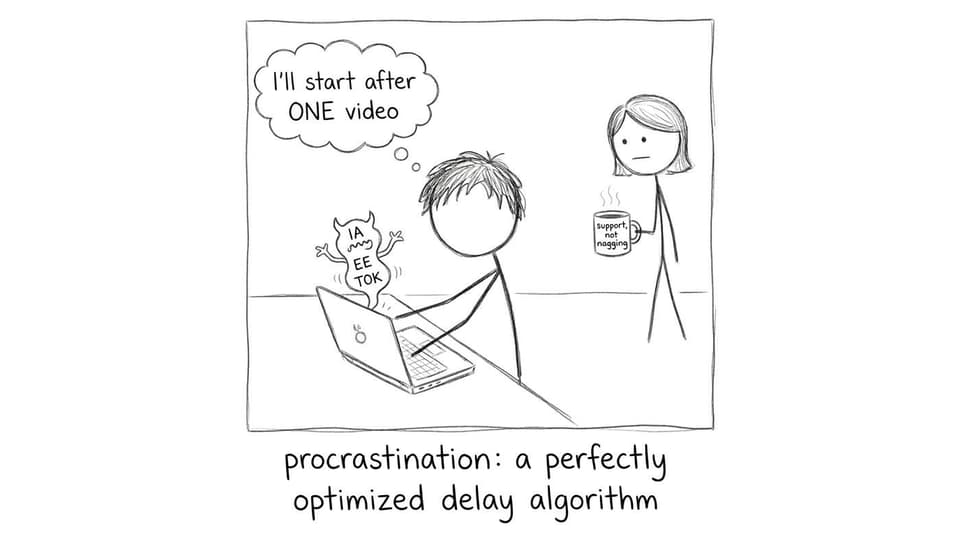
Procrastination in IB rarely looks like a big, dramatic choice. It looks like a laptop open on the bed, a tab for “notes” beside a tab for “just one video,” and a student who genuinely wants to do well but can’t seem to start.
If you’re a parent watching this from the doorway, it’s tempting to push harder. Yet in IB, pushing often increases the very stress that creates procrastination. What helps most is a calmer approach: reduce friction, shrink the first step, and build a routine where starting feels safe.
A quick parent checklist for IB procrastination
Use this as a simple reset when IB avoidance shows up:
-
Name the real problem (overwhelm, perfectionism, confusion, burnout).
-
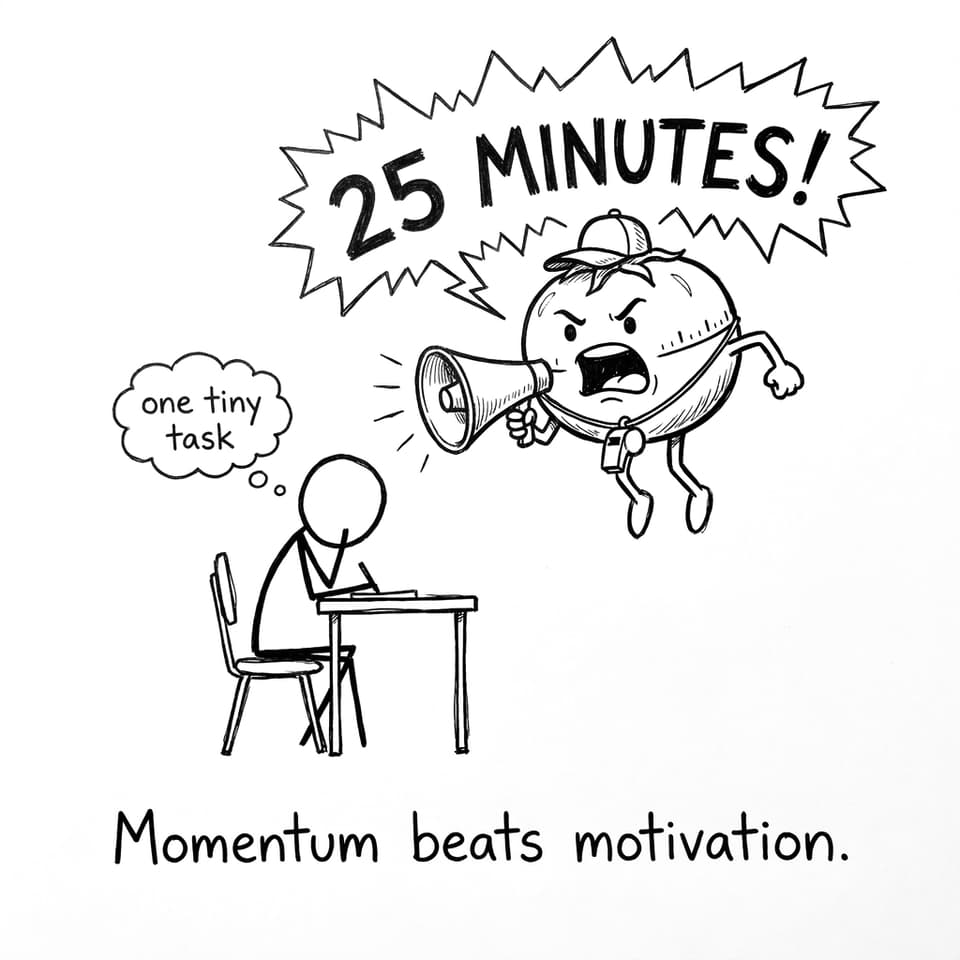
Make the first step “too small to fail” (2-10 minutes).
-
Turn “study” into one action (questions, one paragraph, one diagram).
-
Use timed sprints (25 minutes work, 5 minutes break).
-
Praise starting and reviewing mistakes, not just final grades.
-
Keep ownership with your child: you support the system, not the work.
Why IB students procrastinate (it’s usually not laziness)
In IB, procrastination is often a rational response to uncertainty. A student delays because starting means confronting confusing content, a scary rubric, or the possibility of not being “good enough.” Three common drivers show up again and again:
Overwhelm from too many moving parts
Between tests, IAs, TOK, and long-term deadlines, IB can feel like a never-ending queue. When the brain can’t see a finish line, it chooses relief instead.
Perfectionism that disguises itself as “planning”
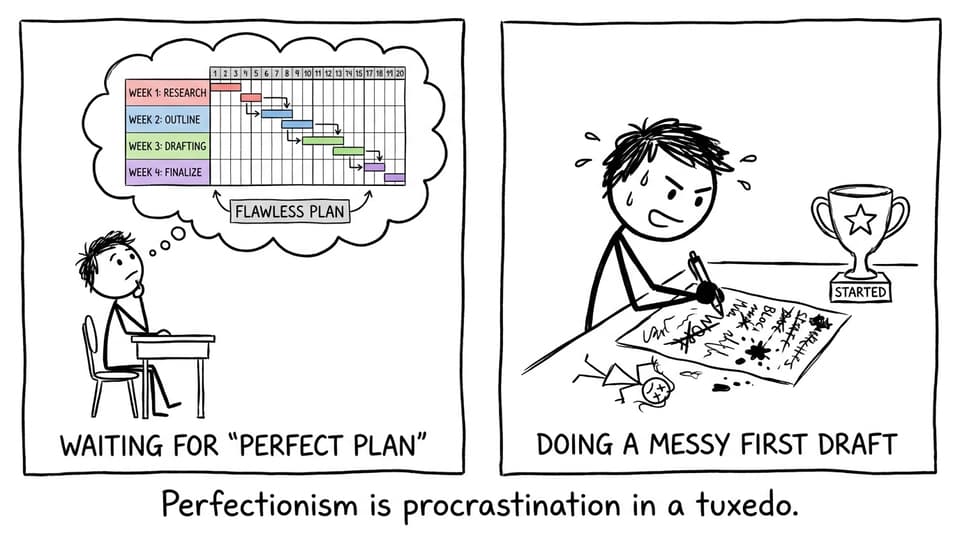
Some students spend hours organizing notes, rewriting schedules, or waiting for the perfect mood. It feels productive, but it avoids the only thing that creates confidence: practice.
Low energy and burnout
Sleep debt and stress make everything feel heavier. In IB, procrastination sometimes means “I’m running out of fuel.” If this is the pattern, look at recovery first.
If your child is in that exhausted zone, this may help: IB Burnout Is Real: How to Fix It Fast.
How parents can help: practical strategies that work in IB
Create a “start ritual” that’s smaller than motivation
The goal is not a three-hour session. The goal is a beginning.
Try this script: “Let’s do a 12-minute start. When the timer ends, you can stop or continue.” Starting becomes a choice, not a prison.
A good start ritual in IB is “notes for clarity, then questions for proof.” RevisionDojo makes that loop easy with Study Notes, Flashcards, and the Questionbank.
Helpful starting points:
-
Questionbank for quick, targeted practice
-
Flashcards for low-effort daily recall
Replace time goals with action goals
Instead of “study Biology for two hours,” use “do 12 questions on one subtopic, review mistakes, write 2 correction rules.” IB rewards precise outputs.
If your child needs a clear method, share: How to Stop Procrastinating in IB (Without Burning Out).
Use feedback loops to reduce fear
Procrastination grows when students don’t know if they’re improving. Fast feedback lowers anxiety.
In RevisionDojo, the loop can be:
-
attempt a short Questionbank set
-
check feedback
-
ask AI Chat one specific question (“Why did this mark get lost?”)
-
turn mistakes into Flashcards
For more structure, see: Why You Procrastinate IB (And Fix It Fast).
Protect attention, don’t police it
You don’t need to become the phone police. But you can help design the environment.
A simple house rule during IB exam season: phone outside the room for one sprint. One tab open. Timer running. Then a real break.
This pairs well with: How to Study for IB Exams Without Burning Out.
What parents should avoid (even if it “works” once)
-
Nagging as a default: it trains your child to associate IB with shame, not agency.
-
Taking over the plan: they might comply, but they won’t learn the skill.
-
Praising only outcomes: it feeds perfectionism, which fuels procrastination.
-
Open-ended “just do more” advice: vague demands increase overwhelm.
If your child is truly behind, this article helps shift into calm triage: From Failing to Passing IB in 1 Month.
A calm ending: help them start, then let the system carry them
In IB, the students who win aren’t the ones who feel motivated every day. They’re the ones who can start small, get feedback fast, and repeat a simple loop until confidence shows up.
If your child is stuck in procrastination, make tonight a “tiny win” night: one short sprint, one set of questions, one review of mistakes. Then point them toward RevisionDojo, where Questionbank, Study Notes, Flashcards, AI Chat, Grading tools, Predicted Papers, Mock Exams, Coursework Library, and Tutors turn effort into visible progress in IB, without the drama.