


If you’ve ever watched a price jump overnight (or a job market suddenly feel “impossible”), you’ve seen the quiet truth at the heart of IB Business Management: the economy isn’t a machine run by one lever. It’s a crowd scene. Millions of tiny decisions, by customers, workers, managers, and investors, add up to big macro outcomes.
In IB Business Management, this matters because exam questions love the bridge between micro choices and economy-wide results. The best answers show how a decision travels: from an individual or firm, into markets, and finally into growth, employment, and living standards.
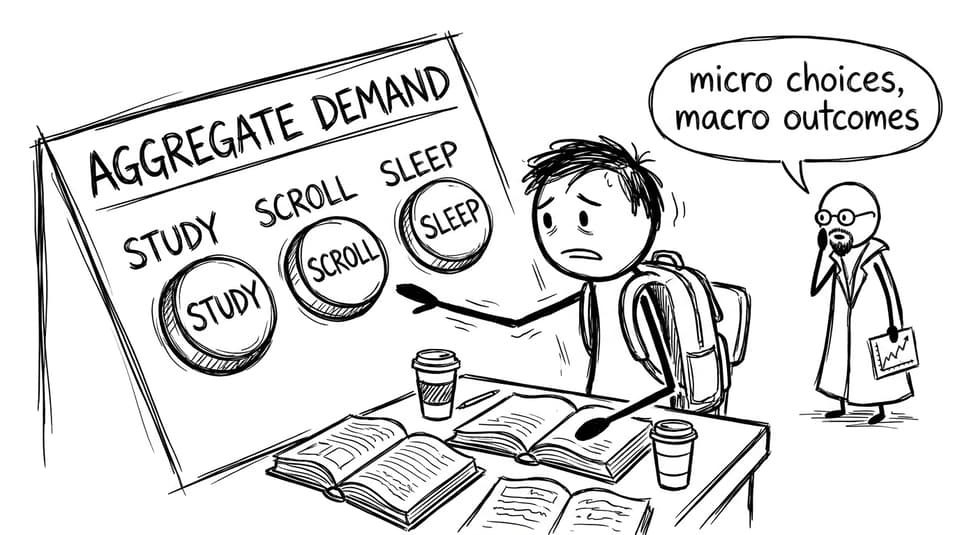
A quick checklist: micro choices to macro outcomes
-
Consumption choices shift demand and influence prices and output.
-
Production choices change supply, productivity, and resource allocation.
-
Investment choices shape long-run capacity and competitiveness.
-
Work and education choices reshape labour supply and wages.
-
Incentives (prices, wages, taxes) steer behaviour.
-
Distribution choices affect inequality and social stability.
If you want a home base for the syllabus connections, start at the IB Business Management subject hub.
How individual choices move markets (and then the economy)
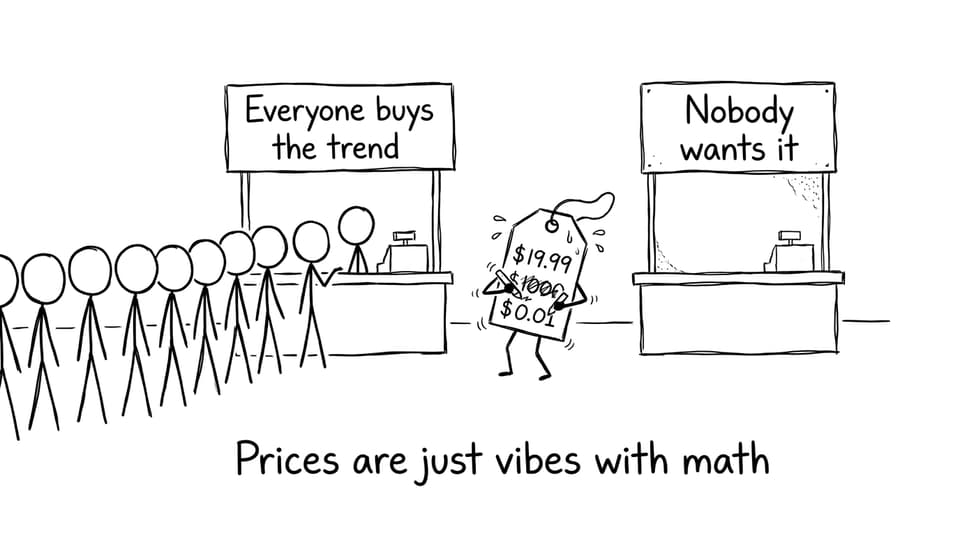
In IB Business Management, individuals are not “background characters.” They are demand. When households decide to buy more of something, firms notice quickly. Higher demand tends to push prices up and encourages firms to expand output, which can increase hiring and incomes.
These decisions also reshape entire industries. When preferences swing toward ethical products or cheaper substitutes, firms reallocate resources, marketing budgets, supplier contracts, even factory capacity. If you also study economics, RevisionDojo’s explanation of supply and demand essentials helps you describe that chain clearly.
How firm decisions shape productivity, jobs, and growth
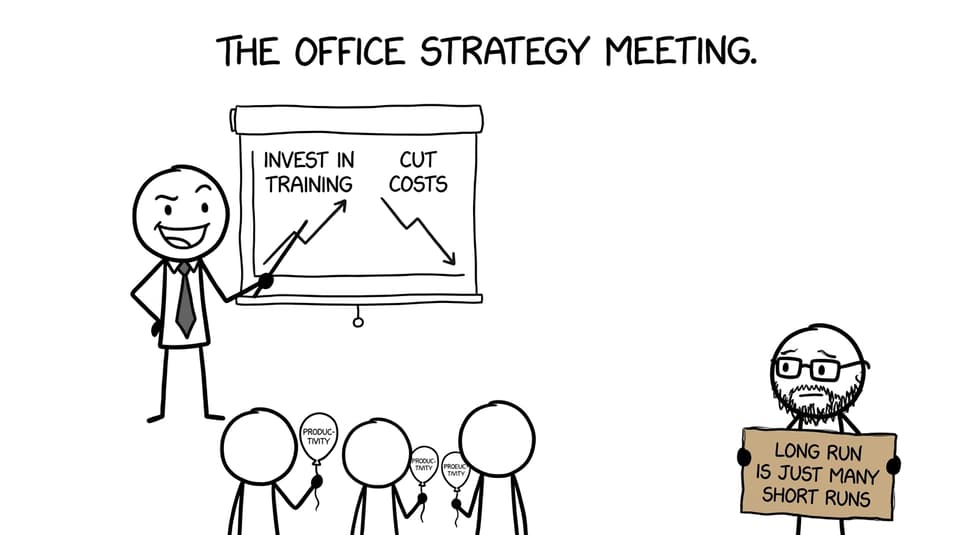
Firms decide what to produce, how to produce, and what to prioritise. In IB Business Management, those choices map directly onto productivity and resource allocation.
A firm that improves operations methods or adopts better technology can produce more with the same inputs. That can lower costs, raise competitiveness, and expand output over time. You can reinforce operations-language with the Operations methods topic page.
Investment is the long-run amplifier. When firms spend on training, capital equipment, or process innovation, the economy’s productive capacity rises. If you want a finance-specific angle for essays, see 3.1 Introduction to Finance and the deeper, exam-useful 3.8 Investment appraisal.
Incentives, inequality, and the big macro picture
Individuals and firms respond to incentives because incentives change trade-offs. Higher wages pull workers into certain sectors; higher prices attract more supply; tax relief can unlock investment. The result is that “policy” becomes real only when it changes behaviour.
Those choices also shape inequality. Households differ in saving and investing habits; firms differ in wage policies and hiring strategies. Over time, distribution affects social stability, consumer spending power, and even long-run growth.
Macro outcomes are the scoreboard: inflation, unemployment, and GDP growth. When households and firms spend more, total demand rises, often boosting output and jobs in the short term, but sometimes adding inflation pressure. When both pull back, recessions can follow.
How to turn this into exam marks (fast)
Use a simple IB Business Management writing habit: Decisiontomechanismtooutcometoevaluation.
To practise it under exam pressure, combine RevisionDojo’s Business Management Predicted Papers with targeted drills from the platform’s Questionbank and feedback tools on the RevisionDojo homepage. If Paper 1 terminology is slowing you down, the article on Abraca ABC terminology for IB Business Management is a surprisingly efficient fix.
Conclusion: the economy is a story of decisions
The simplest way to remember this for IB Business Management is that macro outcomes are just micro choices stacked on top of each other. Consumers vote with spending, workers vote with skills, and firms vote with investment and hiring. When you can trace that chain clearly, your answers become more realistic, more evaluative, and more convincing.
Build that habit with RevisionDojo’s Study Notes, Flashcards, AI Chat, Grading tools, Questionbank practice, Predicted Papers, Mock Exams, Coursework Library, and Tutors, all linked from the IB Business Management resources hub.