

You can feel it in your stomach before you can explain it in a paragraph: a slope that looks “fine” right up until it isn’t. In IB Geography, mass movement is one of those topics that punishes vague answers. Examiners want control measures tied to triggers (especially water), and they want you to weigh what works, where, and why.
This guide breaks down how the risk of mass movement can be reduced, using the same logic you’ll need in Option D essays: reduce the likelihood of slope failure, reduce exposure, and reduce loss when failure happens.
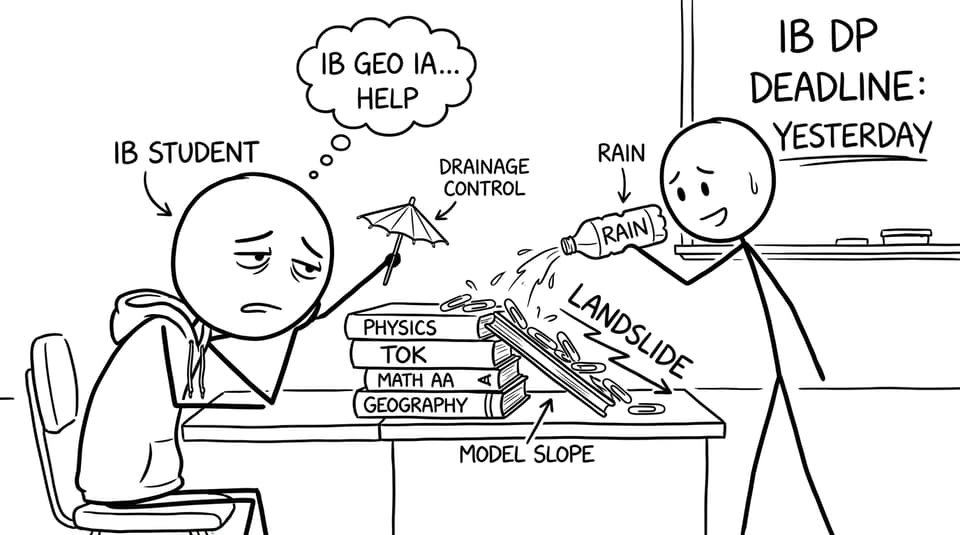
Quick checklist for an IB Geography answer
-
Stabilise the slope (engineering)
-
Remove water from the system (drainage)
-
Increase cohesion (vegetation)
-
Reduce exposure (land-use planning)
-
Detect change and act fast (monitoring and early warning)
-
Build awareness (education and preparedness)
For the core processes and definitions, revise mass movement types first, then move to management: Main Types of Mass Movement and D.1.4 Mass Movements Notes.
Slope stabilisation: make failure harder
Slope stabilisation reduces the chance that driving forces overwhelm resisting forces. In IB Geography, you’ll score higher when you name techniques and connect them to mechanics.
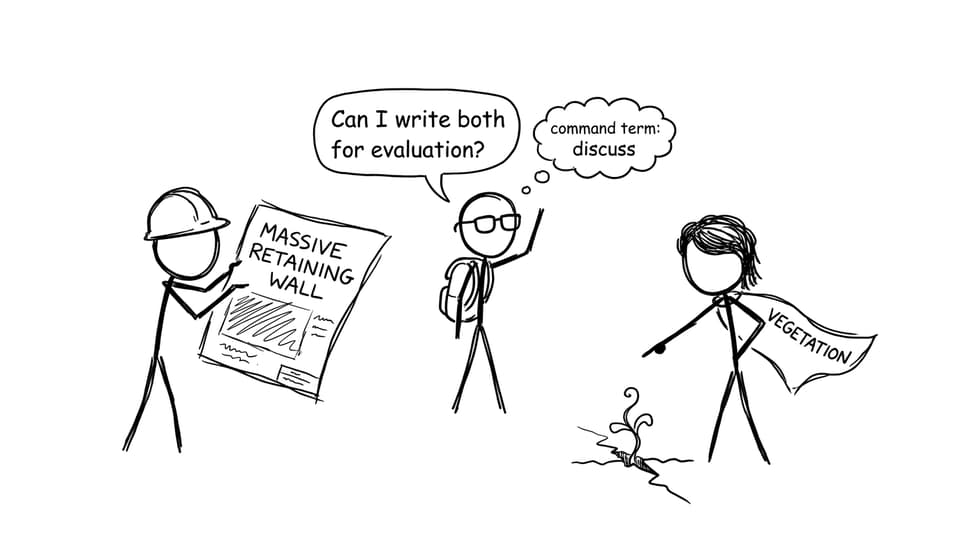
Common examples include retaining walls, rock bolts, and netting to physically support unstable material. Terracing lowers slope angle, which reduces downslope force and can slow runoff.
If you want to connect this to the wider hazard-management toolkit (a great evaluation move), link it to pre-event planning: D.4.3 Pre-Event Management Strategies Notes.
Drainage control: treat water like the main suspect
Water is a major trigger because it increases weight and raises pore water pressure, lowering friction. So drainage is often the highest-impact intervention.
Methods include drainage pipes, channels, and permeable surfaces that move water away before saturation builds. This is especially important in high-rainfall climates or clay-rich soils.
To strengthen your explanation, revise the trigger side of the story too: What Factors Trigger Mass Movement Events?.
Vegetation management: cheap, slow, and surprisingly powerful
Vegetation increases slope stability by binding soil with roots (cohesion), intercepting rainfall, and reducing surface runoff. Reforestation can meaningfully reduce risk, but it takes time and depends on land-use pressure.
In IB Geography, this is a good place to evaluate: vegetation is often more realistic for lower-income contexts, while high-income contexts may combine it with heavy engineering.
Land-use planning: reduce exposure, not just hazard
Sometimes the smartest solution is not to “fight” the slope at all. Hazard mapping and zoning can restrict development on steep or unstable land, lowering exposure.
This fits neatly with the risk framing you’ll use across Option D: hazard risk is shaped by vulnerability and capacity to cope as well as the physical event.
Explore the wider Option D pathway here: IB Geography Option D Geophysical Hazards and for synthesis links, D.5.1 Spatial Interactions and Hazard Risk Notes.
Monitoring and early warning: accept you can’t prevent everything
Monitoring doesn’t stop mass movement, but it buys time. Tools like inclinometers, ground sensors, and rainfall thresholds help authorities issue warnings, close roads, and evacuate.
This connects well to broader hazard response framing: Responses to Geophysical Hazards.

Exam tip: how to turn this into marks fast
In IB Geography, the best evaluation isn’t fancy vocabulary. It’s matching strategy to context:
-
Steep, road-cut mountain slopes might justify expensive engineering.
-
Rural hillslopes under deforestation pressure may benefit most from vegetation plus planning.
-
Places with intense rainfall need drainage and monitoring because triggers are frequent.
To practise writing this under time pressure, use RevisionDojo’s IB Geography Questionbank and reinforce definitions with Option D Flashcards.
Closing: turn control measures into confident marks
Mass movement risk reduction in IB Geography is really the art of being specific: stabilise slopes, manage water, use vegetation wisely, plan land use, and monitor for change. If you can explain why each strategy works and where it works best, you’ll write answers that feel inevitable.
When you’re ready to practise, RevisionDojo pulls everything together in one place: Study Notes, Flashcards, AI Chat, Questionbank practice, Grading tools, Predicted Papers, Mock Exams, a Coursework Library, and Tutors to help you turn this topic into an exam-strength response.