If you have ever started a run feeling fine, then suddenly noticed your breathing turn loud and your skin get hot, you have witnessed IB SEHS in real time. Not as a textbook definition, but as a quiet conversation inside your body: signals, adjustments, and tiny course-corrections that keep you moving without tipping into chaos.
That conversation is built on feedback mechanisms. In IB SEHS, they are the reason you can sprint, settle into pace, and still stay inside safe limits. They also happen to be a high-yield exam topic because they connect homeostasis, nervous system control, movement coordination, fatigue, and performance.
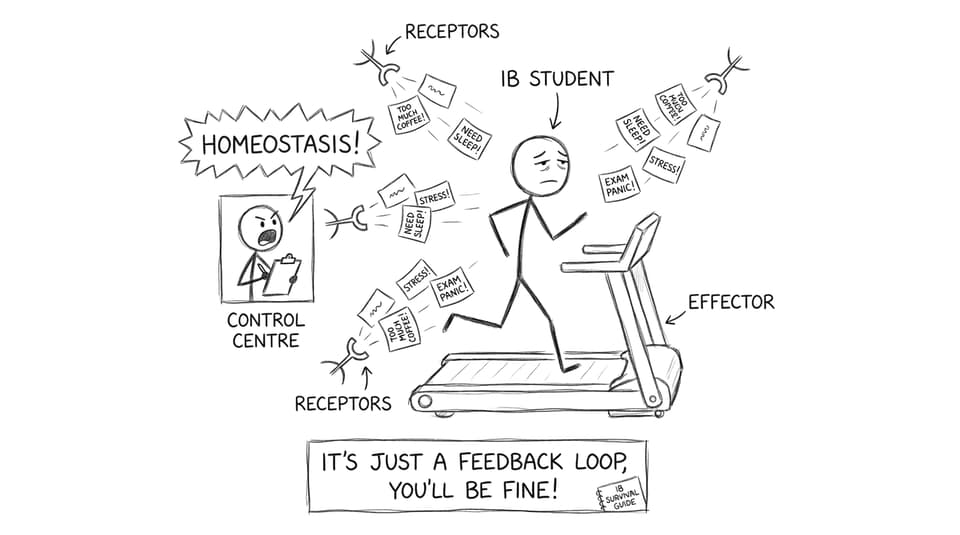
IB student vs homeostasis control centre
IB SEHS quick checklist: what examiners want
Use this mini-structure whenever you explain feedback mechanisms in IB SEHS:
Name the variable changing (temperature, CO₂, muscle tension, etc.)
Identify the receptor detecting change
State the control centre (usually CNS, e.g., hypothalamus/brainstem)
Describe the effector response (sweating, ventilation, altered muscle contraction)
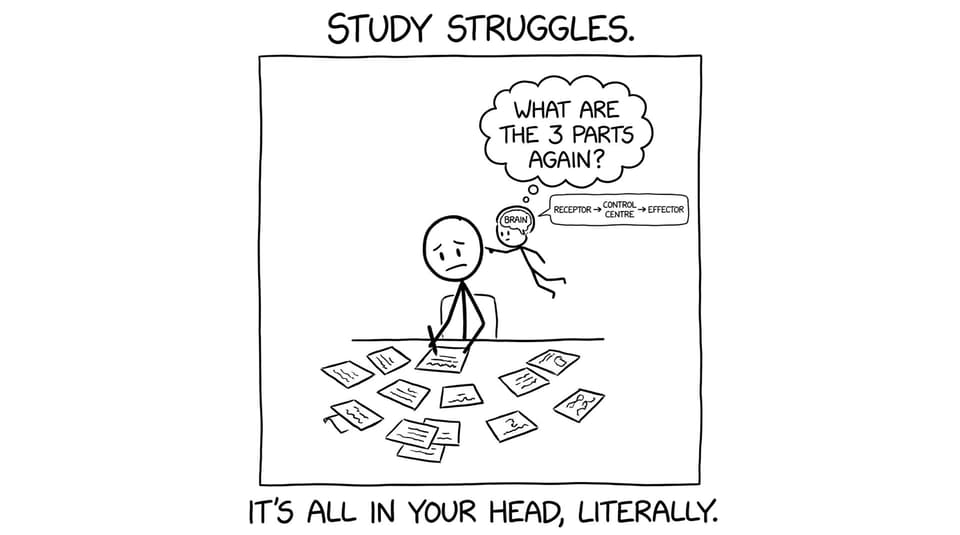
A feedback mechanism is a control loop with three moving parts:
Receptors detect a change (stimulus)
A control centre compares it to a set point and decides what to do
Effectors create a response that adjusts the condition
In IB SEHS, you will usually anchor the control centre in the central nervous system. That is why this topic pairs naturally with inter-system communication. If you mix up endocrine vs nervous control, you can lose marks quickly, so revise the foundations in A.1.1 Inter-system communication Notes.
Negative feedback in exercise (the one you must master for IB SEHS)
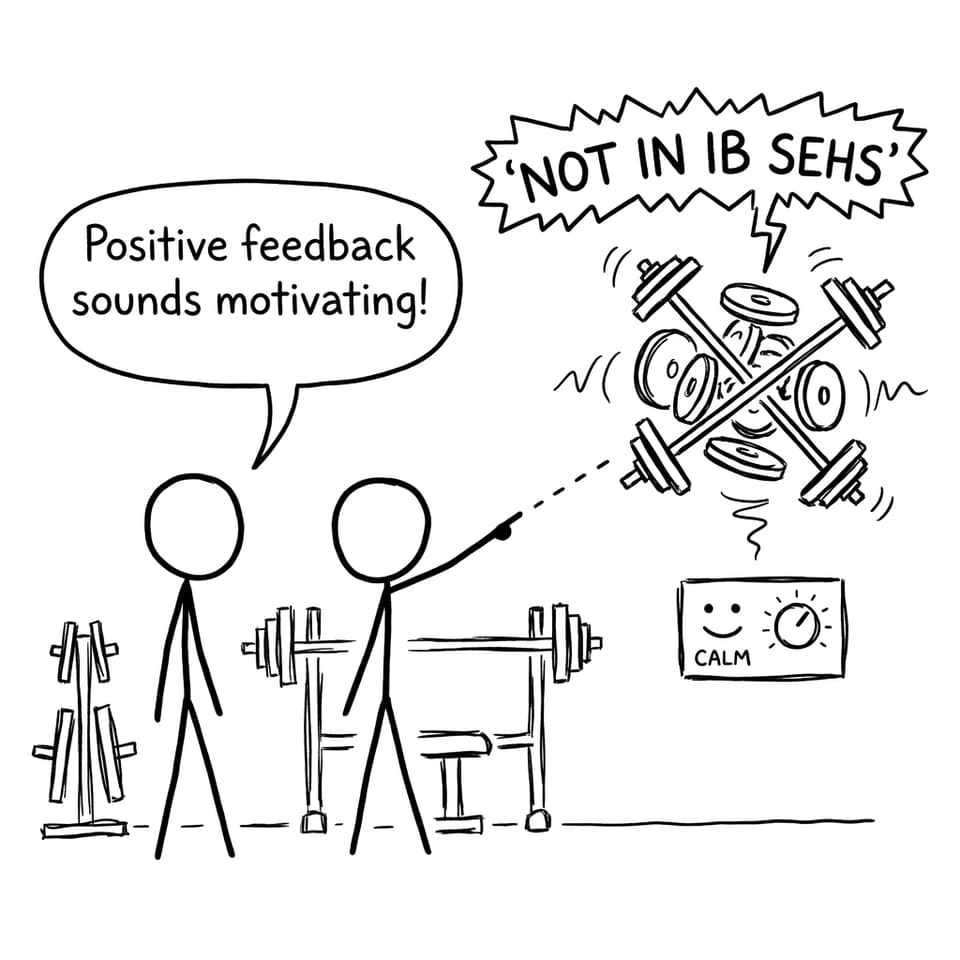
Most regulation during exercise is negative feedback: the body detects deviation, then acts to reduce it.
Thermoregulation example
When core temperature rises during exercise, receptors and the hypothalamus coordinate effectors like sweating and vasodilation. The goal is not to stop temperature from rising at all, but to prevent dangerous drift.
Blood pH / CO₂ example
As exercise intensity increases, CO₂ production rises. Chemoreceptors and respiratory control centres respond by increasing ventilation to expel CO₂ and stabilise blood pH. This is one of those IB SEHS explanations that earns marks because it is sequential and applied.
Feedback and movement control (why technique changes when you fatigue)
Feedback mechanisms are not only about internal conditions. They also shape movement quality.
Receptors in muscles and tendons provide ongoing information about muscle length, tension, and joint position. The CNS uses that stream of input to refine motor output. When fatigue builds, that stream can get noisier or slower, and the result is familiar: timing slips, coordination drops, and technique becomes less efficient.
If you want to connect this to skill learning answers, pair your physiology explanation with the performance-side concept of feedback in practice using Feedback and Skill Improvement.
How to turn this into a 6-mark IB SEHS answer
A strong IB SEHS response is a story told in the right order.
Try this template:
Define feedback mechanisms and link to homeostasis.
State the three components (receptor, control centre, effector).
Choose one exercise example (thermoregulation or CO₂/pH is safest).
Bringing it home: revise IB SEHS feedback mechanisms with less stress
The best part about IB SEHS is that the theory is always happening inside you. Feedback mechanisms are not random facts to memorise; they are the logic behind why your body stays stable while you move.
When you are ready to make it exam-proof, RevisionDojo is built for it: use Study Notes to lock the sequence, Flashcards for the three-part loop, and the Questionbank for exam-style application. Then sharpen under pressure with Mock Exams, Predicted Papers, and Grading tools that show you exactly where marks are won or lost. If you need a human plan, the Tutors and the AI Chat help you turn confusing processes into clear, repeatable answers.