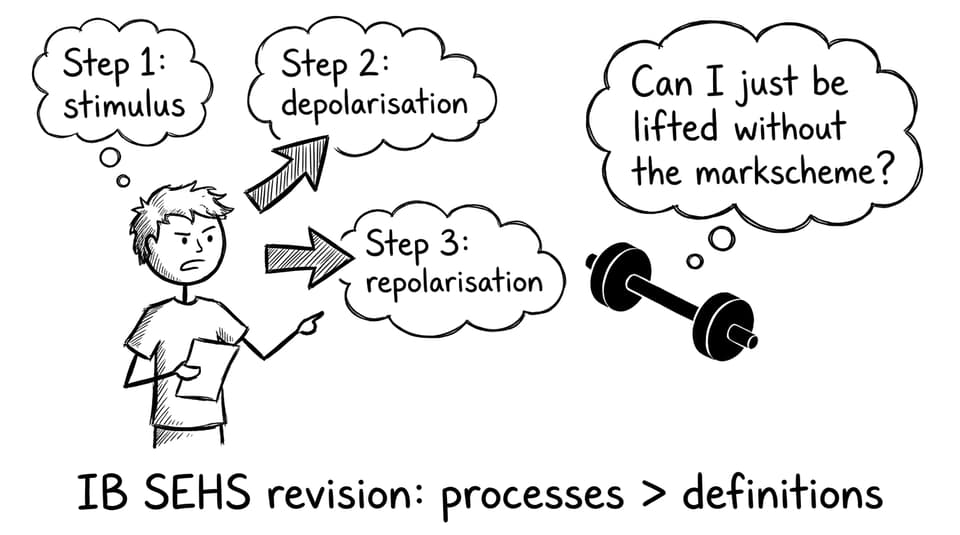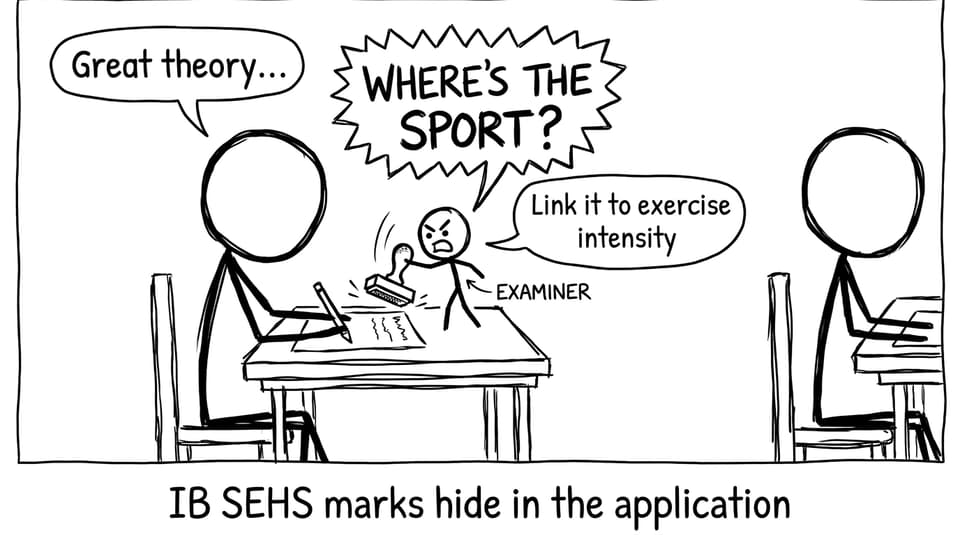


Some topics feel like they should be easy until you try to explain them under time pressure.
Communication in IB SEHS is that kind of topic. You know the words -- nervous system, endocrine system, action potential -- but in an exam, marks disappear when your explanation loses sequence, mixes pathways, or forgets to link back to exercise.
This guide shows how to revise IB SEHS communication in a way that stays calm, structured, and highly exam-ready.
IB SEHS communication quick checklist
Before you do anything fancy, make sure you can do these five things consistently in IB SEHS:
-
Distinguish nervous vs endocrine clearly (speed, duration, transmission)
-
Describe key processes in the correct order (no missing steps)
-
Use correct terminology (neuron types, synapse/NMJ language, hormones)
-
Apply every explanation to exercise, movement, or performance
-
Practise exam-style questions and self-mark with markscheme phrasing
A strong starting point is the A.1 Communication hub, which keeps notes, lessons, and practice aligned to the syllabus.
Start with the two systems (and stop blending them)
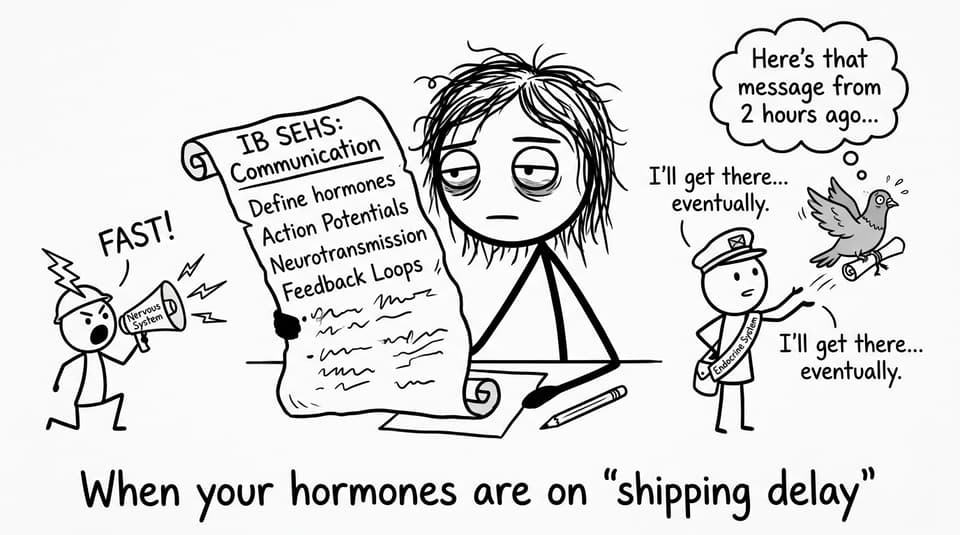
Most lost marks in IB SEHS communication come from one quiet mistake: treating the nervous system and endocrine system as interchangeable.
Revise them side-by-side:
-
The nervous system uses electrical impulses along neurons, then chemical neurotransmitters at synapses. It is fast and short-lived.