


In the week before your IB exams, you can feel it in the classroom.
Not the panic (that’s always there). Something subtler.
A teacher pauses after a lesson and says, “That explanation didn’t land. Let’s try a different angle tomorrow.” Another teacher down the hall is doing the same thing. They compare notes at lunch. Someone brings a few anonymized student responses. A pattern appears.
That moment is quiet, but it matters. In IB, the fastest improvements often come from the adults treating learning like a shared investigation, not a performance. When teachers run collaborative case studies, you get clearer explanations, sharper feedback, and fewer “Wait… what does the question want?” surprises.
This article shows how collaborative case studies fuel teacher inquiry, and how you (as an IB student preparing for exams) can benefit from it immediately.
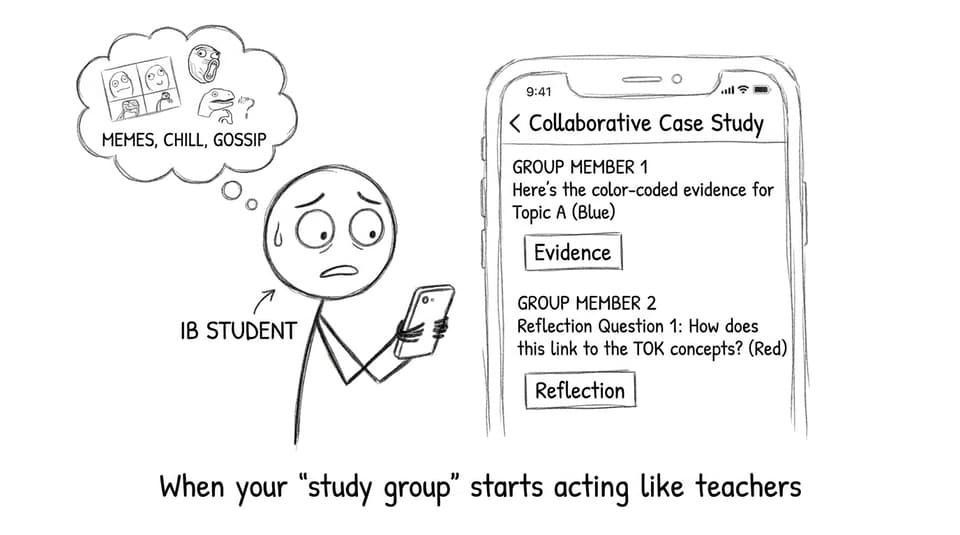
Quick checklist: what great IB teacher inquiry looks like
If your school is doing collaborative case studies well, you’ll notice these signals:
-
Teachers form small inquiry teams (often by subject or shared challenge)
-
They pick one specific focus question tied to IB assessment or learning
-
They collect evidence (student work, common errors, reflections, mini-assessments)
-
They meet briefly to interpret results, not to blame anyone
-
They change one thing, then check if it worked
-
Insights get shared across the department so your cohort benefits
For students, this usually shows up as better-aligned revision tasks, clearer success criteria, and feedback that sounds more like the mark scheme.
Why teacher inquiry matters for IB students preparing for exams
IB rewards a particular kind of thinking: accurate knowledge, yes, but also interpretation, structure, and command-term precision. Teachers who inquire into their practice tend to teach those “hidden mechanics” more explicitly.
Collaborative teacher inquiry matters because it closes three common IB gaps:
Misread questions
In IB, two students can know the same content and earn different marks because one answers the command term better. When teachers run case studies on “Where do students lose marks?”, lessons shift toward exam technique, not just content coverage.
Vague feedback
The best IB feedback is specific: what earned marks, what didn’t, and what to do next time. Inquiry teams often standardize feedback language, so you get fewer confusing comments and more actionable steps.
Unhelpful revision habits
When teachers study what students actually do during revision (and what outcomes follow), they can recommend strategies that work: spaced repetition, targeted practice, and timed attempts with careful review.
If you’re building your own system, RevisionDojo’s ecosystem makes this easier: Questionbank for targeted practice, Study Notes for fast clarity, and IB Flashcards with spaced repetition for daily recall.
What collaborative case studies are (in student terms)
A collaborative case study is basically: “Let’s pick a real classroom problem, examine evidence together, test a change, and see if it improves learning.”
In IB schools, the best case study questions are concrete and assessment-aware, like:
-
Why do students drop marks on “Evaluate” questions in IB Economics?
-
Which feedback format helps IB Biology students write better explanations?
-
Do reflection routines increase confidence in IB TOK discussions?
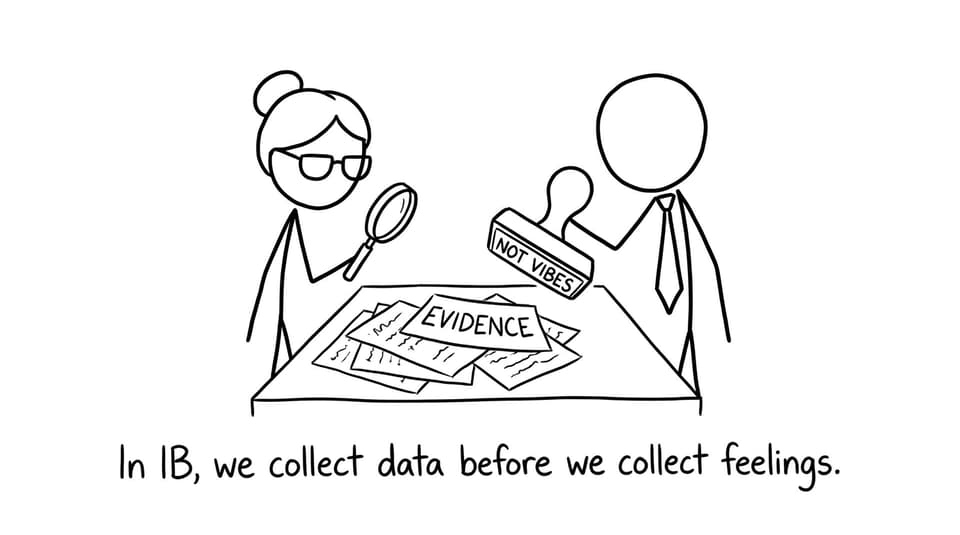
Case studies work because they stay close to reality. Not theory. Not vibes. Actual student work. Actual misunderstandings. Actual improvements.
The IB inquiry cycle (and how it reaches your desk)
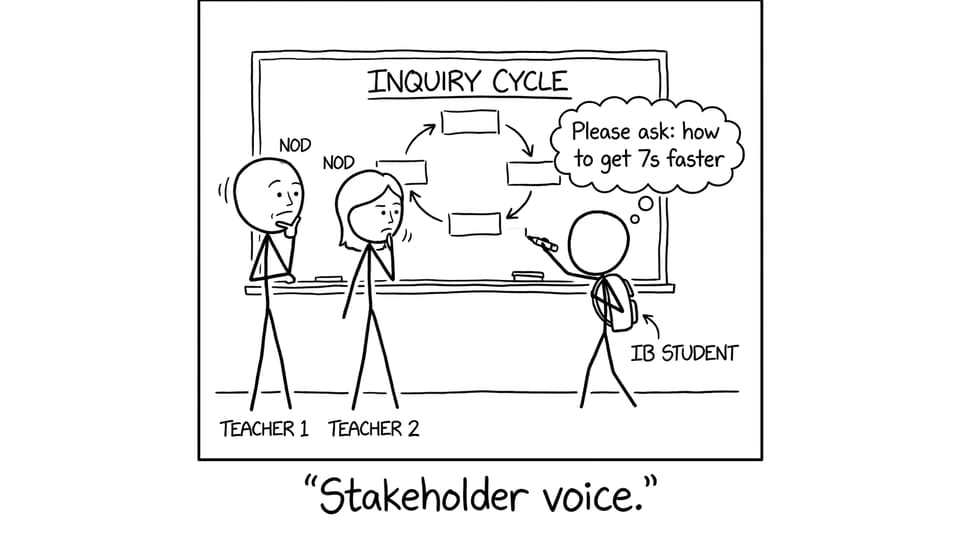
Teacher inquiry often follows a loop that mirrors the IB mindset: inquiry, action, reflection.
Choose one focus question
Good inquiry starts small. One unit, one skill, one paper type, one recurring error.
For you as an IB student preparing for exams, this is a hint: don’t revise “the whole subject.” Revise the next bottleneck. If you need help choosing it, use a structured guide like How to Study for IB Exams: Step-by-Step Guide.
Collect evidence (not opinions)
Teachers might bring:
-
Samples of anonymized responses
-
A list of the most common misconceptions
-
Mini-quiz results
-
Notes from lesson observations
-
Student reflections on what felt confusing
Students can do the same thing with their own learning. Your “evidence” is your mistakes.
A practical student version is to use targeted question practice (then review your errors). You can start with IB Question Bank | How to Use It Effectively and then drill weak areas in the RevisionDojo Questionbank.
Analyze together through dialogue
This is where collaboration matters. One teacher notices wording issues. Another sees a concept gap. Another spots that students are using the right method but presenting it poorly.
When teachers do this, your class gets the benefit of multiple perspectives without you needing multiple tutors.
Act: change one variable
Inquiry fails when it tries to change everything at once. Strong teams adjust one lever:
-
A new feedback template
-
A model answer routine
-
A re-taught concept using a different representation
-
A short weekly retrieval quiz
For IB students, this is the same logic behind effective revision: pick one change, test it, keep it if it works. If you need ideas, 10 Proven Study Techniques for IB Students is a strong starting point.
Reflect and repeat
After a week or two, teams revisit the evidence. Did marks improve? Did clarity improve? Did students retain it?
This is exactly how RevisionDojo’s improvement loop is designed to feel: learn in Study Notes, lock it in with Flashcards, pressure-test with timed practice, then diagnose and repeat.
How you can encourage teacher inquiry (without being awkward)
You don’t need to tell your teacher how to teach. But you can offer clean, useful input that makes inquiry easier.
Bring one good question after feedback
Instead of “Why did I lose marks?”, try:
-
“Which part of the mark scheme is my answer missing?”
-
“Is the problem content, structure, or command term?”
-
“Could you show one example of a 6/7 response and what makes it different?”
These questions invite evidence-based teaching, which is the heart of IB teacher inquiry.
Offer your own “case study” data
Show patterns, not single incidents:
-
“I missed 5 questions on this subtopic.”
-
“I always lose marks when I have to justify.”
-
“Timed conditions drop my score by two bands.”
Then use a tool like the RevisionDojo IB curriculum hub to target that weakness systematically.
Where RevisionDojo fits into an IB school culture of inquiry
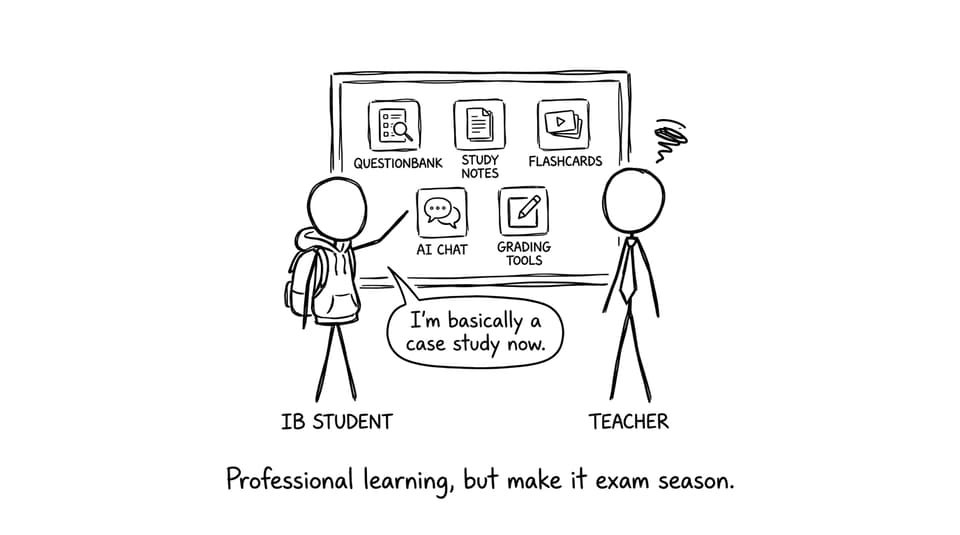
In high-performing IB classrooms, the line between “teaching” and “improving teaching” is thin. RevisionDojo supports both sides of that line.
-
The Questionbank helps teachers and students see which skills break under pressure: Questionbank
-
Study Notes make explanations consistent across classes: Study Notes
-
Flashcards turn key misunderstandings into daily retrieval practice: IB Flashcards with SRS
-
AI Chat helps you get unstuck fast, so confusion doesn’t become a habit
-
Grading tools make feedback more mark-scheme-aligned, faster
-
Predicted Papers and Mock Exams help your cohort rehearse timing and stamina: IB Predicted Papers
-
The Coursework Library and Tutors reduce background stress that steals focus
If your school is formalizing this culture, the best overview is here: RevisionDojo for Schools.
Closing: the quiet advantage in IB
IB success isn’t only about how hard you work. It’s also about whether the system around you learns quickly.
When teachers encourage inquiry through collaborative case studies, your classroom becomes a place where confusion is investigated, patterns are named, and improvements are tested. That culture doesn’t just make school feel smarter. It makes your revision more efficient and your exam performance more predictable.
If you want to lean into that advantage, build your own IB inquiry loop with RevisionDojo: use Study Notes to clarify, Flashcards to retain, the Questionbank to practice, and IB Predicted Papers to rehearse under pressure. Then repeat until the work feels boring in the best way possible.