


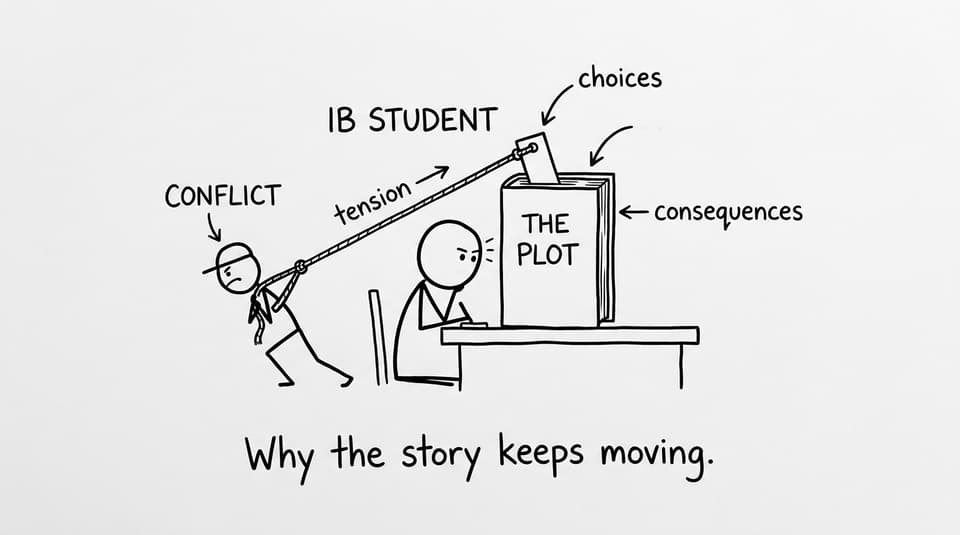
Conflict is what makes a story feel inevitable. Not because characters are trapped, but because pressure reveals what they care about. In IB English, that pressure has a name: conflict. And the moment the pressure changes shape, settling, breaking, or refusing to disappear, you get resolution.
For exam prep, this matters more than it sounds. Examiners are not looking for a plot summary with a few literary device labels sprinkled on top. They are looking for a clear argument about how conflict builds meaning, and how resolution clarifies (or complicates) what the text believes about people, power, and consequence. If you can track conflict precisely, you can write a stronger Paper 1 analysis, a more controlled Paper 2 essay, and a sharper Individual Oral.
A quick IB English conflict checklist
Use this mini-checklist before you plan any paragraph in IB English:
-
Name the central conflict in one sentence (internal, external, or both).
-
Identify what each side wants (desire vs obstacle).
-
Track escalation (what raises the stakes scene by scene?).
-
Identify the turning point (where does the conflict change direction?).
-
Explain what the resolution suggests about theme, values, or society.
If you want to connect conflict to theme more confidently, pair this with RevisionDojo’s guide on defining theme in literature.
Why conflict matters in IB English analysis
In IB English, conflict is rarely just “drama.” It is an author’s most reliable tool for revealing:
-
Character values (what they protect, abandon, or rationalize)
-
Social rules (what is rewarded or punished)
-
Power dynamics (who gets to define “normal”)
-
Emotional logic (why a character keeps choosing the harder option)
A useful mental shift: treat conflict like a question the text keeps asking. Resolution is the text’s attempt to answer it. Sometimes the answer is comforting. Sometimes it is brutally incomplete.
When you need language for explaining those choices, RevisionDojo’s breakdown of the importance of structure in IB English analytical writing helps you turn observations into arguments.
Types of conflict to track (and how to write about them)
Internal conflict: the private argument
Internal conflict is when a character becomes their own antagonist: guilt versus desire, duty versus freedom, fear versus truth. In IB English, internal conflict often shows up through technique rather than announcement:
-
unstable or fragmented narration
-
tonal whiplash (confidence turning to self-doubt)
-
contradictions in dialogue or behavior
-
recurring images that “stand in” for the feeling
Internal conflict is usually where you find the thesis of the character arc. For practical phrasing, RevisionDojo’s guide on how to analyze a character shows how to link motivation, choices, and meaning.
External conflict: the visible collision
External conflict is the pressure outside the character: another person, a family system, an institution, a cultural expectation, even an environment. It drives plot momentum because it forces decisions in public:
-
arguments, betrayals, alliances
-
rules enforced by authority
-
exclusion, prejudice, surveillance
-
material obstacles that represent larger forces
For texts where conflict is shaped by politics and ideology, you might also find this theme overview useful: themes of conflict and war in IB literature.
Combined conflict: when the world matches the wound
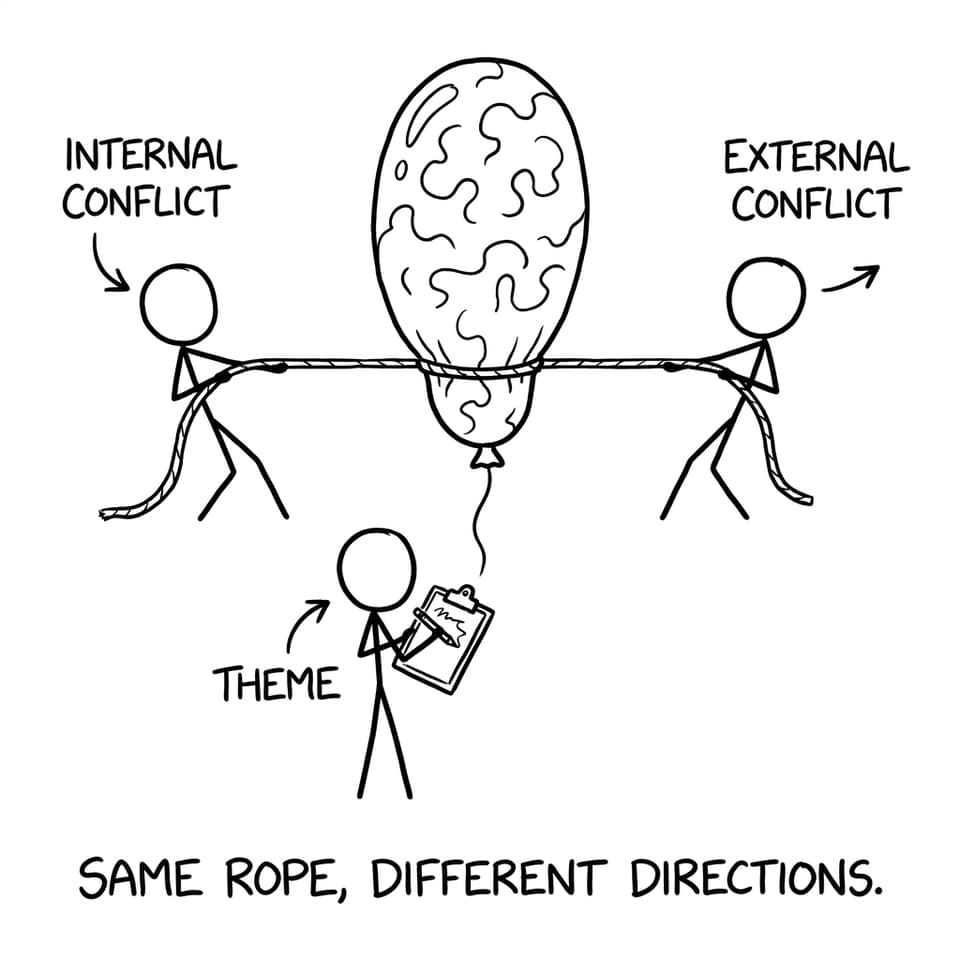
The strongest IB English arguments notice mirroring. A character’s internal conflict often echoes the external conflict:
-
a society that demands silence creates a narrator who self-censors
-
a rigid class system produces private shame and public performance
-
a hostile setting intensifies a fragile identity
This is where theme becomes more than a label. For a step-by-step approach, see how to identify and discuss themes in IB English texts.
Conflict shapes structure: where tension lives on the page
Plot structure is basically tension management. Conflict arrives, escalates, peaks, then shifts. But in IB English, you score higher when you stop calling it “rising action” and start explaining how the author engineers it.
Look for:
-
placement: where does the text introduce its first fault line?
-
pacing: do sentences shorten under pressure? do scenes compress?
-
turning points: what new information changes the conflict?
-
silences: what is avoided, delayed, or left unsaid?
For exam execution, RevisionDojo’s IB English Paper 1 success guide is a practical companion for turning structural observations into a controlled commentary.
Resolution: closure, consequence, or a new kind of problem
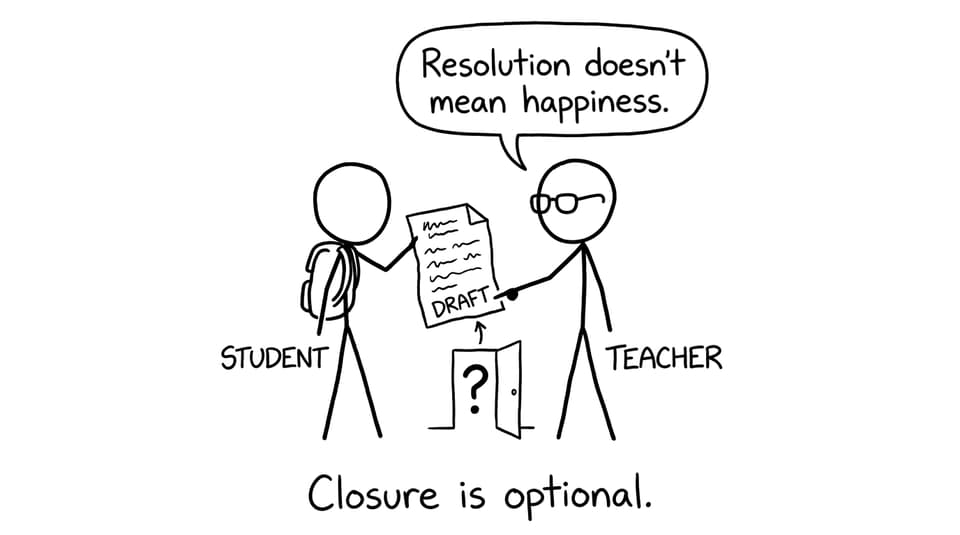
Resolution does not mean “everything is fixed.” In IB English, resolution is the moment the text reveals what it thinks consequences look like.
Ask:
-
Does the ending restore order, or expose it as a fantasy?
-
Does the character transform, regress, or stay trapped?
-
Does the final tone feel earned, ironic, numb, or unresolved?
Ambiguous endings are not a trick. They are often a deliberate ethical choice: the author refuses to tidy up what society will not fix.
Symbols intensify conflict (and make evidence easier)
Symbols are where conflict becomes portable: a door, a storm, a uniform, a meal, a repeated color. In IB English, symbolism helps you write less plot summary because a single recurring image can carry the argument.
If you struggle to move from “this is symbolic” to “this means something,” use RevisionDojo’s symbolism analysis guide and the quick definition in what is a literary symbol?.
How RevisionDojo helps you practice conflict analysis fast
In the week before exams, you do not need more motivation. You need reps.
RevisionDojo is built for that:
-
Use the Study Notes to refresh conflict terminology and structural patterns.
-
Drill technique-to-meaning links with Flashcards.
-
Train speed and clarity with the Questionbank.
-
Use AI Chat to test thesis statements and counter-arguments.
-
Tighten your paragraphs with Grading tools and exemplars.
-
Build confidence under time pressure with Mock Exams and Predicted Papers.
-
If you are stuck, the Tutors and Coursework Library help you find a path forward quickly.
If you want a hub for related strategies, browse all IB English posts.
Closing: make conflict your shortcut to better essays
Conflict and resolution are not just plot ingredients. They are the fastest route to meaning. When you track what pressures a character, what choices follow, and what the ending ultimately permits or punishes, your IB English analysis becomes sharper almost automatically.
If you want to practice this with less guesswork, build a quick routine on RevisionDojo: pick a passage, identify the conflict in one sentence, then use the Questionbank, Flashcards, and AI Chat to pressure-test your thesis before you write. That is how strong essays are made, one clear conflict at a time.