If you have ever annotated a passage at 1 a.m. and thought, Why is everything either light or dark?, you are not alone. In IB English, dualities can feel like the simplest pattern to spot and the hardest to write about well. They show up everywhere: the bright room that becomes a trap, the “innocent” voice that turns calculating, the comforting darkness that becomes a threat.
The good news is that dualities are not a gimmick. They are one of the cleanest ways writers build tension and transformation. The even better news: once you learn to treat dualities as moving relationships (not fixed opposites), your IB English analysis gets more precise, more nuanced, and much easier to structure under exam pressure.
Dualities in IB English: a fast exam checklist
Use this quick checklist before you start writing any IB English commentary or comparative paragraph:
-
Name the duality (light/dark, innocence/experience, public/private, order/chaos).
-
Track the pattern: where does each side appear, and how often?
-
Spot the turning point: when does the text blur, flip, or complicate the contrast?
-
Link method to meaning: imagery, structure, tone, setting, stage directions, diction.
-
Convert into an argument: “The text uses X duality to show Y change or conflict.”
If you want a solid baseline method for this, pair the checklist with RevisionDojo’s guide on close reading techniques so your observations reliably become analysis.
Light and dark in IB English: more than “good vs evil”
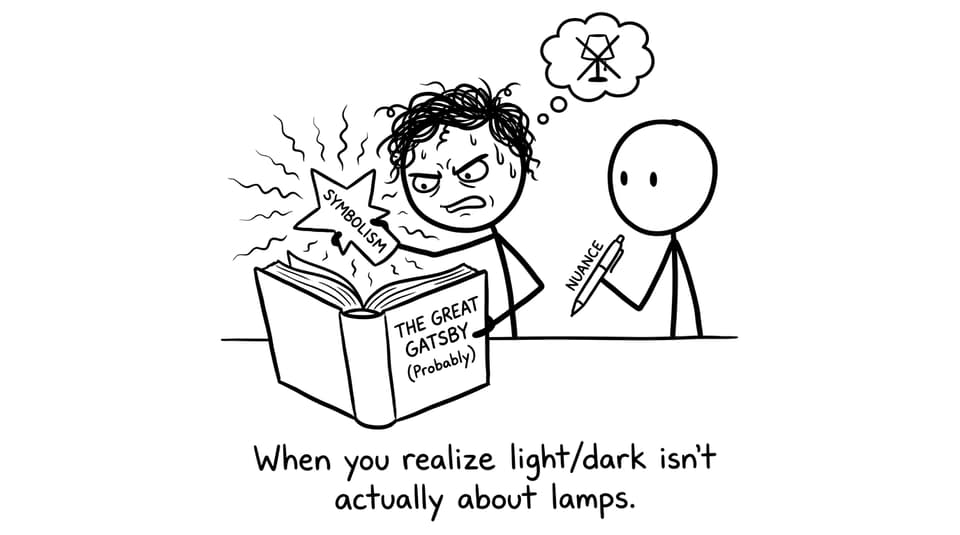
Light/dark is the duality students reach for first in IB English because it is so visible. But the highest scoring essays do something more specific: they show how light and dark change meaning depending on context.
How to analyze light/dark without oversimplifying
Try these angles when you write about light/dark in IB English:
-
Light as exposure: illumination can feel like truth, but also like surveillance or judgement.
-
Dark as refuge: darkness can be safety, privacy, intimacy, or internal reflection.
-
Shifts in control: ask who controls the light (or who chooses darkness).
-
Form matters: in drama, lighting is literal stagecraft; in prose, it is filtered through narration.
This is where technique vocabulary keeps you honest. When you can name the method, you can prove the effect. RevisionDojo’s explanation of what a literary symbol is is a strong companion here because light/dark often functions as symbol, motif, and atmosphere simultaneously.
A thesis template you can reuse
A reliable IB English thesis structure for light/dark:
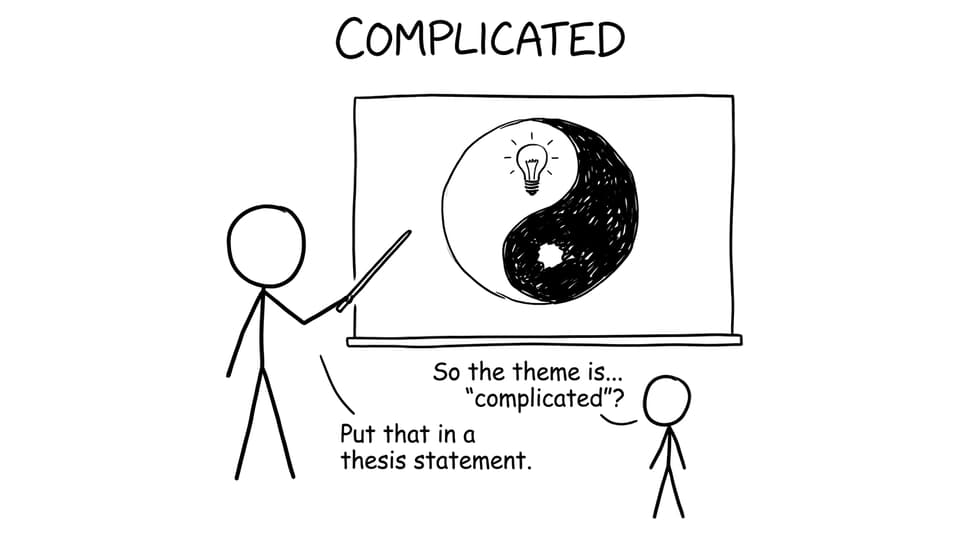
The writer uses recurring light/dark imagery to map a shift from (state A) to (state B), suggesting that (theme claim) is shaped by (pressure: power, guilt, society, memory).
Notice what this does: it avoids “light equals good,” and instead argues for a trajectory.
Innocence and experience in IB English: the moment that changes everything
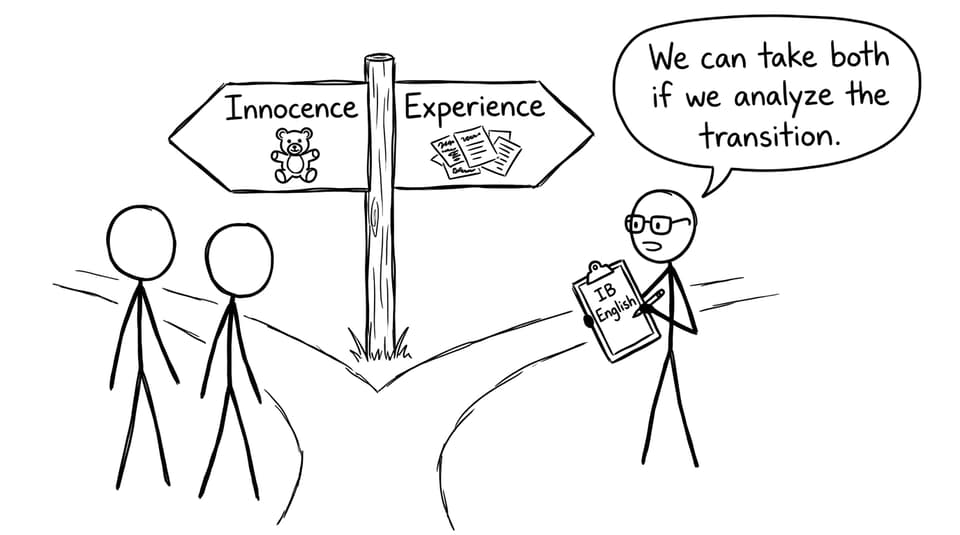
Innocence/experience is often treated as “before and after.” But in strong IB English analysis, experience is not just knowledge; it is the cost of knowledge. That cost can be grief, shame, disillusionment, or even empowerment.
What to look for in innocence/experience
When writing about innocence/experience in IB English, ask:
-
What triggers the shift? A betrayal, a discovery, an institution, a relationship.
-
Is the change chosen or forced? This affects how you frame agency.
-
How does the voice evolve? Naive diction may harden into irony or detachment.
-
What is lost or gained? The text may mourn innocence or critique it as blindness.
If you want to build this quickly in exam conditions, practice turning observations into PEEL-style paragraphs. RevisionDojo’s Paper 1 success guide is especially helpful for making sure your duality analysis stays organized, not scattered.
Structural dualities: when the text’s shape does the arguing
Some of the best IB English duality analysis is not about a recurring image at all. It is about how the text is built.
Look for:
-
Past vs present (memory interrupting narrative time)
-
Public vs private voice (performative language vs confessional tone)
-
Order vs chaos (tight form breaking apart)
-
Reality vs illusion (unreliable narration, staging, framing devices)
A practical way to write this in Paper 1 is to treat structure as cause-and-effect: the writer moves the reader between two modes to create tension. RevisionDojo’s commentary writing guide is a useful reference when you want to turn structural noticing into scoring analysis.
Turning dualities into exam-ready paragraphs (Paper 1 and Paper 2)
Here is a simple paragraph blueprint that works across IB English tasks:
-
Point: Name the duality and claim what it reveals.
-
Evidence: Quote a precise image, word cluster, or structural pivot.
-
Analysis: Explain connotations, tone, and reader positioning.
-
Zoom out: Link to theme and authorial purpose.
If you are preparing for Paper 2 comparisons, you can make dualities your comparison engine: “Both texts complicate innocence/experience, but one frames experience as liberation while the other frames it as loss.” For targeted Paper 2 practice, RevisionDojo’s English Paper 2 Questionbank helps you rehearse these comparative moves.
Closing: make the contrast do the work
Dualities are not a shortcut in IB English. They are a craft choice writers use to make change visible: the moment innocence becomes experience, the moment light becomes exposure, the moment darkness becomes clarity. When you track that movement and explain the method behind it, your analysis stops being summary and starts sounding like interpretation.
If you want to turn this into consistent exam performance, use RevisionDojo to practice in a loop: build drills with the Questionbank, review key ideas with Study Notes and Flashcards, test yourself with Mock Exams and Predicted Papers, and refine paragraphs using AI Chat plus the Grading tools. When dualities show up again on exam day (they will), you will already have a structure ready to write.

