



When you first hear “two pathways,” it sounds like the IB is offering freedom.
But most students experience it differently.
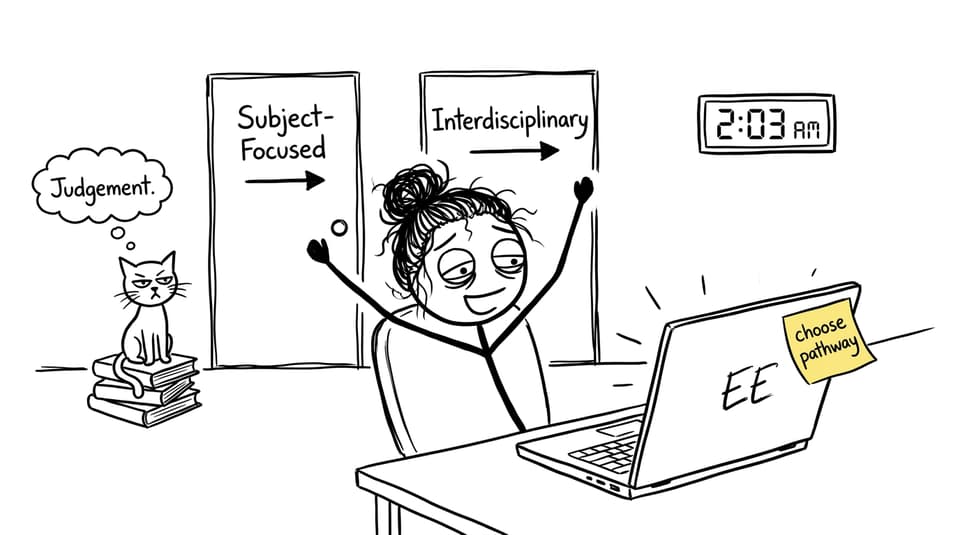
It’s 11:47 p.m. You’ve opened a document titled EE. The cursor blinks like it’s judging you. Your supervisor says, “Pick the right pathway early.” Your brain hears: If I choose wrong, I waste months.
The good news is that EE 2027’s two pathways are less of a trap and more of a sorting hat. They’re designed to clarify what kind of research you’re actually doing, and which rules you must follow to earn top marks.
This guide breaks down the two Extended Essay pathways in 2027, how the new Interdisciplinary option works, and how to decide quickly without guessing.
The quick answer: what are the two EE pathways in 2027?
In 2027, the EE has two pathways:
- Subject-Focused pathway: your research is grounded in one Diploma Programme (DP) subject. Your concepts, methods, and criteria alignment come from that single subject.
- Interdisciplinary pathway: your research integrates knowledge, concepts, theories, perspectives, or methods from two DP subjects. This pathway replaces the former World Studies extended essay. You must place your topic within one of five prescribed frameworks.
If you want a broader hub for planning and standards, keep RevisionDojo’s Extended Essay guides open as you read.
EE 2027 pathway checklist (save this before you choose)
Use this as a fast filter before you commit to a topic.
Choose the Subject-Focused EE if you can say “yes” to most of these
- My research question is clearly owned by one subject.
- My evidence and method fit one subject’s expectations.
- I can explain what “analysis” looks like in that subject.
- I can use the subject guide vocabulary naturally.
Choose the Interdisciplinary EE if you can say “yes” to most of these
- My research question genuinely needs two subjects to answer.
- I will apply methods or perspectives from both subjects (not just mention them).
- I can explain how the two subjects interact without becoming two separate essays.
- I’m ready to anchor the investigation in a prescribed framework.
If you want example structures while you decide, Mastering IB Extended Essays: How to Research, Write, and Revise pairs well with the checklist above.
Pathway one: the Subject-Focused EE (what it really means)
The Subject-Focused EE is the classic version: one subject, one set of expectations, one methodological “home.” That sounds obvious, but it changes how you earn marks.
A strong Subject-Focused EE has a hidden advantage: it can be coherent almost by default. Your introduction, evidence, analysis, and conclusion all speak the same language.
What Subject-Focused “research” looks like
- In History, you’re typically weighing evidence, perspectives, and historiography.
- In Biology, you’re usually designing an investigation or evaluating data with scientific reasoning.
- In English A, you’re building an interpretation grounded in textual analysis.
The point is not the topic. The point is that the EE becomes legible to an examiner because it behaves like the subject.
The most common Subject-Focused mistake
Students pick a subject, then write a “general essay” anyway. They summarize sources, stack quotations, and call it research.
If you want a reality check, read Mistakes to Avoid in IB Extended Essays. It’s basically a map of how decent drafts turn into average grades.
How RevisionDojo supports Subject-Focused EEs
This is where RevisionDojo feels less like a website and more like a calm second brain:
- The Coursework Library gives you models to imitate without copying: IB Coursework Examples: IA, EE and TOK Exemplars.
- The Grading tools help you see your draft the way the criteria sees it: IB Coursework Grader.
- AI Chat can pressure-test your research question and paragraph logic when your supervisor isn’t available.
Even if exams are your main focus, a clean Subject-Focused EE protects your time. The clearer your direction, the fewer weekends get eaten by rewrites.
Pathway two: the Interdisciplinary EE (the new 2027 shift)
The Interdisciplinary EE is not “two subject essays stapled together.” It is one argument that requires two toolkits.
This pathway replaces the former World Studies model and adds a specific requirement: you must place your topic within one of five prescribed frameworks.
That framework requirement matters because it stops the essay from drifting. Interdisciplinary research is powerful, but it can turn into a fog if you don’t define what kind of integration you’re doing.
What “integration” actually means in an Interdisciplinary EE
To integrate, you must do at least one of these consistently:
- Use a concept from Subject A to reinterpret evidence in Subject B.
- Use a method from Subject A to test or structure a claim in Subject B.
- Compare how two subjects define the same key term, then use that tension to sharpen your conclusion.
If you can remove Subject B and the essay still “works,” you probably don’t have an Interdisciplinary EE. You have a Subject-Focused EE with extra decoration.
A practical example of real integration
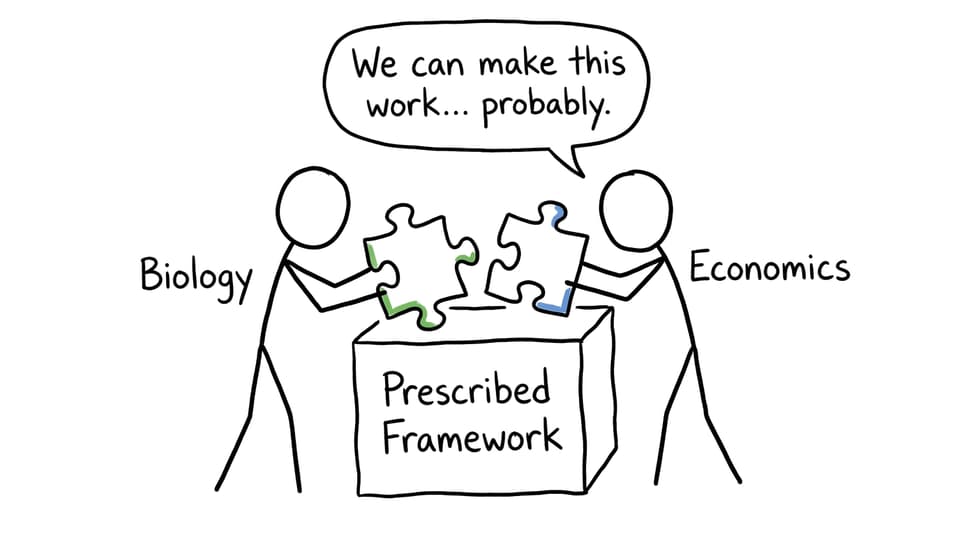
Imagine combining Biology and Economics.
A weak version: “Pollution is bad for health and also expensive.”
A stronger interdisciplinary version: you might analyze health outcomes using biological reasoning while evaluating policy trade-offs using economic models, then show how the limitations of one method change the conclusions of the other.
Why the framework requirement is helpful (even if it feels annoying)
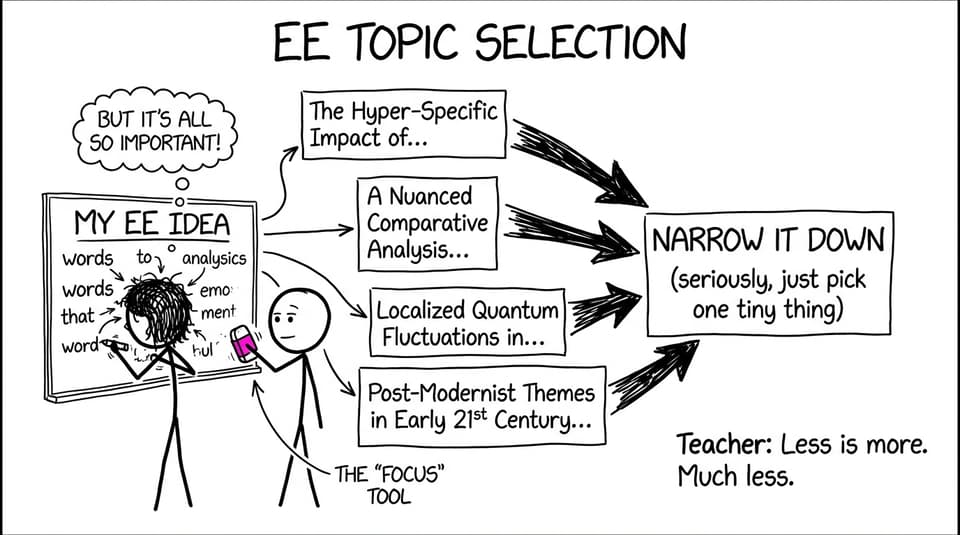
Most students don’t fail the EE because they can’t write. They fail because they can’t choose.
A framework forces a choice. It pushes you to define what your essay is about, not just what it mentions.
If you want to keep your structure tight, pair this article with How to Create an Effective EE Outline for a Logical Flow. Interdisciplinary work needs an outline that acts like guardrails.
How to choose the right EE pathway in 20 minutes
Choosing your EE pathway is less about ambition and more about fit.
Ask yourself these four questions
Can I name my “core subject” in one sentence?
If yes, Subject-Focused is usually safer.
Do I have access to evidence that supports both subjects?
Interdisciplinary topics often die because the evidence base is lopsided.
Can I explain my method without hand-waving?
Examiners reward method that is explicit. If you can’t explain how you’ll gather and analyze information, your EE will drift.
Will this pathway reduce stress later?
This is underrated. A clean plan now means fewer all-nighters later.
Planning your EE alongside exam preparation (without burning out)
The EE is part of the DP core, but your exams still decide most of your points. The students who manage both don’t have superhuman discipline.
They do something simpler: they build systems that prevent the EE from expanding into every available hour.
A simple weekly rhythm that works
- One deep EE session (90 minutes): research question, outline, or a single section draft.
- Two short maintenance sessions (20 minutes): bibliography updates, reflection notes, evidence filing.
- The rest of your week stays exam-focused.
RevisionDojo supports that rhythm because it separates the work types:
- Study Notes and Flashcards keep your content review efficient.
- Questionbank, Mock Exams, and Predicted Papers help you stay sharp under timed conditions.
- Tutors can unblock an EE in one session instead of you spending three evenings guessing.
If you need a formatting sanity check before submission, use How to Format Your EE According to IB Guidelines: Tips + FAQ.
Tools that make EE drafting faster (and less painful)
Most EE stress is not the writing. It’s the uncertainty: Is this good? Is this enough analysis? Am I still on track?
Here are the tools that reduce uncertainty:
- To improve draft quality quickly: IB EE Feedback Tool: Improve Your Extended Essay Score.
- To understand the full landscape of guidance: All IB Extended Essay Posts.
- To avoid accidental overlap between assignments: IA Sources for Your EE: What’s Allowed in IB?.
Closing: choose the EE pathway that keeps your thinking sharp
The 2027 change isn’t asking you to become a different kind of student. It’s asking you to name the kind of research you’re already trying to do.
Pick the Subject-Focused EE if depth in one discipline will help you build a clean argument. Pick the Interdisciplinary EE if the question truly requires two disciplines and a prescribed framework can keep you honest.
Then make it boring in the best way: outline early, narrow relentlessly, draft in small cycles, and get feedback faster than your doubt can grow.
If you want the simplest next step, open RevisionDojo’s Extended Essay guides, choose your subject or approach, and use the Coursework Library, AI Chat, and Grading tools to turn the EE from a looming project into a series of manageable decisions. Your exams will thank you for it, too.