
The question every IB student asks at 1:12 a.m.
It usually happens like this: you finish an essay draft, close your laptop, and remember you still have “the IA.” Not an IA. Several. In the IB, the Internal Assessment can feel like a quiet shadow following every subject you chose with optimism back in Year 1.
So, do all IB subjects require an Internal Assessment (IA)? Yes. If you are taking the full IB Diploma Programme, every subject includes some form of internally assessed work that counts toward your final grade and is moderated by external examiners. The catch is that the word “IA” doesn’t always look the same. In some subjects it’s a lab report. In others it’s an investigation, an oral, a portfolio, or a performance.

Quick IB checklist: what “IA” really means
Use this checklist when you’re planning your IB workload:
-
Every IB subject includes an internally assessed component (often called an IA).
-
Most IAs are worth about 20-30% of your final subject grade (varies by course).
-
Teachers mark your work first, then the IB moderates samples to keep standards consistent.
-
The best IAs are rarely the “hardest topics”; they’re the clearest questions with controlled scope.
-
Your IA timeline should run in parallel with exam revision, not compete with it.
If you want a bigger overview of how an IB Internal Assessment works across the Diploma Programme, this guide is the best starting point: IB Internal Assessment: A Complete Guide.
Why the IB makes every subject include an IA
The IB isn’t only testing what you can recall under pressure. It’s also testing whether you can build something: an argument, an experiment, a model, an interpretation, a creative process.
That’s why the IA exists. It captures skills final exams can’t easily measure: planning, reflection, research design, data handling, and sustained writing. And because it’s done over weeks (sometimes months), it rewards a different kind of discipline, the quiet, unglamorous habit of improving a draft one step at a time.
A practical upside: when exams feel like a single high-stakes moment, a strong IB IA can stabilize your overall grade.
How the IA changes across IB subjects (with examples)
The IB uses the same core idea (internal assessment) but adapts it to each discipline.
Sciences (Chemistry, Physics, Biology): investigation-style IB IA
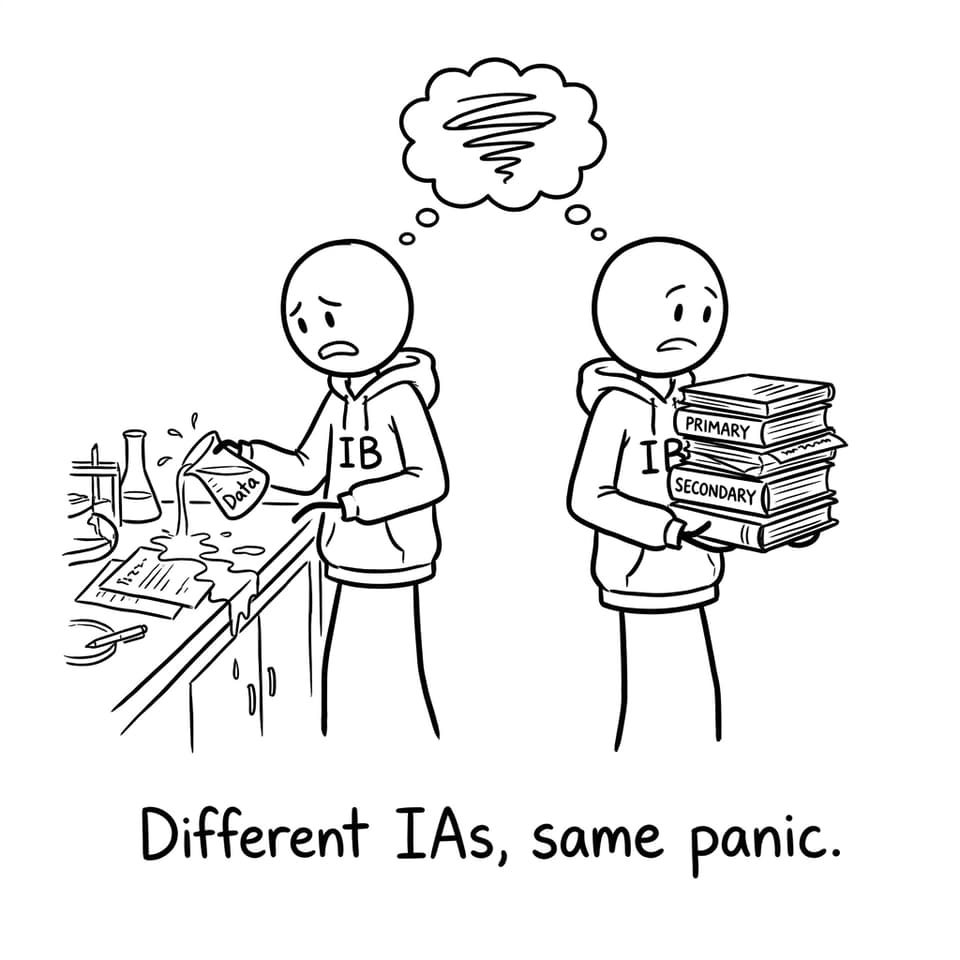
In IB sciences, the IA usually looks like a scientific investigation. You design (or adapt) a method, collect data, process results, and evaluate limitations. It’s not about having a “perfect” experiment. It’s about demonstrating that you understand how scientific reasoning works.
Typical focus areas:
-
A focused research question
-
A method that can realistically produce usable data
-
Correct processing (graphs, uncertainties, trends)
-
Evaluation that sounds like science, not apology
Individuals and societies (History, Business, Geography): investigation-style IB IA
In IB humanities and social sciences, the IA usually becomes an investigation: you choose a narrow question, use sources or data, and build a structured analysis.
-
IB History often centers on source analysis and argument.
-
IB Business Management tends to be a real organization and a decision-focused problem.
In these subjects, the difference between a mid-level IA and a high-scoring one is rarely intelligence. It’s usually selection: picking a question that is specific enough to analyze deeply.
If you’re still shaping your topic, this is the skill you want most: How to Write a Strong IA Research Question.
Mathematics (AA/AI): exploration-style IB IA
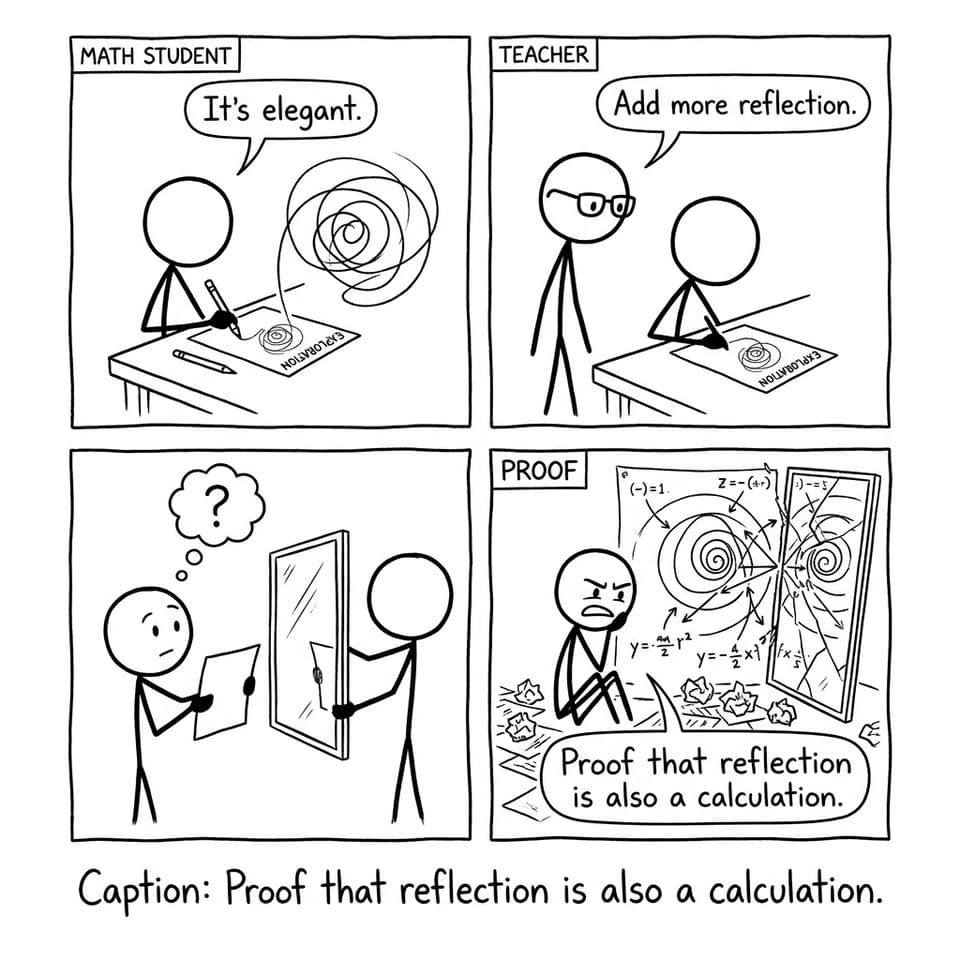
In IB Mathematics, the IA is often called an exploration. It rewards clarity, mathematical communication, and reflection on choices.
A strong exploration doesn’t try to impress with complexity. It tries to make sense.
For a step-by-step walkthrough, use: Guide to IB Math AI Internal Assessment.
The arts (Drama and more): process + product IB IA
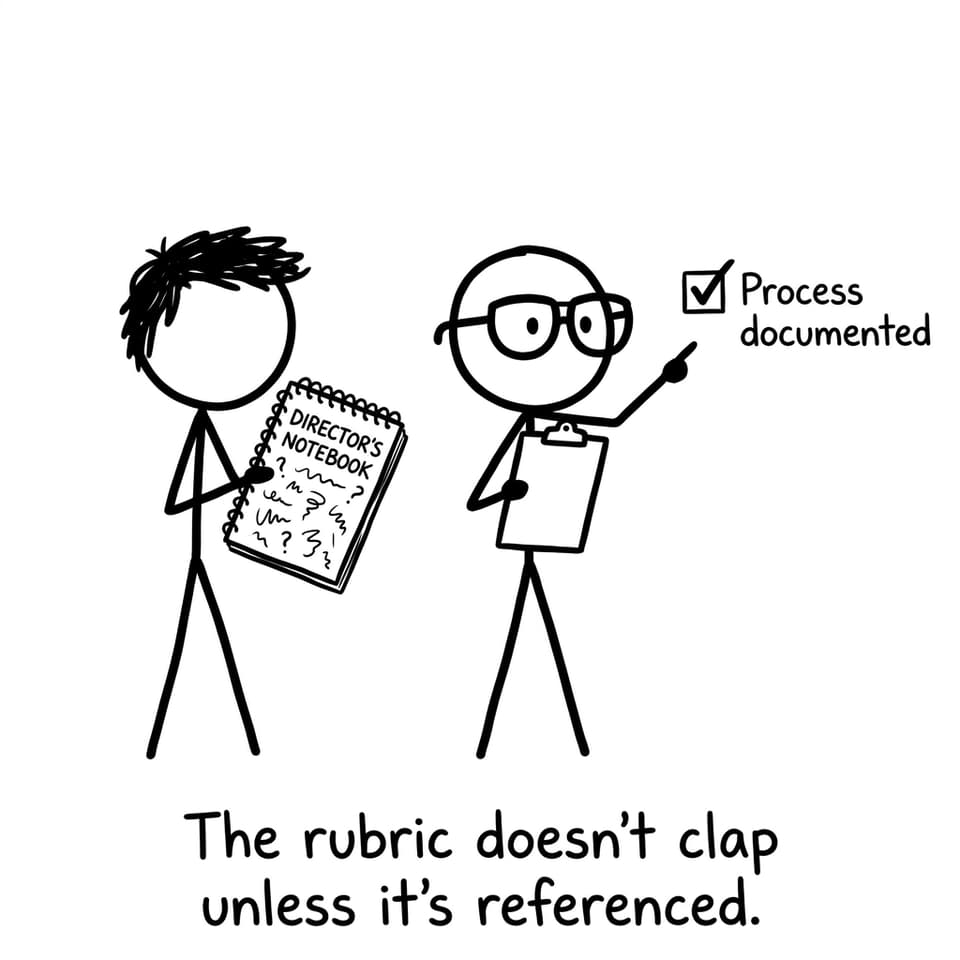
In IB arts subjects, the IA often includes both the final artistic outcome and evidence of your process: planning, iteration, intention, reflection.
That’s why documentation matters. You’re not only being assessed on what you made, but how you made it and how thoughtfully you can explain the creative decisions.
A simple way to manage IB IAs without sacrificing exam prep
Most IB students don’t struggle because they’re lazy. They struggle because IAs have “invisible workload.” A page doesn’t show the hours of fixing graphs, rebuilding paragraphs, or rewording a research question.
Here’s a sustainable loop:
-
Learn the criteria first (so you don’t write beautifully in the wrong direction)
-
Draft fast, then improve in cycles
-
Build evidence: data, sources, reflection, and rationale
-
Get feedback early, not only at the end
RevisionDojo is built for that loop:
-
Use the IA Guides hub to understand what your subject’s IA is actually rewarding.
-
Use the IB IA Grading Service to pressure-test a draft against criteria before it becomes “final.”
-
When IA work steals revision time, keep exam skills alive with the RevisionDojo Questionbank.
-
Convert notes into daily recall using RevisionDojo Flashcards and the Flashcards feature.
-
Tighten content knowledge quickly with Study Notes and this strategy piece on Digital IB Study Notes.
And when you need the whole system (notes, questions, feedback, and planning) in one place, start here: RevisionDojo for IB.
The bottom line: yes, every IB subject has an IA
So the answer is simple: yes, every IB subject requires an Internal Assessment, even when it’s called an exploration, an oral, a portfolio, or a performance. The harder truth is that IAs reward consistency, not last-minute intensity.
If you want to make your IB IAs feel less like a mystery and more like a process you can control, build your workflow inside RevisionDojo: use the Coursework Library, Study Notes, Flashcards, AI Chat, Grading tools, Questionbank, and when it’s time to simulate the finish line, add Mock Exams and Predicted Papers. And if you need a human voice in the middle of the noise, RevisionDojo Tutors can help you choose a feasible direction and execute it well.
Your IA isn’t a side quest. In the IB, it’s part of the main story. Make it count.