

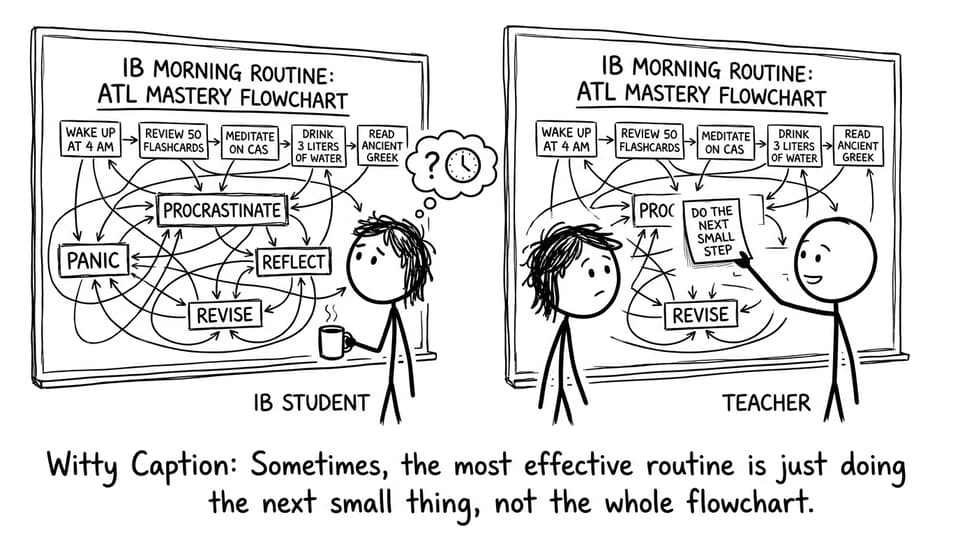
A few weeks before exams, most IB students discover a quiet truth: motivation is unreliable, but routine is faithful.
One day you wake up ready to revise. The next day, your brain negotiates: “Maybe later. Maybe after one more video. Maybe after I reorganise my notes… again.” The syllabus doesn’t care. The exam clock definitely doesn’t.
That’s why the strongest advantage you can build in the IB isn’t a secret trick. It’s a set of classroom routines that make Approaches to Learning (ATL) skills automatic: planning, questioning, collaborating, and reflecting until they feel like muscle memory. When routines work, you don’t just learn more -- you waste less.
Below is a student-first guide to designing (or borrowing) classroom routines that foster ATL mastery and translate directly into stronger IB exam performance.
Quick routine checklist for ATL mastery in IB
If you want the fast version, build your week around these routine anchors (in class or at home):
-
Pick 2 ATL skills to prioritise for the next two weeks (not all of them).
-
Start each lesson with a two-minute thinking prompt (predict, connect, question).
-
End each lesson with a one-minute reflection (what changed in my understanding?).
-
Use structured pair-talk to practise communication, not just “discussion.”
-
Do one source check routine each week to strengthen research skills.
-
Track your process with a simple loop: notes --> questions --> feedback --> retry.
If you want that loop in one place, RevisionDojo supports it with Study Notes, Flashcards, a Questionbank, AI Chat, Grading tools, Predicted Papers, Mock Exams, a Coursework Library, and Tutors.
Helpful starting points:
Why routines matter more than “being disciplined” in IB
ATL skills are habits. Habits are built through repetition in predictable contexts.
In the IB, you’re asked to perform under timed pressure, across multiple subjects, using different formats. That’s hard to do if your learning behaviours change every time your mood changes. Classroom routines solve that by removing decisions.
A good routine does three things:
-
It makes the skill visible (you know what you’re practising).
-
It makes the skill repeatable (you can do it even on a tired day).
-
It creates feedback (you can see whether the habit helped).
That last part is where many students level up: feedback turns effort into progress. Tools like the RevisionDojo Questionbank and AI Chat make that feedback faster, so routines stick.
Choose fewer ATL targets (and win more often)
Most students fail at ATL mastery the same way they fail at revision plans: they try to fix everything at once.
Instead, pick two ATL categories that most directly improve your current IB exam performance:
Self-management skills (the exam multiplier)
If your grades swing because you rush, freeze, or mismanage time, start here. Routines that train pacing and planning create immediate gains.
Pair this with:
Thinking skills (the “command term” advantage)
If you know the content but lose marks on explain/evaluate/discuss, focus on thinking routines that force structure and clarity.
Research skills (the calm, not the chaos)
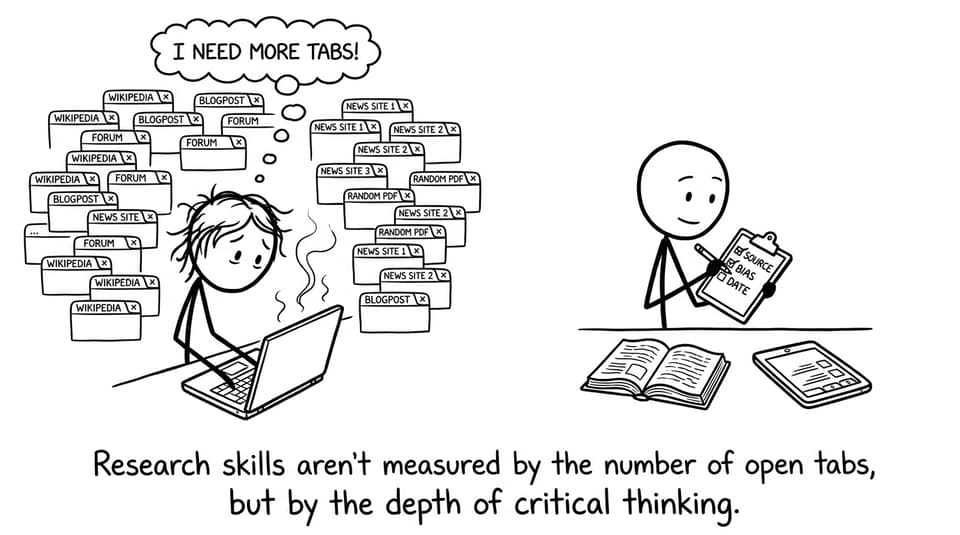
If your projects and essays turn into tab explosions, a weekly source routine will save hours and improve quality.
Classroom routines that build ATL mastery (and feel like exam training)
The best IB routines are small enough to repeat, but sharp enough to change behaviour. Here are routines you can ask teachers for, suggest to your study group, or run yourself.
The “Question of the Day” thinking routine
At the start of class, spend two minutes answering one prompt:
-
“What would a 7-level response do here?”
-
“Which concept from last topic links to today?”
-
“What mistake would the examiner expect?”
This routine trains thinking skills because it forces prediction and transfer, not copying.
If you want to make it exam-real, end by writing one sentence that begins with: “Therefore…”. In the IB, conclusions are often where marks hide.
Pair-share with a rule (communication skills)
Most “discussion” is just two people taking turns talking. An ATL communication routine needs constraints.
Try this:
-
Partner A speaks for 30 seconds.
-
Partner B must summarise A’s point first: “So you’re saying…”
-
Then Partner B adds one challenge: “But what about…”
You practise listening, accuracy, and academic tone. Those show up in oral commentary, essay argumentation, and even short-answer clarity.
The two-minute “exit ticket” reflection routine
Reflection is the underrated engine of ATL mastery in the IB because it transforms a lesson into a reusable method.
At the end of class, answer two prompts:
-
“What confused me at the start but feels clearer now?”
-
“What is the next smallest action I should take?”
Keep it short. The power comes from doing it every lesson, not writing a novel once a month.
To make reflection actionable, you can immediately convert one gap into:
-
a Flashcard
-
a targeted question set
-
one message to AI Chat to clarify a misunderstanding
The weekly source reliability routine (research skills)
Once a week, take one source you used (or plan to use) and run a simple reliability check:
-
Who wrote it and why?
-
When was it published/updated?
-
What is the likely bias or limitation?
This trains research skills without turning your life into an academic bureaucracy.
Make ATL visible so it becomes real
Routines stick faster when the language is consistent.
If you’re a student, this means naming the skill while you do it:
-
“I’m practising self-management by setting a 15-minute timer.”
-
“I’m using thinking skills by writing a counterargument.”
-
“I’m using research skills by checking reliability.”
If you’re preparing for IB exams, that visibility reduces the mental fog. You’re no longer “studying harder.” You’re training a skill.
A practical way to keep ATL visible is to track it alongside your revision loop. RevisionDojo’s flow (Notes --> Flashcards --> Questionbank --> feedback) naturally reinforces ATL mastery through repetition and progress tracking.
Extra support reading:
Feedback on the skill, not just the score
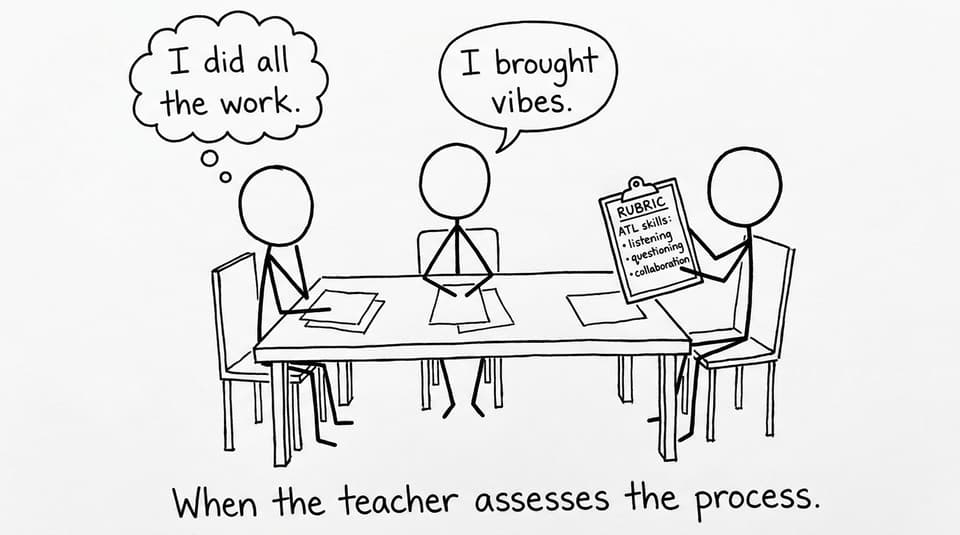
One of the most helpful classroom shifts for IB students is when teachers comment on the process, not only the product.
Instead of only “good answer” or “needs more detail,” the feedback becomes:
-
“Your organisation improved because you planned first.”
-
“Your evaluation got stronger when you used a counterclaim.”
-
“Your time management slipped when you overcommitted to one question.”
That kind of feedback builds ATL mastery because it gives you something repeatable to do next time.
If you want a model for feedback that builds confidence, see: Feedback Strategies That Build Confidence and Growth in the MYP
Common routine traps (and the fixes)
Doing too much at once
If you try to improve thinking, research, collaboration, reflection, and time management simultaneously, you’ll do none of them consistently.
Fix: run two-week “ATL sprints” with only two priority skills.
Routines becoming robotic
A routine can drift into box-ticking.
Fix: keep the structure the same, but refresh the prompt. The brain likes familiarity, but it needs meaning.
Reflection that doesn’t change behaviour
Reflection without action is journaling. Useful sometimes, but not a performance engine.
Fix: every reflection ends with one next action: one Flashcard, one question set, or one clarification request.
Closing: make IB success boring (in the best way)
The most effective IB students aren’t always the ones who feel the most confident. They’re often the ones who made their learning boringly repeatable.
Design routines that make ATL mastery inevitable: a small thinking prompt at the start, a small reflection at the end, a weekly research check, and feedback that targets the skill behind the score. Do it long enough and you stop needing motivation. You start relying on systems.
If you want a platform built around that system, RevisionDojo is designed to turn routines into results with Questionbank practice, examiner-aligned Study Notes, spaced repetition Flashcards, instant AI Chat, supportive Tutors, and realistic Mock Exams and Predicted Papers. Build the routine once, then let it carry you to exam day.