

If you’ve ever looked up from your phone and wondered, “Wait… who benefits from this app?” you’re already thinking like an IB Digital Society student.
Group 3 has always been about people and power. The difference is that power now lives in recommendation systems, data trails, and the quiet design choices that shape what we see, buy, and believe. IB Digital Society is the subject that treats that reality as worth studying.
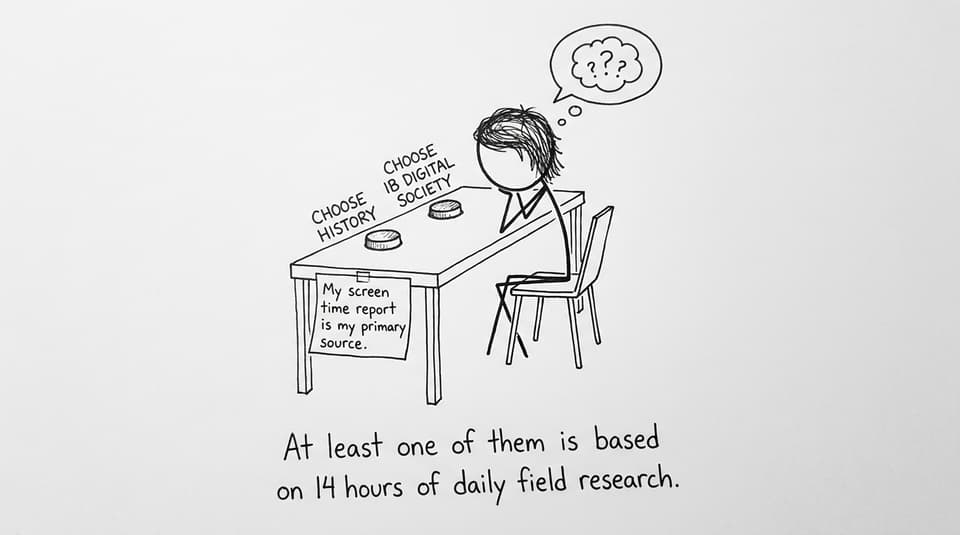
Quick checklist: signs IB Digital Society fits you
Choose IB Digital Society if most of these are true:
-
You like real-world examples more than memorizing long timelines.
-
You enjoy debating ethics, culture, identity, and power.
-
You can write clearly and build an argument with evidence.
-
You’re curious about AI, surveillance, digital identity, media, and misinformation.
-
You want a Group 3 subject that connects naturally to both humanities and STEM.
A good starting point is to read What Is IB Digital Society? and compare it to your current expectations.
What you actually study in IB Digital Society
A common misconception is that IB Digital Society is a “coding subject.” It isn’t. You study digital systems through a social lens: how technology shapes people, communities, decisions, and institutions.
Expect themes like:
-
Privacy, data, and surveillance
-
AI and ethics
-
Digital identities and online culture
-
Media ecosystems, influence, and misinformation
-
Power and control inside digital systems
If you want a topic anchor you can revise again and again, read Power and Control in Digital Systems: IB Digital Society Explained. It’s one of those core ideas that turns scattered examples into a coherent essay.

How IB Digital Society compares to other Group 3 options
Most Group 3 subjects ask, “How does society work?” IB Digital Society asks, “How does society work when digital systems are everywhere?”
-
History often rewards deep context and long-term causation.
-
Economics often rewards models, diagrams, and structured evaluation.
-
Global Politics often rewards institutions, actors, and competing interests.
-
IB Digital Society rewards contemporary analysis: impacts, implications, ethics, and evidence.
If you’re choosing subjects with a future degree in mind, it helps to see how interdisciplinary pathways are viewed. Start with Choosing the Right IB Subjects for a University Degree in Politics and Which IB Subjects Should I Take If I Don’t Know What to Do Yet?.
Skills you’ll build (and why they help in exams)
The secret advantage of IB Digital Society is that it trains you to think in “examiner language”: claims, evidence, evaluation, and ethical reflection.
You’ll practice:
-
Turning messy real-world examples into clear case studies
-
Evaluating consequences, trade-offs, and stakeholders
-
Writing arguments that balance breadth and depth
-
Using precise terminology (without sounding robotic)
For exam technique, keep this open while you practice: How to Structure High-Scoring IB Digital Society Exam Answers. Pair it with the IB Digital Society Glossary so your terminology stays consistent.
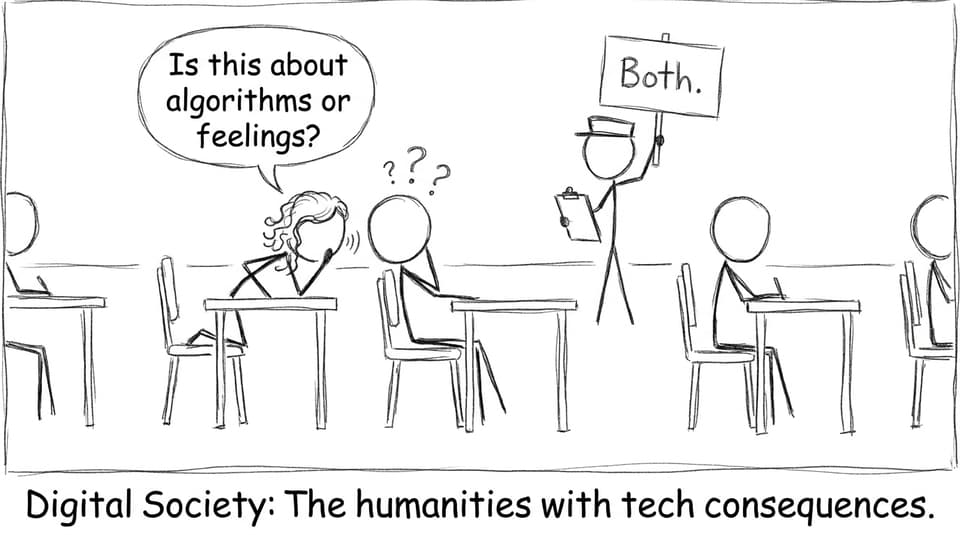
SL vs HL: which level should you pick?
Picking SL or HL in IB Digital Society is mostly a question of time and tolerance for depth.
-
Choose HL if you enjoy sustained writing, complex evaluation, and you want more room to explore ideas.
-
Choose SL if you want the conceptual toolkit and essay practice, but you need to protect time for heavy HL sciences or Math.
Either way, your results depend less on being “techy” and more on being consistent: building a bank of case studies, practicing command terms, and writing under time pressure. RevisionDojo helps you do this with Study Notes, Flashcards, and the Questionbank inside the Digital Society subject hub.
How RevisionDojo makes IB Digital Society revision simpler
A lot of IB Digital Society stress comes from disorganized evidence: too many articles, too many examples, not enough exam-ready paragraphs.
RevisionDojo is built to fix that:
-
Study Notes to learn concepts quickly and consistently
-
Flashcards to lock in definitions and key thinkers
-
Questionbank to practice exam-style prompts without guessing what matters
-
AI Chat to test your reasoning and clarify misconceptions fast
-
Grading tools and the IB Coursework Grader to polish written work with rubric-focused feedback
-
Mock Exams to rehearse timing and structure under pressure
-
Tutors when you want human feedback on argument quality and case study choice
If coursework is part of your stress, use IB Coursework Strengths Analysis so you improve without rewriting everything.
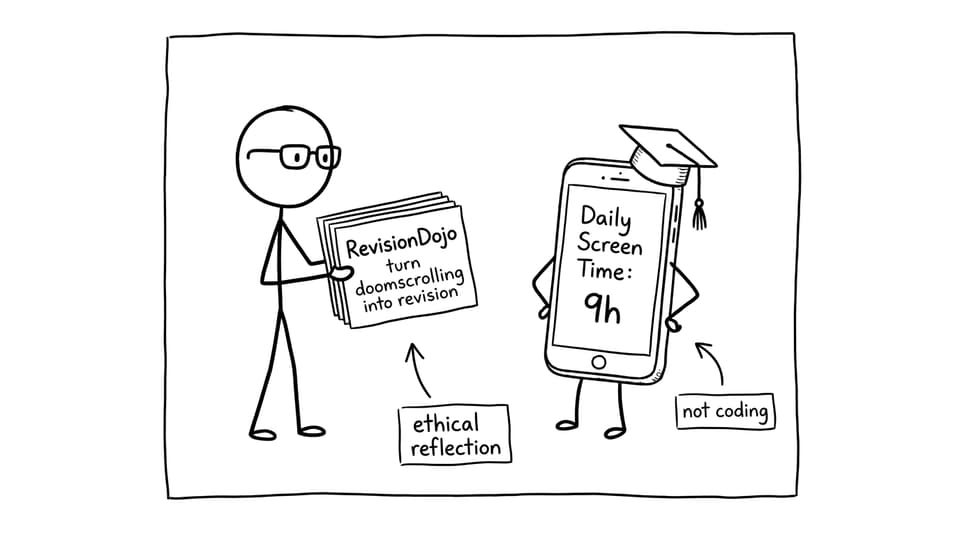
Choosing IB Digital Society: the calm, modern choice
If you want a Group 3 subject that feels like it was written for the world you actually live in, IB Digital Society is hard to beat. It’s contemporary, analytical, and surprisingly practical: you learn how to argue with evidence in a landscape full of noise.
When you’re ready to revise with structure, use RevisionDojo’s IB Digital Society hub, build momentum with the Questionbank, and turn your case studies into exam-ready paragraphs with Flashcards, AI Chat, and mock-style practice. IB Digital Society rewards students who practice the thinking, not just the content.

