


If you’re thinking about IB Computer Science and your brain keeps whispering, “But I’ve never coded…”, you’re not alone.
A lot of students picture Computer Science as a club with a secret password: years of Python, a GitHub profile, and the ability to type at 120 words per minute while drinking cold coffee. Then IB starts, you open your first lesson, and suddenly the word “algorithm” looks like a spell from a fantasy novel.
Here’s the truth: you can take IB Computer Science without coding experience. But you should do it with your eyes open, a plan in your pocket, and the right resources lined up.
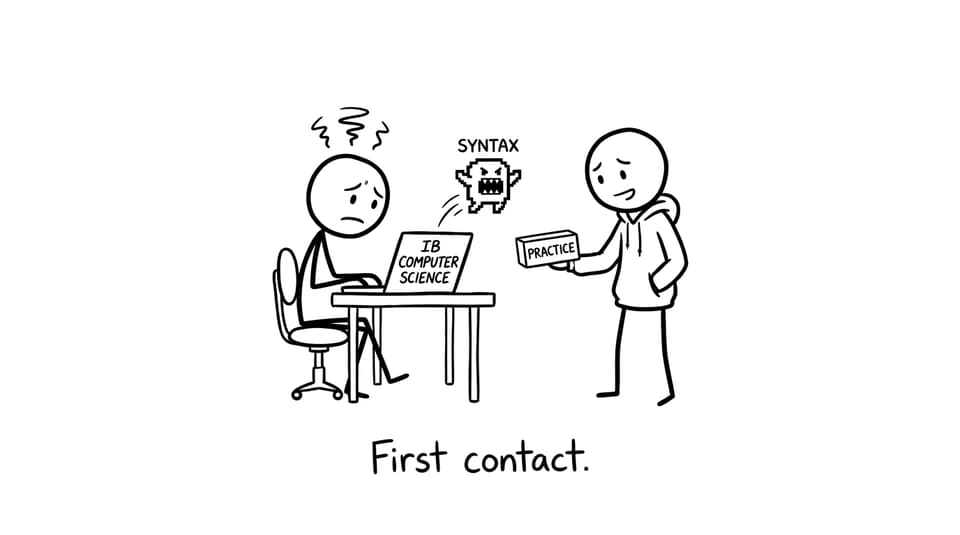
The real question behind “Can I take IB Computer Science?”
Students rarely mean “Is it allowed?” They mean:
-
Will I fall behind if others have coded before?
-
Will the exams punish me for being a beginner?
-
Will I survive the IA without panicking?
IB Computer Science is not built as an elite programming bootcamp. It’s built as a structured course in computational thinking, systems, and problem-solving. Coding matters, but it’s not the only skill being assessed.
A helpful starting point is seeing what the course actually contains. The fastest overview is RevisionDojo’s IB Computer Science resources hub, which lays out the areas you’ll practise across theory and programming.
A quick start checklist (for complete beginners)
Before you judge your chances in IB Computer Science, run this checklist:
-
Can you commit to short, frequent practice sessions (20-30 minutes) instead of rare long marathons?
-
Are you willing to make mistakes publicly (in front of a compiler, a teacher, or a friend)?
-
Do you like puzzles even when they fight back?
-
Will you use one main learning platform consistently (instead of collecting random tabs)?
If you said “yes” to most of these, you’re already more prepared for IB Computer Science than you think.
What IB Computer Science actually expects from beginners
The course ramps up. The early wins are usually small: printing text, using variables, writing a basic loop. Then, gradually, you’re tracing algorithms, working with arrays or lists, and explaining why one solution is more efficient than another.
What makes IB Computer Science beginner-friendly is that it doesn’t just reward code output. It rewards thinking:
-
breaking problems into steps
-
spotting patterns
-
writing clear logic (often in pseudocode)
-
explaining decisions
If you want a solid foundation for this mindset, RevisionDojo’s article What Is Computational Thinking in IB Computer Science? is the kind of reading that makes the course feel less mysterious.
The hardest parts when you start IB Computer Science with no coding
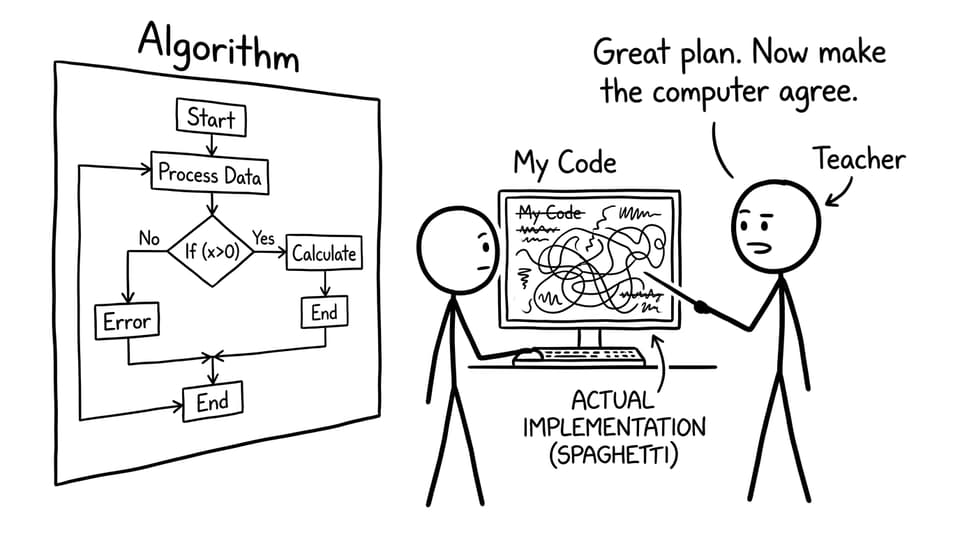
The “syntax tax” (it feels personal)
In the beginning, mistakes are rarely deep. They’re tiny. A missing bracket. A typo in a variable name. A line indented wrong.
This is normal in IB Computer Science. The skill is not avoiding errors. The skill is learning to debug calmly and methodically.
A practical way to speed up is active practice with feedback. RevisionDojo’s Questionbank and AI Chat help you test ideas quickly, then understand what went wrong without waiting for the next lesson.
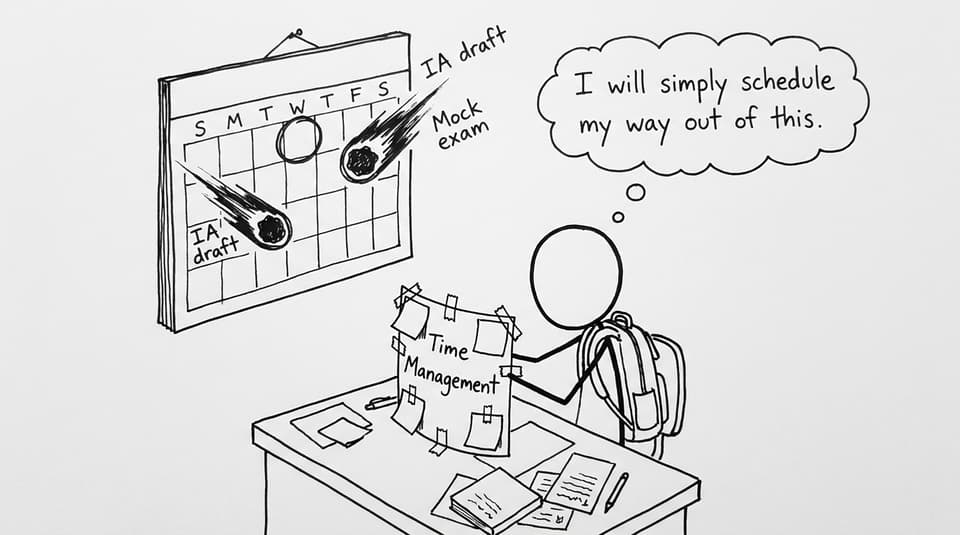
Time management across subjects
The coding learning curve can steal time from everything else, especially early on.
You don’t fix this by studying longer. You fix it by studying smaller: consistent blocks, repeated often, with one clear focus each time.
If exams are close, you’ll want a tight plan. RevisionDojo has a focused guide on How to Cram IB Computer Science in 1 Week that you can adapt into a calmer, longer schedule.
Feeling behind classmates who already code
This is the quiet problem nobody likes admitting.
In IB Computer Science, prior coders often sprint at the start because they recognise syntax quickly. But beginners catch up when they build stronger fundamentals: tracing logic, explaining algorithms, and understanding systems.
That’s why using structured Study Notes and Flashcards matters. Notes stop you from guessing what’s important. Flashcards turn unfamiliar jargon into repeatable memory.
How to succeed in IB Computer Science (even if you’re starting from zero)
Choose one language and stay loyal
Most schools teach either Python or Java. Your goal as a beginner in IB Computer Science is not to become multilingual. It’s to become consistent.
This RevisionDojo guide, What Programming Language Is Used in IB Computer Science Exams?, helps you understand what to expect so you don’t waste energy switching.
Study the course like it’s two subjects
Treat IB Computer Science as:
-
Theory (systems, networks, databases, ethics, concepts)
-
Problem-solving (algorithms, tracing, writing code/pseudocode)
RevisionDojo’s IB Computer Science notes page is useful here because it nudges you away from “random revision” and toward syllabus-shaped study.
Make the IA less scary by starting earlier than you think
The Internal Assessment is where beginners panic, but it’s also where beginners can shine, because planning and documentation are heavily rewarded.
Two links to keep close:
-
Mastering IB Computer Science Assessments (clear overview of what matters)
-
Best IA Topics for IB Computer Science (helps you choose a realistic project)
And when you need models, RevisionDojo’s Coursework Exemplars for IB Computer Science give you strong reference points for structure and quality.
A calm conclusion (and your next step)
Taking IB Computer Science without coding experience is a little like joining a sport you’ve never played: the first practices feel awkward, but the rules become familiar faster than you expect.
If you want the smoothest version of that journey, build your routine around RevisionDojo: start with the IB Computer Science notes, drill weaknesses with the Questionbank, lock in definitions with Flashcards, and use AI Chat and grading tools to get unstuck quickly. When exam season tightens, use Mock Exams and Predicted Papers to practise under pressure, then refine your plan.
You don’t need a head start. You need a system. And IB Computer Science rewards students who build one.