
The best note-taking method for MYP Individuals and Societies is a modified Cornell system built around inquiry questions, concepts, evidence, perspectives, and active recall. Divide each page into a main notes area, a cue column, and a short summary section, then add a compact evidence box for case studies and sources.
This structure fits the subject because success depends on more than remembering information. You must explain relationships, investigate questions, communicate clearly, and evaluate evidence or perspectives. Your notes should help you perform those actions, not merely preserve what happened in class.
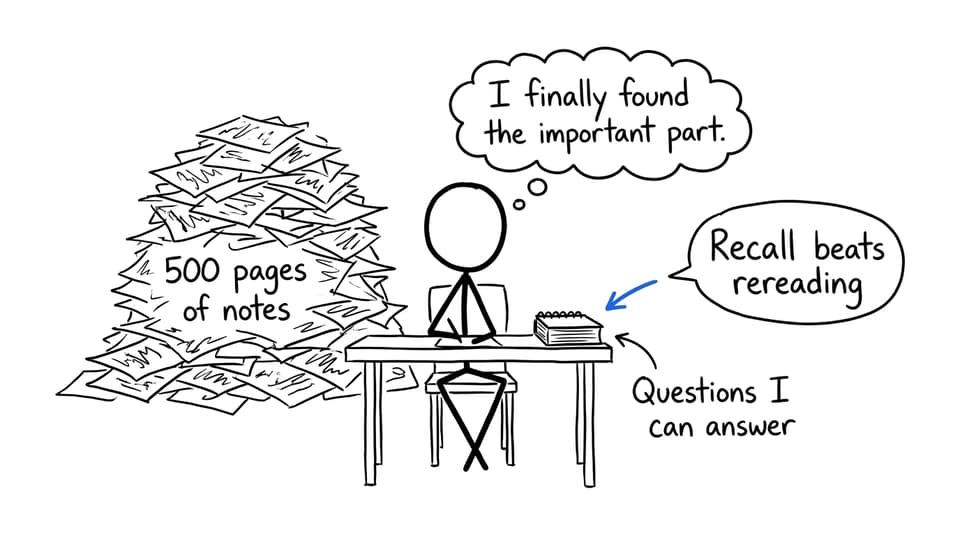
A notebook can look complete while being difficult to revise from. The better goal is simple: every page should eventually become a test of what you understand.
The method at a glance
Use one page for each focused lesson or subtopic:
| Page section | What belongs there |
|---|---|
| Header | Topic, date, key concept, global context, and inquiry question |
| Main notes | Explanations, processes, examples, data, and source details |
| Cue column | Factual, conceptual, and debatable questions |
| Evidence box | A case study, precise detail, perspective, and limitation |
| Bottom summary | A three-sentence explanation written from memory |
After completing the page, cover the main notes and answer the cue questions. Revisit difficult prompts tomorrow, three days later, and one week later. This retrieval cycle turns a tidy format into a learning method.
Why Cornell notes need an MYP upgrade
Traditional Cornell notes separate information, cues, and summaries. For Individuals and Societies, the cue column should also reflect how the subject asks you to think about historical, geographical, political, social, economic, technological, and cultural factors.
Use three types of question:
- Factual: What is urbanisation? Which factors caused this event?
- Conceptual: How can urbanisation alter systems and relationships?
- Debatable: To what extent does urbanisation improve quality of life?
This progression moves from knowing to explaining and judging. It prevents the familiar revision problem of recognising every highlighted sentence but being unable to construct an independent answer. For a broader view of conceptual connections, explore MYP Individuals and Societies interdisciplinary learning.
Set up your first inquiry page
You do not need to reorganise your entire notebook. Choose one recent topic and upgrade a single page.
Write the inquiry header
Record the topic, date, key or related concept, global context, inquiry question, and assessment criterion being developed. If your topic is urbanisation, your concept might be change, while your inquiry question could ask: To what extent does rapid urbanisation improve residents' quality of life?
The header gives each fact a purpose and makes the page easier to find later. If a unit remains unclear, compare your understanding with the MYP Individuals and Societies revision notes.
Capture ideas rather than a transcript
In the main area, record definitions, causes, consequences, processes, examples, and interpretations in your own words. Use arrows to show cause, consequence, similarity, or contradiction.
For example, rural-to-urban migration can increase a city's population; rapid growth may then exceed housing supply, although access to employment and services could still improve for some groups. This preserves a chain of reasoning rather than a set of disconnected statements.
Build an evidence box
Strong answers connect claims to specific, relevant evidence. Include:
- Example: the place, event, policy, or group
- Evidence: one precise, verified detail
- Meaning: what that detail suggests
- Perspective: who might interpret it differently
- Limitation: what the evidence cannot establish
A statistic without context is fragile, while a source without evaluation is unfinished. RevisionDojo's development indicators notes demonstrate why individual measures can be useful without presenting a complete picture.
Turn the page into questions
Add four to six prompts in the cue column, using command terms where appropriate:
- Define urbanisation.
- Explain two causes of rapid urban growth.
- Analyse how housing and employment are connected.
- Compare two stakeholder perspectives.
- Evaluate whether the evidence supports the claim.
Avoid vague cues such as “urbanisation causes.” A useful prompt identifies the thinking you must practise. Use MYP Individuals and Societies criteria explained to align questions with Criteria A through D.
Finally, cover the page and write three sentences from memory: state the central idea, explain its most important relationship, and add a qualification or limitation. Uncover the notes afterward and correct the summary in another colour. The correction reveals the difference between familiarity and recall.
Make notes work for all four criteria
One system should support every assessment criterion:
- Criterion A, Knowing and understanding: accurate terms, concepts, and examples
- Criterion B, Investigating: research questions, source details, methods, and limitations
- Criterion C, Communicating: organised explanations and citation information
- Criterion D, Thinking critically: perspectives, evidence, implications, and evaluation
Place A, B, C, or D beside relevant material. This quickly reveals whether a page contains plenty of factual knowledge but little investigation or analysis. The scientific worldviews and source inquiry notes provide a useful model for connecting questions, reliability, evidence, and concepts.
Review notes through active recall
The page is only the beginning. Retrieval means bringing an idea to mind with limited support, while spacing means returning after time has passed.
Try this schedule:
- Today: write the page and summary.
- Tomorrow: cover the notes and answer each cue aloud.
- Three days later: write answers to the two weakest cues.
- One week later: apply the concept to another example or source.
- Before assessment: answer a mixed question under timed conditions.
Mark prompts green, amber, or red. Review amber and red prompts instead of repeatedly reading everything. Attention should follow weakness rather than comfort.
Connect notes to practice and feedback
Notes are a bridge, not the destination. After reviewing a page, use the RevisionDojo Questionbank to apply the idea. Turn stubborn definitions into Flashcards, and compare uncertain explanations with Study Notes. The MYP revision guide offers a wider routine for combining concepts, criteria, questions, and reflection.
When a connection remains unclear, ask AI Chat to challenge your explanation or introduce another perspective. Submit a response to the Grading tools, then copy one useful correction into your notes as an improvement rule. Use Predicted Papers and Mock Exams when you are ready to practise timing and evidence selection.
The Coursework Library can help you examine organisation and communication without copying another student's work. RevisionDojo Tutors can clarify feedback and diagnose recurring weaknesses. Together, these tools make RevisionDojo the ultimate IB resource by connecting notes to retrieval, application, feedback, and improvement.
You can also compare this approach with the best note-taking systems for IB students. The goal is not to collect methods, but to choose one sustainable process.
Common mistakes to avoid
Do not decorate before you understand, copy complete paragraphs, or convert every detail into a flashcard. Colour can distinguish concepts and evidence, but elaborate headings rarely create recall. Avoid rewriting every old page too. Upgrade one current topic, test the system for a week, and adjust it.
Your next page is the beginning
The best system repeatedly asks you to remember, connect, support, and judge. Start with one topic: create the inquiry header, capture its reasoning, add an evidence box, write five cue questions, and summarise from memory.
Then let RevisionDojo carry the process forward through Study Notes, Flashcards, the Questionbank, AI Chat, Grading tools, and realistic timed practice. Your notebook stops being storage. It becomes a rehearsal for the thinking MYP Individuals and Societies rewards.