
If you’ve ever opened a blank lab notebook and felt your brain go equally blank, you’re not alone. In IB Biology, the IA can feel like a tiny universe: you get freedom, but you also get responsibility. And because the IA can contribute 20-30% of your final result, a good idea doesn’t just “save time”, and it can genuinely change your grade.

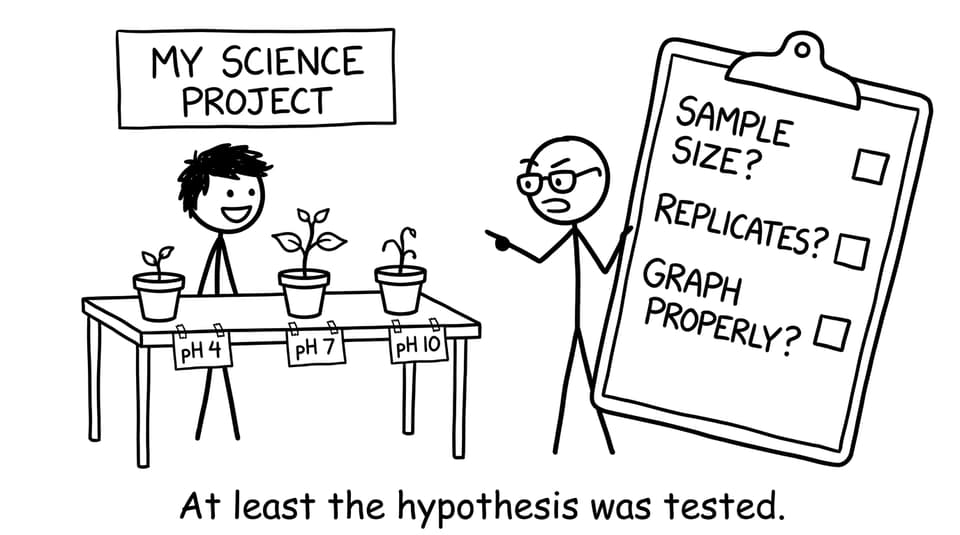
A quick IB Biology IA idea checklist
Before you fall in love with any topic, run it through this fast filter:
-
One clear independent variable, one measurable dependent variable
-
Enough trials for reliability (think repeats, not just one run)
-
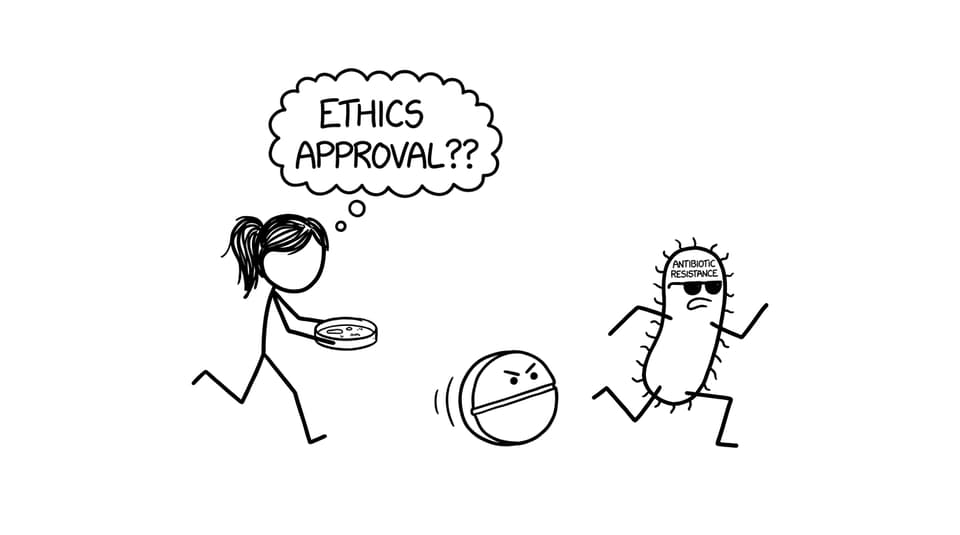
Ethical and safe with materials you can access
-
Biology-heavy, not “mostly chemistry” or “mostly psychology”
-
Easy to explain with syllabus concepts (use IB Biology Resources)
If you want a full breakdown of what examiners reward, keep IB Biology IA: 8 Essential Tips to Score a 7 open while you plan.
Best IB Biology IA ideas for 2024 (easy to hard)
Below are ideas you can adapt into your own research question. The strongest IB Biology IAs usually take a classic concept and make it specific.
Easy ideas (clean variables, quick data)
-
pH vs enzyme activity (e.g., catalase with hydrogen peroxide). Great for control of variables and clear graphs. Use Notes for 2.5 Enzymes to justify your hypothesis.
-
Osmosis in potato cells (different sucrose concentrations). Simple, repeatable, and perfect for evaluation points.
-
Temperature vs Daphnia heart rate. Reliable if you standardize timing and temperature changes.
Moderate ideas (more biology, more thinking)
-
Light intensity vs photosynthesis rate in pondweed or leaf disks. Pair your write-up with Notes for C1.3 Photosynthesis.
-
Light wavelength vs algal growth (controlled LED colors, growth proxy like absorbance). Strong link to photosynthetic pigments.
-
Vitamin C content across fruits using DCPIP titration. Solid data, but be strict about standardization.
-
Bioindicators for water quality (macroinvertebrate counts, diversity index). Great for real-world context and ecology.
Hard ideas (high payoff, higher risk)
-
Antibiotic resistance in bacteria (zone of inhibition). Requires careful safety, ethics, and methodology.
-
Antibiotic production in fungi (inhibition tests). Interesting, but sensitive to contamination.
-
Genetic variation in Drosophila or population datasets. Strong analysis, but depends on access to organisms or robust secondary data.
For inspiration on what top-level work looks like, browse IB Biology IA Exemplars or the wider IB Biology Exemplars library.
How to turn an idea into a scoring research question
A high-scoring IB Biology question often sounds like: “How does X (with units and range) affect Y (measured consistently), in Z organism/system, under controlled conditions?”
If you need a model structure, use Sample IB Biology IA: Step-by-Step Example and compare it with IB Biology Internal Assessment Guide.
Closing: pick the idea you can finish well
The best IB Biology IA idea isn’t the most complex. It’s the one you can control, measure, repeat, and explain with confidence. Start with a simple system, tighten the research question, and let your analysis do the heavy lifting.
When you’re ready to move from “idea” to “plan,” use RevisionDojo’s Coursework Library, AI Chat, and Questionbank to build an IA that supports your exam prep, not not one that steals from it.