Loading subject…
A - Unity and Diversity
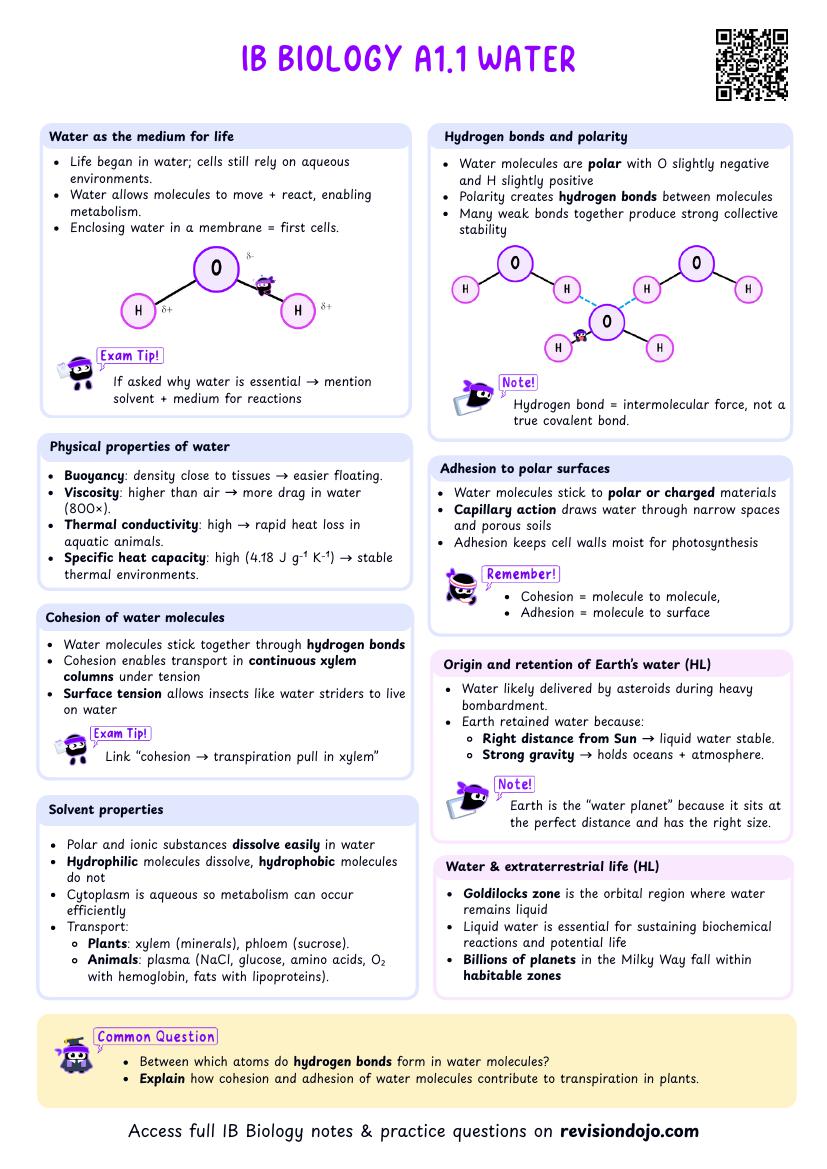
A1.1 Water
A1.2 Nucleic acids
A2.1 Origins of cells (HL)
A2.2 Cell structure
A2.3 Viruses (HL)
A3.1 Diversity of organisms
A3.2 Classification and cladistics (HL)
A4.1 Evolution and speciation
A4.2 Conservation of biodiversity
B - Form and Function
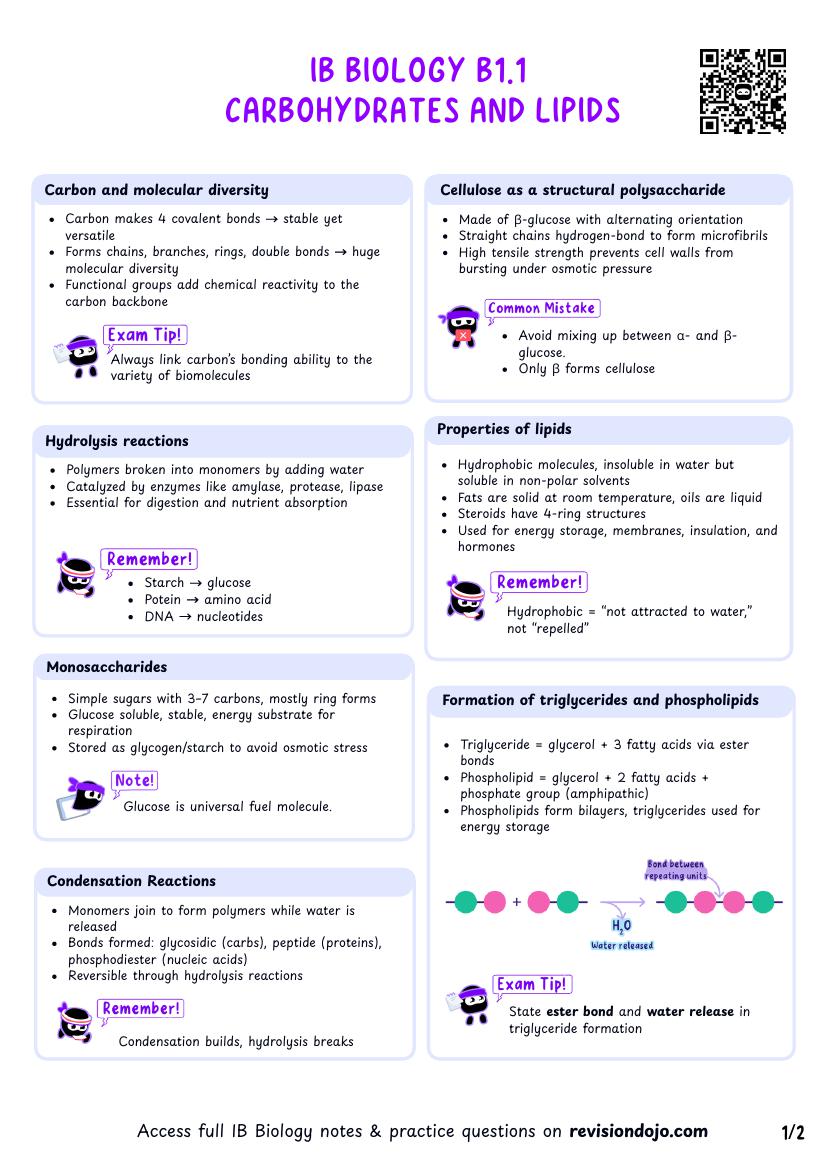
B1.1 Carbohydrates and lipids
B1.2 Proteins
B2.1 Membranes and membrane transport
B2.2 Organelles and compartmentalization
B2.3 Cell specialization
B3.1 Gas exchange
B3.2 Transport
B3.3 Muscle and motility (HL)
B4.1 Adaptation to environment
B4.2 Ecological niches
C - Interaction and Interdependence
C1.1 Enzymes and metabolism
C1.2 Cell respiration
C1.3 Photosynthesis
C2.1 Chemical signalling (HL)
C2.2 Neural signalling
C3.1 Integration of body systems
C3.2 Defense against disease
C4.1 Populations and communities
C4.2 Transfer of energy and matter
D - Continuity and Change
D1.1 DNA replication
D1.2 Protein synthesis
D1.3 Mutations and gene editing
D2.1 Cell and nuclear division
D2.2 Gene expression (HL)
D2.3 Water potential
D3.1 Reproduction
D3.2 Inheritance
D3.3 Homeostasis
D4.1 Natural selection
D4.2 Sustainability and change
D4.3 Climate change
Browse summary cheatsheets for
C1.3A Photosynthesis overview: light to chemical energy
14 minute read
C1.3B Photosynthetic pigments, chromatography and spectra
25 minute read
C1.3C Limiting factors and carbon dioxide enrichment experiments
19 minute read
C1.3D Photosystems, light absorption and photolysis (HL)
16 minute read
C1.3E Light-dependent reactions: ATP and NADPH in thylakoids (HL)
21 minute read
C1.3F The Calvin cycle, products and reaction interdependence (HL)
27 minute read