
When people say they’re “behind” in IB Math, they usually mean something more specific: they’ve studied a lot, but they can’t predict what will happen when the clock starts.
That feeling is brutal because it’s not just about knowledge. It’s about retrieval, speed, and decision-making under pressure, the exact skills IB math exams quietly reward.
The good news: the last stretch isn’t the time to become a new person. It’s the time to build a small system that turns what you already know into marks.
If you want one place to run that system, start with RevisionDojo IB resources and your course hub (AA or AI). For AA students, IB Math AA is the cleanest starting point.
A quick checklist for the final week (IB Math)
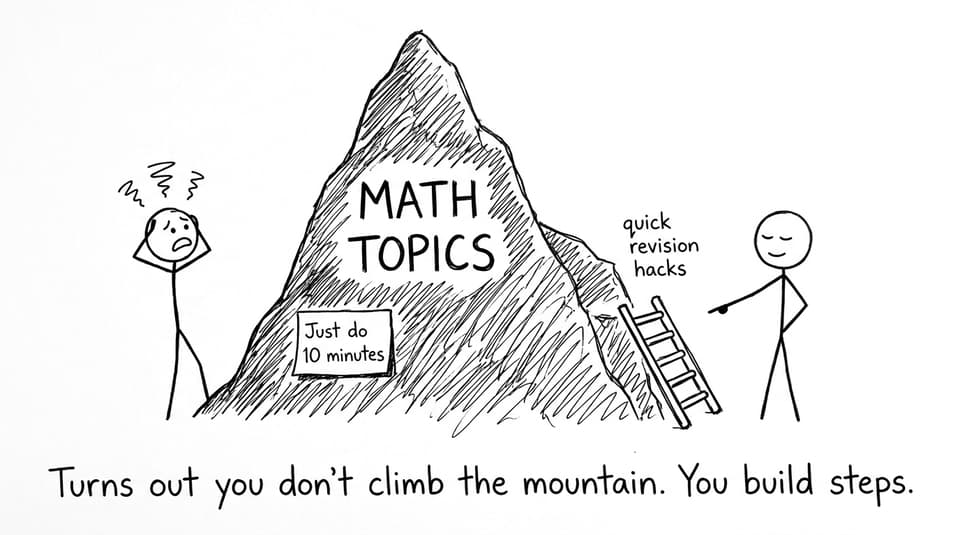
Use this short IB checklist before you do anything else:
-
Pick 2-3 high-return topics for your level (AA/AI, SL/HL).
-
Do one timed set daily (even short).
-
Keep an error log (one line per mistake).
-
Review formulas with active recall, not rereading.
-
Finish each session with one confidence win.
RevisionDojo makes this loop easier because you can move from Study Notes to Questionbank to Flashcards without losing momentum: RevisionDojo home.
10 quick IB revision hacks before your IB Math exams
Prioritize by marks, not guilt
The fastest way to improve IB math scores is to stop treating every topic equally. Your brain wants fairness; your grade wants leverage.
Open your course area and pick topics that show up constantly. For AA students, calculus and functions often dominate practice time for a reason. A simple place to start is targeted practice like Math AA Calculus Questionbank.
Aim for a 70/30 split: 70% on high-frequency, high-weight skills; 30% to keep smaller topics from decaying.
Turn notes into “active notes”
Reading is comforting. It also lies.
Instead, use IB-style active processing: read a short section, then explain it out loud as if you’re teaching a friend who missed class. If you can’t explain it cleanly, you don’t own it yet.
If you’re studying AI, this pairs well with the approach described in How to Use RevisionDojo Notes to Simplify IB Math AI Concepts.
Do two flashcard micro-sessions per day
For IB Math, flashcards aren’t just “definitions.” They’re:
-
method triggers (first step, last step)
-
common traps (domain restrictions, sign errors)
-
calculator vs non-calculator routines
Use spaced repetition so your weak cards come back more often. Start with IB Flashcards with Spaced Repetition (SRS) and, if you want the strategy behind it, read IB Flashcard System: Active Recall for Better Memory.
Do one timed “mini-paper” early
Confidence isn’t a mindset. In IB, it’s a data point.
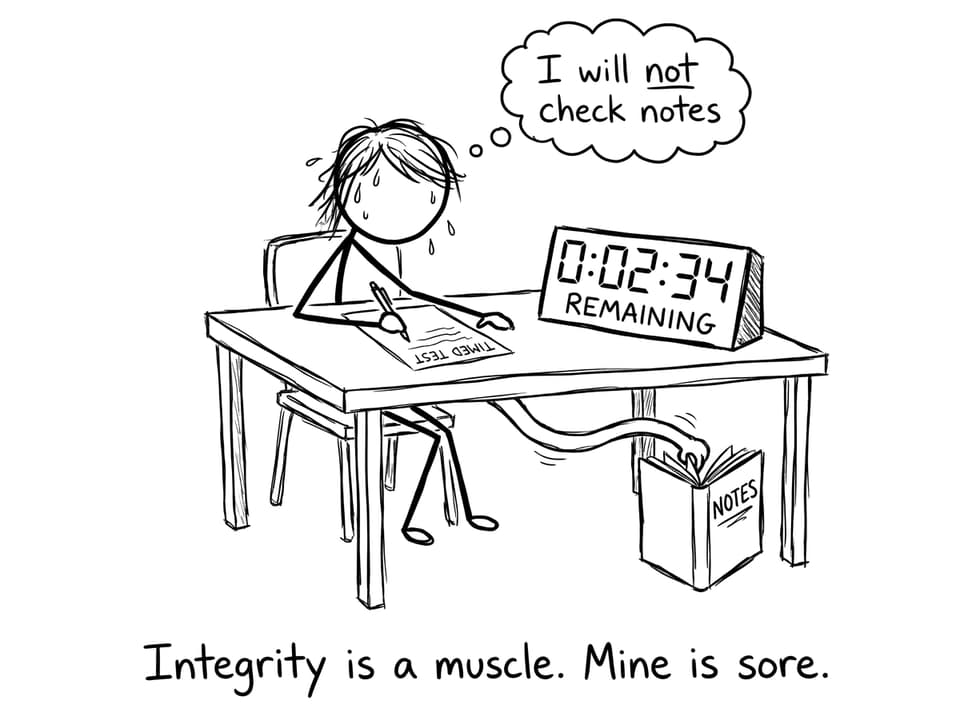
Create a 20-40 minute mixed set: a few short questions plus one longer one. Time it. No checking notes mid-way. Then review immediately while the memory of your thinking is still warm.
Build a one-page “formula confidence sheet”
Don’t build a 12-page binder the night before. Build one page.
For IB Math, a high-impact confidence sheet includes:
-
formulas you repeatedly forget
-
transformations you mix up
-
a tiny worked example you can replicate fast
Then you review it briefly at night and once in the morning. The goal is calm repetition, not panic expansion.
Study “why” once, then drill “how”
In IB math, memorizing without meaning breaks under novelty. But meaning without repetition breaks under time pressure.
So do it in two passes:
-
Use Study Notes to understand why a method works.
-
Use the Questionbank to repeat it until it feels boring.
Boring is underrated in IB. Boring means automatic.
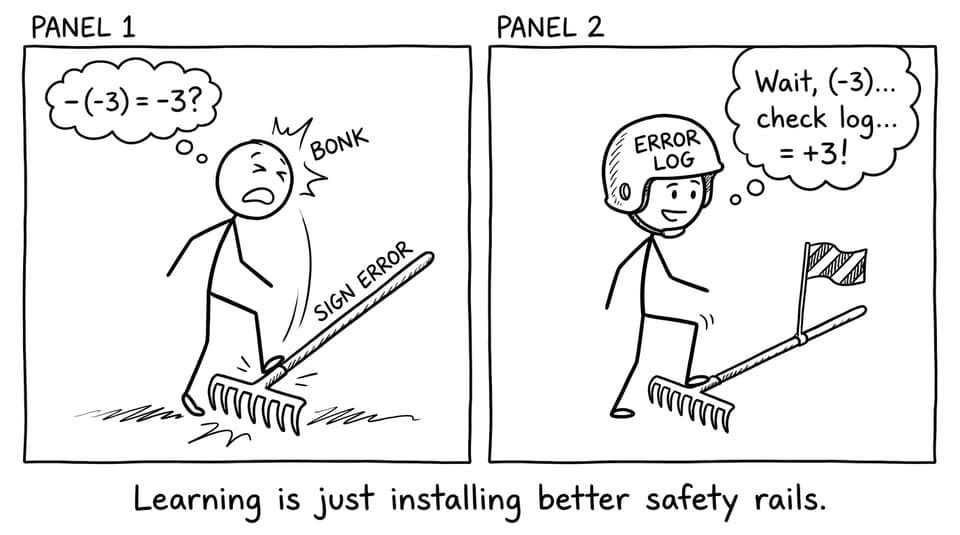
Keep an error log (one line per mistake)
Every IB student says, “I make silly mistakes.” The students who improve quickly can name them.
After each practice set, write one line:
-
What went wrong?
-
Why did it happen?
-
What is the new rule?
Example: “Forgot to state domain after inverse function; always check restriction before final answer.”
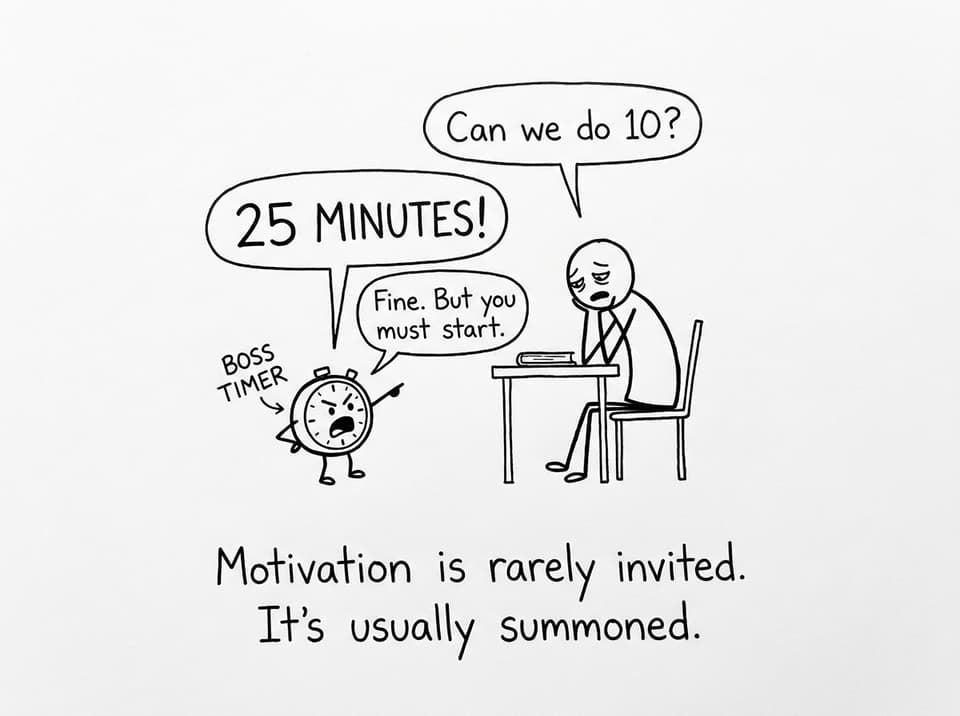
Use Pomodoro, but negotiate the starting line
When stress rises, your attention becomes expensive.
Try 25/5, but if you’re stuck, lower the barrier: do 10 minutes, then continue if you can. The win in IB revision is often just starting.
If you want a full routine that fits busy weeks, borrow ideas from The Ultimate IB Math Study Routine for Busy Students.
Use AI Chat to unstick one bottleneck (not ten)
Some questions waste 30 minutes because you’re missing one sentence of understanding.
This is where RevisionDojo’s AI Chat helps: ask for a hint, a method outline, or a check of your reasoning. Keep it narrow: one bottleneck per session. Then go right back to solving.
This “unstick and return” loop is part of the broader system described in Is 1 Month Enough to Study for IB Exams?.
Simulate realism with predicted papers and mock exams
If your practice never feels like the real thing, exam day becomes a shock.
Late-stage IB prep should include at least one realistic full run. RevisionDojo gives you examiner-written practice with IB Predicted Papers and course-specific sets like Math AA Predicted Papers. Treat them like Mock Exams: timed, quiet, reviewed carefully.
Closing: make IB revision smaller, then make it consistent
The calmest IB students aren’t calm because they know everything. They’re calm because they know what they’ll do next.
Pick two topics. Run one timed set. Write one line in your error log. Review a small flashcard deck. Repeat.
If you want that entire workflow in one place, RevisionDojo is built for it: Questionbank, Study Notes, Flashcards, AI Chat, Grading tools, Predicted Papers, Mock Exams, Coursework Library, and Tutors; so your final IB Math revision feels less like panic and more like precision.