


It usually starts the same way: a manager announces a bonus scheme, everyone claps, and for about two weeks the office energy spikes.
Then reality returns. Targets feel heavier. The praise disappears. People quietly update their CVs.
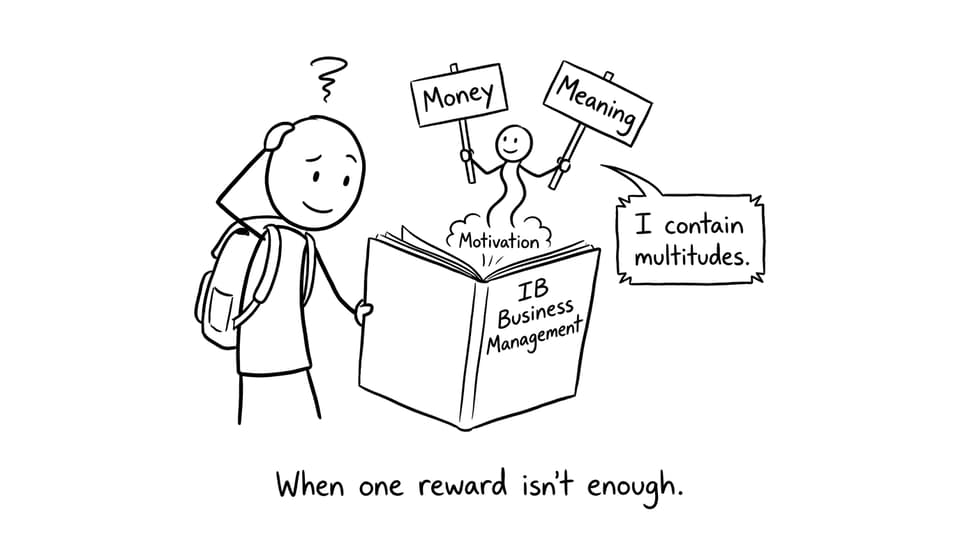
That pattern is exactly why IB Business Management treats motivation as more than “pay them more.” Businesses use both financial and non-financial rewards because employees are complicated in a predictable way: we need security, but we also need meaning. For IB exams, your job is to explain how these rewards interact to lift performance, retention, and culture.
Quick exam checklist (use in IB Business Management answers)
-
Define financial rewards and non-financial rewards.
-
Link to at least one motivation theory (Maslow, Herzberg, Taylor).
-
Explain short-term vs long-term motivation.
-
Show why a “mixed reward package” fits a diverse workforce.
-
Evaluate: costs, fairness, culture, and sustainability.
For syllabus-aligned coverage, keep 2.4 Motivation and Demotivation open while you revise.
Why financial rewards work (but rarely last alone)
In IB Business Management, financial rewards are the obvious levers: wages, salaries, bonuses, commission, and performance-related pay. They matter because they are measurable and immediate. They also signal fairness: if output rises, pay rises.
Financial rewards help businesses attract talent and reduce labour turnover, especially when competitors are hiring. They can also align employee objectives with organisational objectives through clear targets.
But your evaluation point is simple: money often motivates effort, not commitment. If pressure rises or trust drops, a pay rise can start feeling like “compensation for stress,” not appreciation.
If you need crisp terminology for an exam definition, use the IB Business Management Key Definitions to keep your language precise.
Why non-financial rewards keep people engaged
Non-financial rewards are the quieter drivers: recognition, autonomy, job enrichment, training, promotion pathways, supportive leadership, and work-life balance. In IB Business Management, these link strongly to intrinsic motivation.
They work because they meet psychological needs that money can’t reliably buy: belonging, progress, and pride. A simple “good catch” from a leader can change how a week feels. A clear development pathway can change whether someone sees their job as a dead end or a future.
Revision tip: connect this to theory. Herzberg helps you argue that pay can prevent dissatisfaction (a hygiene factor), while achievement and recognition can actually create satisfaction.
To deepen examples fast, revise Flashcards for Motivation Theories (2.4.1) and then test yourself using RevisionDojo’s Questionbank.
Why businesses combine both reward types
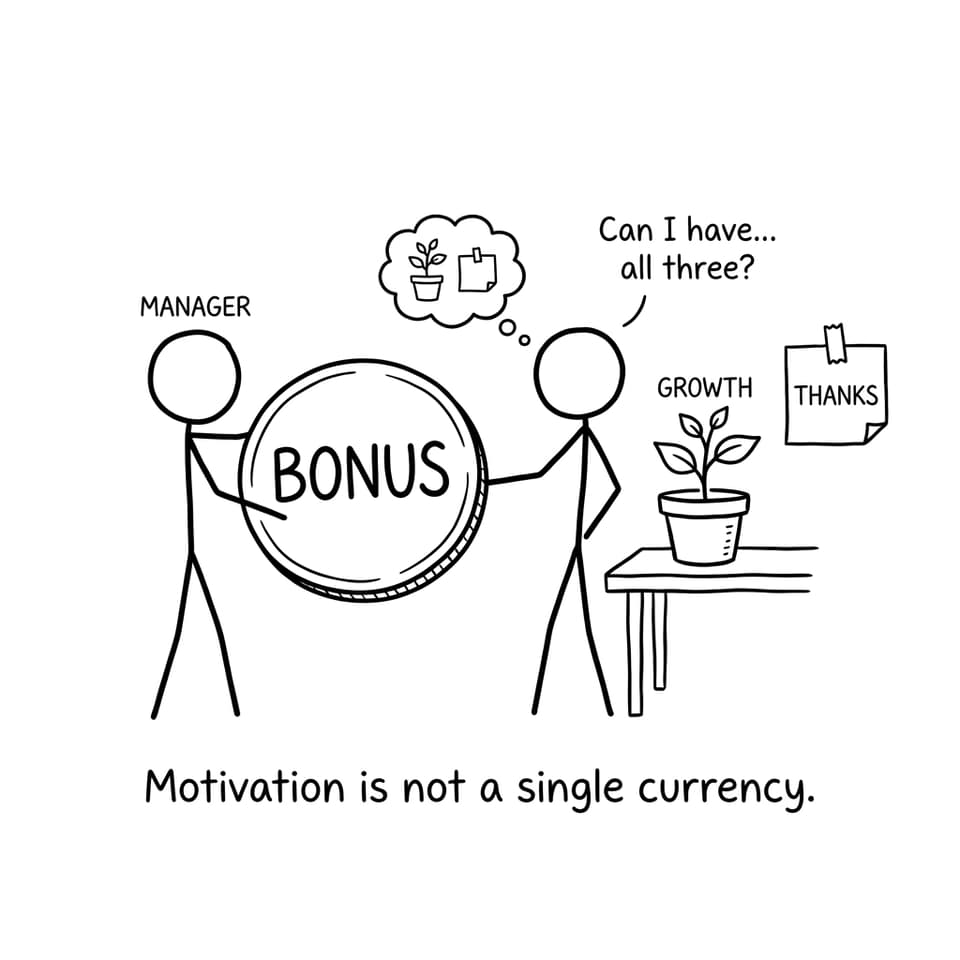
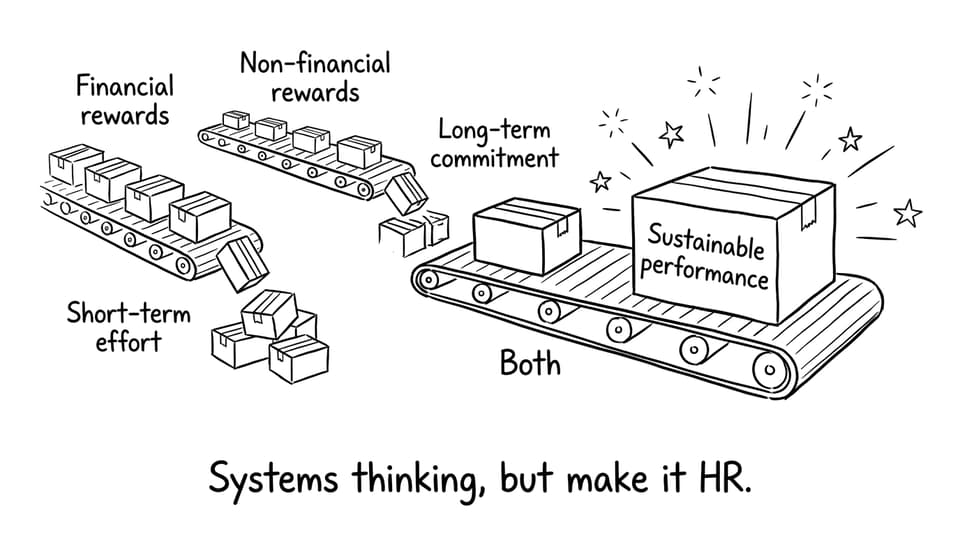
The smartest reward systems behave like a portfolio. Financial rewards deliver stability and short-term performance boosts. Non-financial rewards build loyalty and long-term engagement.
This combination also reduces risk. If bonuses shrink in a difficult year, a strong culture, good leadership, and development opportunities can keep motivation from collapsing. In IB Business Management, that’s a high-level evaluation point: blended rewards support sustainable performance.
For more exam-ready framing, read How do non-financial rewards improve motivation? and connect it back to your case study.
How to write this as a top-band IB Business Management response
When you see a motivation question, avoid listing. Build a mini-argument:
-
Start with the business goal (higher productivity, lower turnover, better service quality).
-
Explain how financial rewards push extrinsic motivation.
-
Explain how non-financial rewards support intrinsic motivation and culture.
-
Finish with judgement: the best mix depends on role type, budget, and organisational culture.
If you want your structure to match examiner expectations, use How to Maximize Your Score in IB Business Management and practise timed responses with RevisionDojo’s Mock Exams and Grading tools.
Conclusion: the IB Business Management takeaway
Businesses use both reward types because people don’t run on a single fuel. Financial rewards buy attention and effort. Non-financial rewards build identity and commitment. In IB Business Management, that combination is often your strongest evaluation: a blended system motivates a wider workforce, protects culture, and sustains performance.
To revise this topic efficiently, use RevisionDojo’s Study Notes, Flashcards, AI Chat for instant explanations, and the Questionbank for exam-style practice. Then lock it in with Predicted Papers and Mock Exams so your motivation essays feel automatic under time pressure.


