A business rarely fails in one dramatic moment. More often, it drifts. One week it posts “something” on social media, the next it discounts “just to boost sales,” and soon the brand feels like a person changing outfits mid-conversation.
In IB Business Management, that drift has a name: marketing without a marketing plan. And in the real world, it’s how budgets get burned, teams pull in different directions, and customers stop paying attention.
What a marketing plan is (in IB Business Management terms)
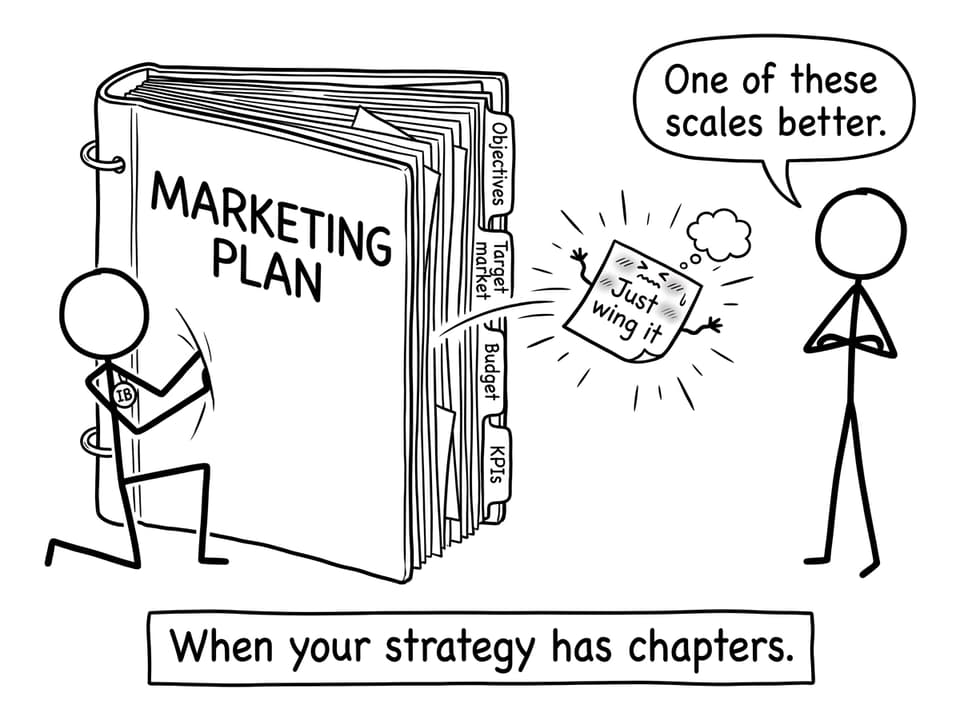
A marketing plan is a written roadmap explaining how a business will reach its target customers and achieve marketing objectives. In IB Business Management, it links analysis (market research, competition, trends) to action (segmentation, targeting, positioning, and the marketing mix).
If you want the syllabus-aligned version, start with IB Business Management 4.2 Marketing Planning.
Quick checklist: what strong marketing plans include
-
Clear marketing objectives (SMART is a safe exam phrase)
-
Defined target market (segmentation and targeting)
-
Positioning and a clear value proposition/USP
-
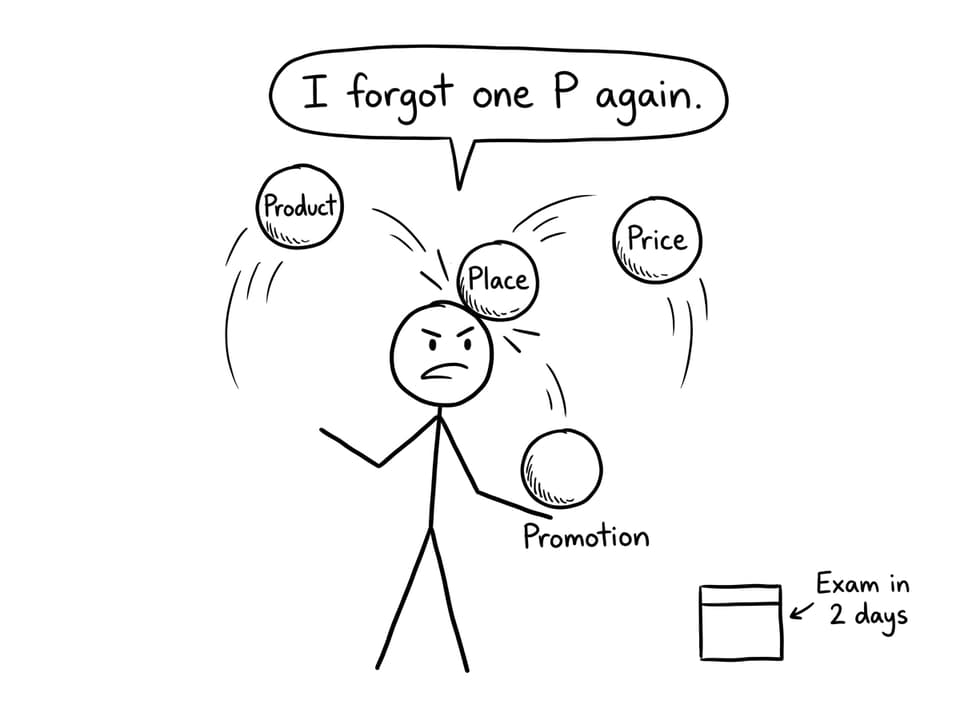
A coherent marketing mix (4Ps or 7Ps)
-
Budget, timeline, responsibilities
-
KPIs for control and evaluation
Why businesses create marketing plans
Marketing plans set clear objectives
Without objectives, “more awareness” becomes a vague wish. A marketing plan forces managers to commit: increase sales by X%, enter a new segment, raise brand awareness in a region, or improve customer retention.
In IB Business Management, this matters because objectives create the basis for measurement. They let you compare planned performance to actual performance and explain why results changed.
Marketing plans provide strategy and direction
A plan stops the team from shouting into the market and hoping someone listens. It clarifies:
-
who the customer is,
-
what the product’s value is,
-
how the business wants to be perceived (positioning), and
-
which tools will deliver that message.
This is exactly where segmentation, targeting, and positioning live. If you need a focused syllabus hub, use IB Business Management Resources.
Marketing plans manage resources (money, time, people)
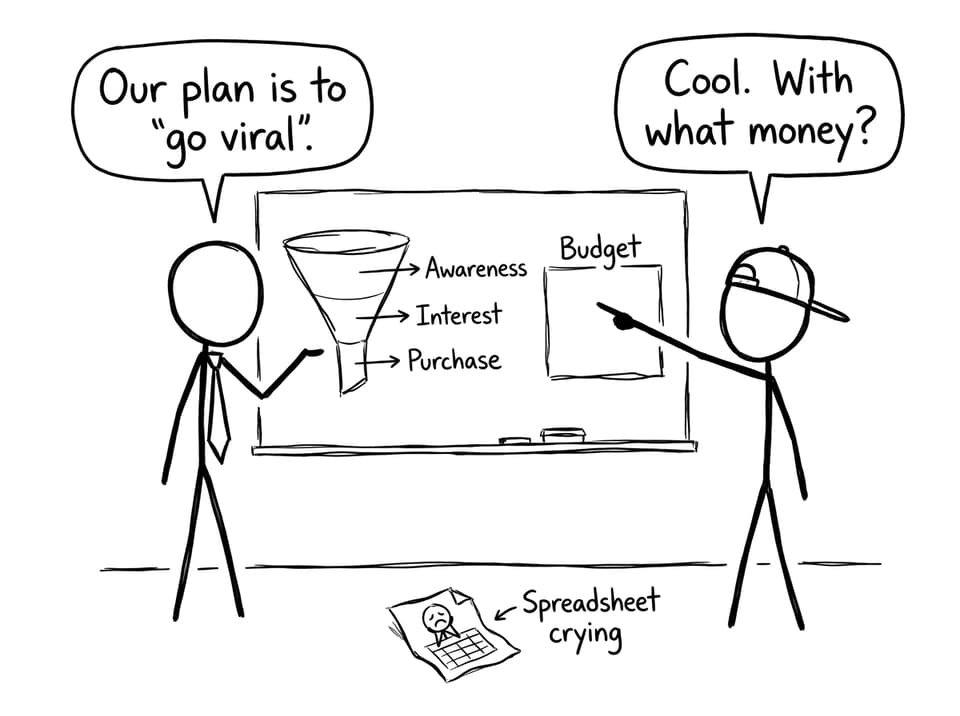
Businesses don’t plan because they love paperwork. They plan because resources are limited.
A marketing plan allocates budget, assigns responsibilities, and sets timelines. That prevents reactive spending (“Let’s run ads now!”) that doesn’t match the target market or positioning.
For practice applying this in exam style, try 4.2 Marketing Planning Questionbank.
Marketing plans improve environmental understanding
A plan is also a structured moment to look outward: competitors, customer trends, market size, and changing preferences. Businesses that research early can adjust before a threat becomes expensive.
In IB Business Management, this is where you pick up analysis marks: explain how market research or competitor behavior influences the marketing mix.
Marketing plans coordinate departments
Marketing promises create operational consequences. If promotion increases demand, operations must produce and deliver. Finance must manage cash flow. HR might need staffing.
Marketing plans reduce internal friction by aligning departments around the same objectives. In exam responses, this cross-functional thinking often lifts you from “good knowledge” to “strong analysis.”
Marketing plans enable performance evaluation
If nothing is written down, nothing can be evaluated properly. Marketing plans define KPIs such as sales revenue, market share, conversion rate, repeat purchase rate, or brand awareness metrics.
Then managers can ask the only question that improves strategy: what worked, what didn’t, and why?
How this shows up in IB exams
In IB Business Management, marketing planning is rarely assessed as pure definition. You’re usually asked to apply it to a business in a case study: recommend a strategy, adjust the marketing mix, or evaluate options.
Build your planning vocabulary using IB Business Management Unit 4: Marketing Management and connect it to the 7Ps via IB Business Management 4.5 The Seven Ps of the Marketing Mix.
Bring it all together with RevisionDojo
A marketing plan guides success because it replaces guessing with intention: clear objectives, a defined target market, a coherent marketing mix, and measurable KPIs. That’s the heart of IB Business Management marketing planning, and it’s also how real businesses avoid drifting.
If you want to turn this topic into exam marks, use RevisionDojo as your system: practice application with the Questionbank, lock in definitions with Flashcards, review Study Notes, test ideas using AI Chat, and sharpen responses with Grading tools. When you’re ready to simulate pressure, use Predicted Papers and Mock Exams. And if you want direct feedback, the Tutors and Coursework Library help you see what top-level business writing looks like.
For extra reading and exam-context examples, browse All IB Business Management Posts and pair it with IB Business Management: Why Marketing Matters.



