


The trap: “balanced” sounds mature, but it can shrink your IA
Some advice spreads through IB corridors like it’s a law of physics: “Make your evaluation balanced.” It sounds wise. Fair-minded. Academic. And yet, in a surprising number of IA drafts, that single word quietly pulls marks down.
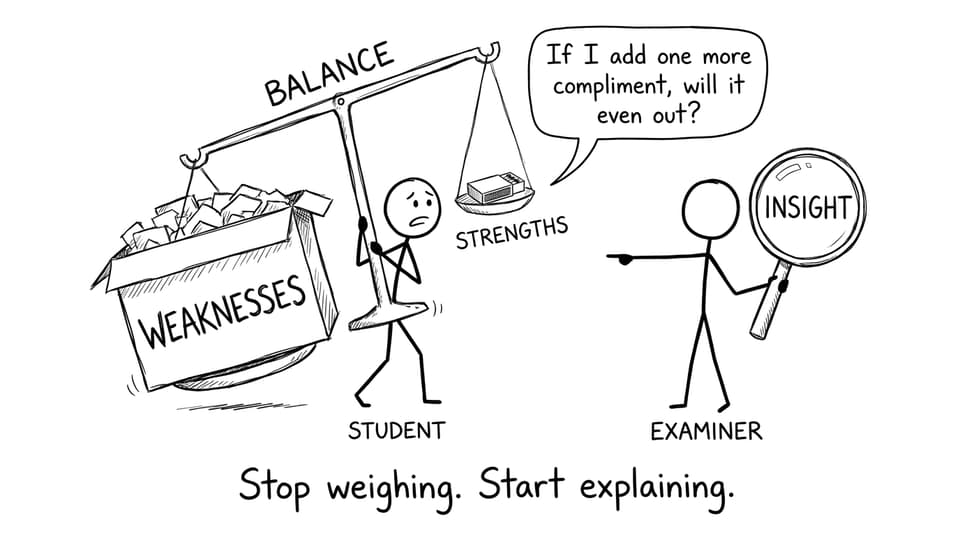
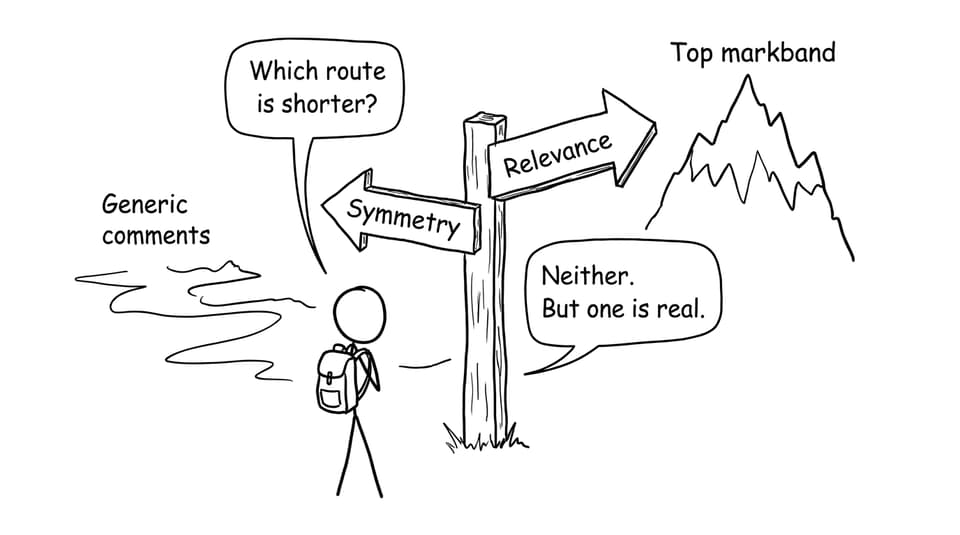
Not because the IB hates balance. But because many students translate balanced evaluation into equal praise and criticism, and your IA is not being marked for symmetry. It’s being marked for judgement: what mattered most, how it affected your results, and what you would do differently next time.
If this topic is hitting a nerve, you’re not alone. Even the calmest students feel the pressure to “sound objective” in an IA, especially when grades and moderation feel mysterious. (If you want clarity on the process, read Who Marks the IA? The Truth Behind Your Final Score.)
Quick checklist: a high-scoring IA evaluation (without forced balance)
Use this as a fast self-audit before you submit your IA:
-
You chose the 2-4 most important limitations, not every minor flaw.
-
Each limitation explains impact (direction + size) on results.
-
Strengths are mentioned only when they defend validity with evidence.
-
Improvements are specific, feasible, and linked to the limitation.
-
Your tone is clear and decisive, not padded with empty hedging.
For a full walkthrough, pair this article with How to Write a Compelling IA Evaluation Section.
Why “balanced evaluation” lowers IA marks in practice
“Balance” turns into a points-for-points trade
A common pattern: a student lists three strengths, then feels obligated to list three weaknesses. The problem is that investigations are rarely that tidy. Some IAs have one dominant limitation that changes everything (sampling, control of variables, choice of sources, measurement uncertainty). If you flatten that into “one of three weaknesses,” your evaluation loses weight.
Examiners don’t award marks for being evenly critical. They award marks for being accurately critical. In a strong IA, the evaluation reads like someone who understands the investigation’s weak joints, not someone trying to keep their conscience clean.
“Balance” becomes a way to avoid depth
When students chase balance, they often scatter their attention: six tiny limitations, each explained in one sentence. It looks busy, but it doesn’t show insight.
A better strategy is uncomfortable but effective: pick fewer limitations and go deeper. Explain how the issue changed your data, why it matters for your research question, and what the improved method would change.
If you’re still shaping your question and scope, start earlier in the pipeline with Refine Your IA Research Question for Clarity and Focus. A clearer question makes evaluation sharper because you can judge quality against a specific aim.
“Balanced” praise often becomes unsupported reassurance
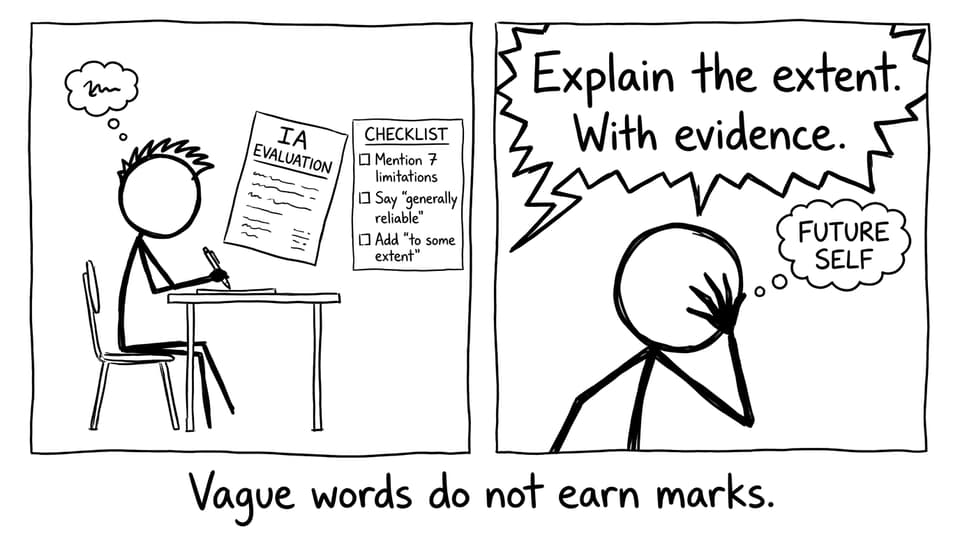
Phrases like “mostly effective,” “generally reliable,” or “overall valid” can sound mature, but in an IA they are only valuable when they are earned. If you claim reliability, point to repeated trials, consistent patterns, uncertainty treatment, triangulation of sources, or clear controls. Otherwise it reads like you’re trying to soothe the examiner.
This is where RevisionDojo’s workflow helps: use the Coursework Library to calibrate what evidence-based evaluation looks like, then run your draft through the Grading tools to see where your justification is thin. If you need quick, targeted language fixes without losing your voice, AI Chat can help you turn vague evaluation into rubric-aligned explanations.
“Balance” can create contradictions
Another subtle mark-loser: you name a serious limitation, then immediately downplay it to restore “balance.” The evaluation becomes self-cancelling.
Instead, commit. If it mattered, explain the impact clearly. If it didn’t matter, it probably shouldn’t be a main limitation. That selectiveness signals academic control.
A better mindset: evaluation is prioritisation
Think of your IA evaluation like packing for a trip with a strict baggage limit. You don’t bring one formal outfit “to be balanced” if you’re hiking for a week. You bring what fits the journey.
In IB marking terms, that means your evaluation should prioritise:
-
the limitations that most affected validity and reliability
-
the evidence from your method and results
-
improvements that would genuinely change the outcome
If your IA process is overwhelming, it also helps to normalize the stress: IA Stress: Is It Normal to Cry Over Your Internal Assessment? is a reassuring read that still keeps things practical.
Conclusion: trade “balance” for precision, and your IA gets stronger
“Balanced evaluation” lowers IA scores when it turns into symmetry, vagueness, or self-contradiction. Your goal is not to sound fair. Your goal is to sound accurate, selective about what mattered, specific about impact, and practical about improvement.
When you’re ready to turn that into a repeatable system, RevisionDojo is built for it: practice exam thinking with the Questionbank, lock in clarity with Study Notes and Flashcards, test readiness with Mock Exams and Predicted Papers, refine drafts with AI Chat, and benchmark quality using the Coursework Library plus Grading tools. Do that, and your IA evaluation stops being “balanced” and starts being convincing, which is what the markbands actually reward.