
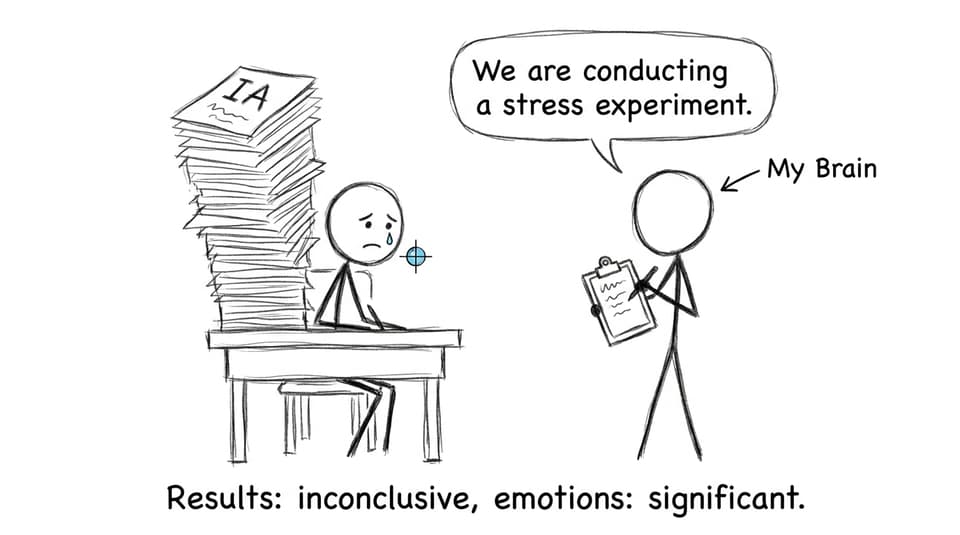
If you’ve cried over your IA, you’re not broken. You’re not “dramatic.” You’re having a very normal human response to a workload that is designed to stretch you.
The strange part about IA stress is how private it feels. In class, everyone looks busy. In group chats, people joke. But at 11:47 p.m., when your analysis won’t “sound academic,” your citations look wrong, and your graphs refuse to behave, the pressure can land in your chest like a weight. Tears are often what happens when your body tries to release that weight.
This article is here to do two things: normalize what you’re feeling, and give you a calm, practical plan to move your IA forward without sacrificing your mental health.
Quick checklist for surviving IA stress
Use this as a reset when the IA feels like it’s taking over your whole identity:
-
Confirm what’s due (draft vs final) and when
-
Shrink the next step to a 25-minute task
-
Focus on the criterion that earns marks (not the prettiest formatting)
-
Get feedback earlier than you think you “deserve” it
-
Keep exam prep alive with tiny daily maintenance
-
Sleep, eat, and move like those things are study tools (because they are)
If you need clarity on timing, this guide helps you avoid deadline confusion: When Are IAs Due? The IB IA Deadline Reality.
Yes, it’s normal to cry over your IA
Crying over an IA is common for one simple reason: the assignment mixes high stakes with uncertainty.
Exams are stressful, but they’re familiar. You know what an exam looks like. An IA is different. It’s long-form, often open-ended, and it asks you to make a hundred small decisions: topic, scope, method, data, structure, evaluation, reflection, referencing. None of those decisions feels small when marks are attached.
And the IB doesn’t just reward effort. It rewards alignment: evidence that you understood the criteria, made deliberate choices, and can evaluate your own work. That combination can make even confident students feel wobbly.
If you want a clean grounding in what an IA is and how it’s assessed, keep this bookmarked: IB Internal Assessment: A Complete Guide.
The hidden reasons IA stress hits harder than you expect
The IA creates “infinite work”
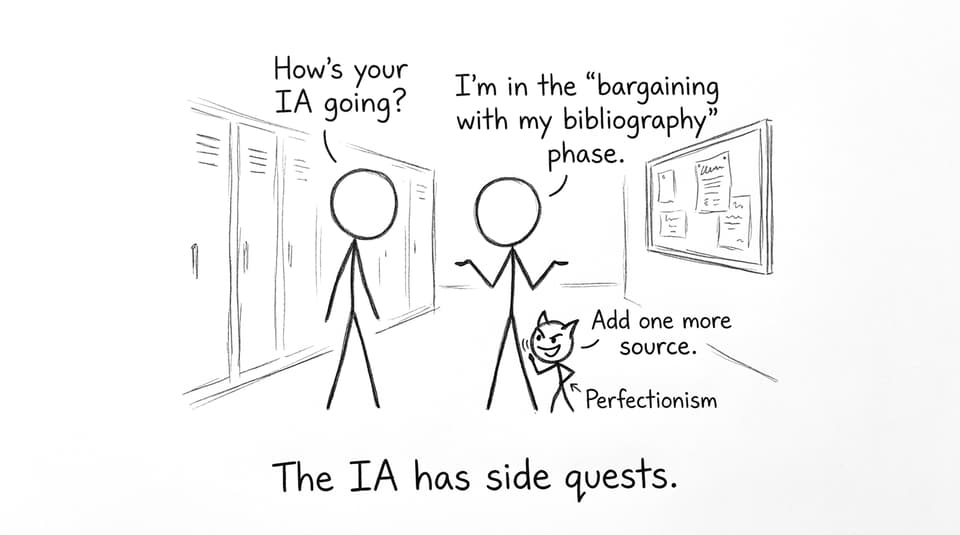
With revision, you can stop after a set of questions. With an IA, there is always one more tweak available: another sentence, another source, another chart, another footnote. Your brain interprets infinite work as danger because it can’t see the finish line.
The IA triggers perfectionism loops
Perfectionism isn’t “high standards.” It’s the fear that a normal draft is proof you’re failing. Many students delay feedback because they want the draft to look impressive first. But IA success usually comes from early, imperfect drafts and fast improvement cycles.
The IA collides with exam season
When your IA eats your evenings, exam prep starts to feel like guilt. That guilt then makes the IA heavier. The fix is not “work more.” The fix is a split system: coursework progress plus tiny, consistent exam maintenance.
This article pairs well with that mindset: IB Stress: How to Stay Motivated Without Burning Out.
A calm plan to move your IA forward (without panic rewriting)
Shrink the IA to the next deliverable
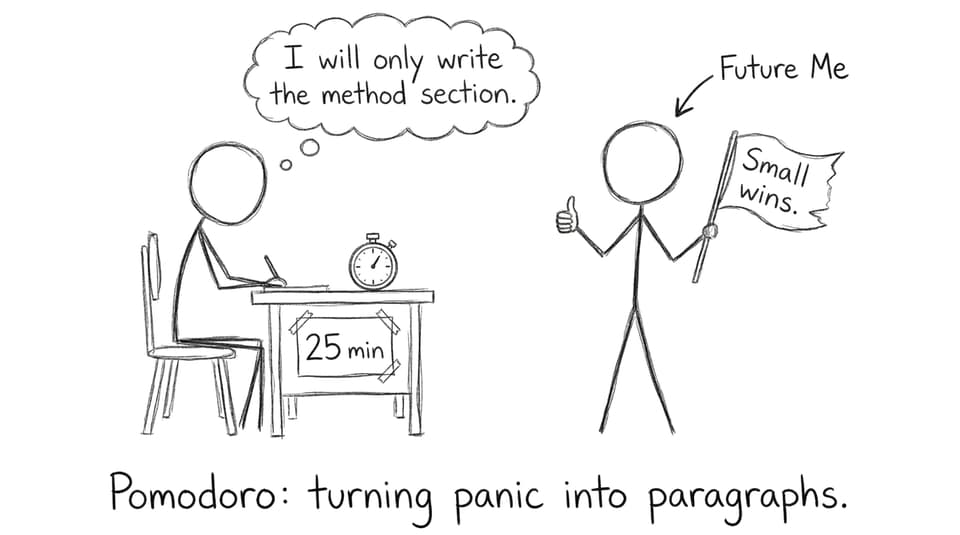
A stressed brain can’t hold “finish the IA.” It can hold “write the method paragraph” or “label two graphs.”
Try this script:
- “In the next 25 minutes, I will complete one section that can be submitted for feedback.”
That’s it. One section. Not the whole document.
Choose mark-impact over cosmetic edits
When you’re anxious, you tend to edit what is easiest to control: fonts, headings, word choice. But marks usually come from clarity of thinking: analysis, evaluation, and explicit links back to your aim or research question.
When you’re not sure what matters most, use examiner-focused guidance. RevisionDojo’s IB IA Guides and IB Coursework Guides exist for exactly this moment: turning “I don’t know what they want” into a visible checklist.
Build a feedback loop that reduces uncertainty
A lot of IA stress is guessing. The antidote is feedback that is fast and specific.
On RevisionDojo, you can reduce uncertainty in a few different ways:
-
Use the Coursework Library to compare your structure to high-performing exemplars
-
Use Grading tools to check your draft against criteria and find missing pieces
-
Use AI Chat to ask, “What does Criterion X actually look like in this paragraph?”
If you’re stuck at the beginning, focus on the research question first. This guide makes that step far less painful: How to Write a Strong IA Research Question.
Keep exam prep alive with “minimum effective dose”
Your IA doesn’t get easier when you ignore exams. It gets scarier.
So keep a small daily routine:
-
10 minutes of Flashcards for definitions and processes
-
10-15 minutes of Questionbank practice on one subtopic
That’s enough to protect confidence while your IA gets finished.
Useful starting points:
Micro-tools for the moment you’re about to cry
Sometimes you don’t need a new plan. You need your nervous system to calm down enough to follow the plan.
Try one of these:
-
The 60-second reset: exhale longer than you inhale for five breaths
-
The “ugly draft” rule: write badly on purpose for 10 minutes, then fix one sentence
-
The next-smallest-question: ask AI Chat one precise question instead of googling for an hour
If stress is spilling into your overall exam prep, this helps: Exam Stress Management Tips for IB Candidates.
Closing: your IA is a project, not a referendum on you
An IA can make you feel like your emotions are evidence you’re failing. They’re not. They’re evidence you care, you’re tired, and you’ve been trying to do something difficult with limited time.
So let the tears be a pause, not a stop. Then pick one next step: one paragraph, one graph, one criterion check. Build the feedback loop. Protect your sleep. Keep your exam skills warm with small daily practice.
When you’re ready, use RevisionDojo as your control panel: IA Guides, Coursework Library, Grading tools, AI Chat, plus Questionbank, Study Notes, Flashcards, Mock Exams, Predicted Papers, and Tutors to keep you steady from coursework to final exams. And yes, your IA can still turn out strong, even if you cried on the way there.