


A small mistake customers feel every time
In IB Business Management, the word process can sound like paperwork. But think about the last time you ordered something and the experience felt… weirdly inconsistent. One day it was fast, friendly, and clear. Next time: confusing, late, and full of vague updates.
That isn’t usually “bad marketing.” It’s often missing marketing processes. A business can have brilliant ideas and still deliver uneven value if it improvises every campaign, every message, every customer touchpoint.
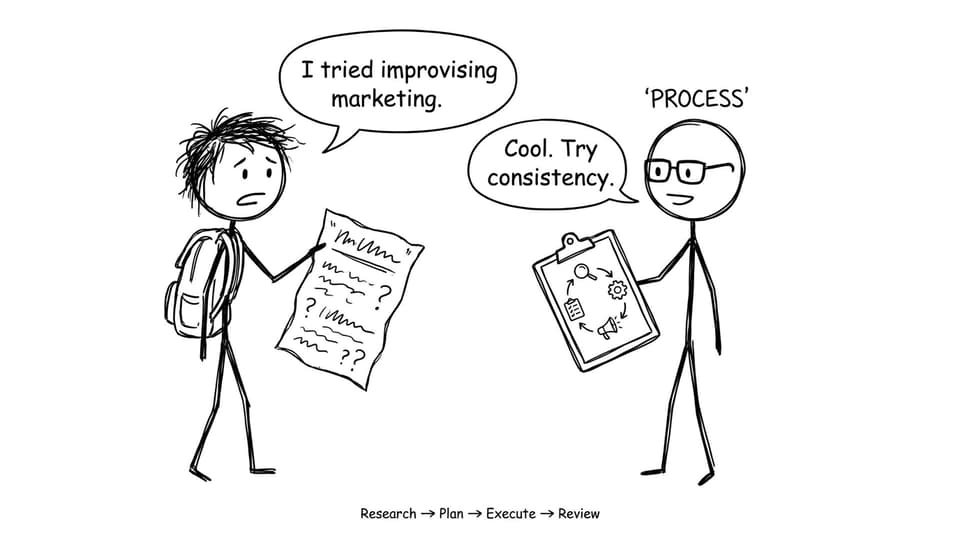
Quick checklist: what a marketing process includes
Use this as a clean exam-ready scaffold (especially for Unit 4 in IB Business Management):
-
Research: understand customers, competitors, and the market
-
Planning: set objectives, choose a target, design the marketing mix
-
Execution: run campaigns and coordinate channels
-
Review: measure results, learn, and improve
If you want the syllabus-aligned context, start with IB Business Management Unit 4: Marketing Management.
Why marketing processes are important in IB Business Management
Consistency builds trust (and marks)
A marketing process makes the customer experience predictable in a good way. The tone of voice stays stable. Promotions don’t contradict pricing. Social posts match what happens in-store. Over time, that consistency becomes trust, and trust becomes repeat purchasing.
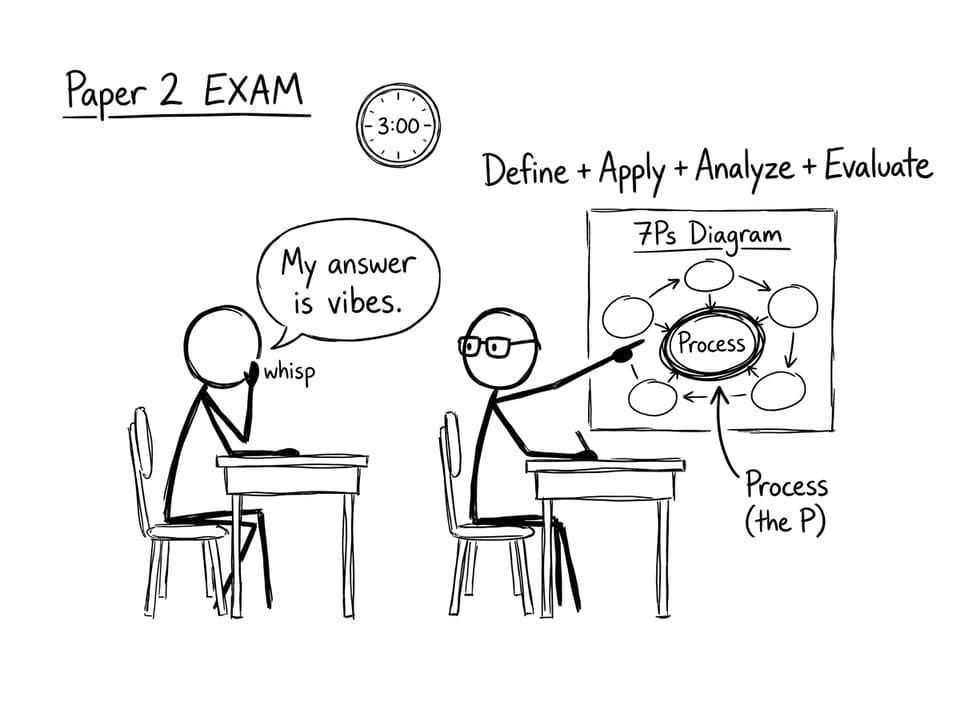
In IB Business Management, you can connect this directly to the marketing mix. The “Process” element of the 7Ps exists because how a service/product is delivered shapes perceived value. Review Topic 4.5 the Seven Ps of the Marketing Mix and notice how “processes” links to customer satisfaction.
Efficiency: fewer repeated mistakes, more learning per week
Processes reduce wasted effort. Instead of reinventing the wheel, teams reuse templates, timelines, and approval steps. That makes deadlines more realistic and quality more consistent.
For your revision loop, this is exactly how RevisionDojo works for IB Business Management: you practice with the IB Business Management resources hub, then use Questionbank to spot patterns, then refine with AI feedback and Grading tools.
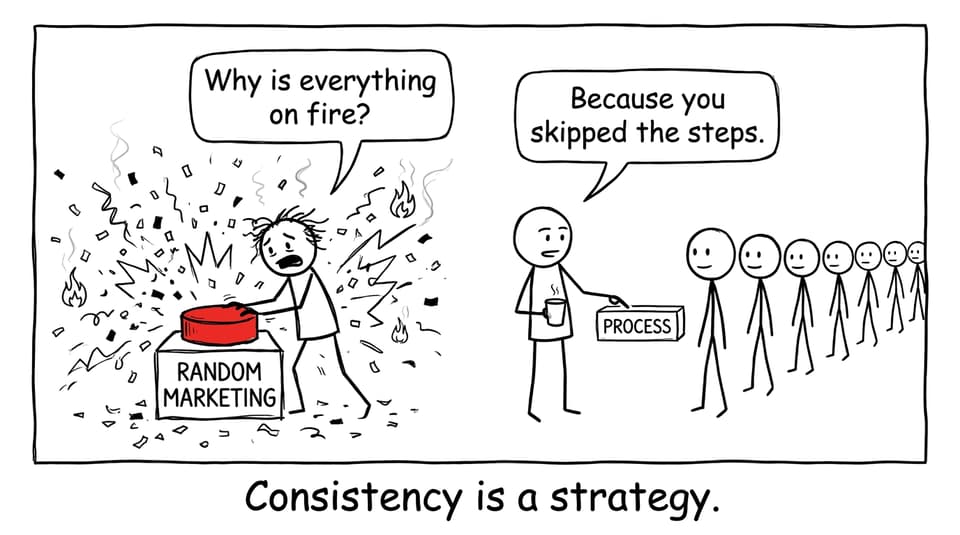
Strategic alignment: marketing stops being “random acts”
A good marketing process forces the business to ask: What are we trying to achieve? Growth? Brand awareness? Market penetration? A new segment?
When planning is structured, every element of the marketing mix supports the same objective, rather than sending mixed signals. If you need a quick refresher on how marketing fits the bigger picture, IB Business Management: Why Marketing Matters is a useful companion.
Better decisions: data replaces guessing
Marketing processes build measurement into the routine: KPIs, customer feedback, sales trends, engagement, and brand metrics. That makes decisions defendable.
In IB Business Management exam terms, this helps you write stronger analysis because you can justify recommendations with evidence (not just opinions). To practise that kind of applied writing, use Topic 4.1 Introduction to Marketing Questionbank.
How marketing processes help businesses deliver consistent value
Consistent value is a chain: the business promises something, delivers it, checks the result, then improves. Marketing processes keep that chain from breaking.
In practice, businesses that follow a clear process can:
-
deliver a stable brand experience across channels
-
coordinate product, price, promotion, and place more reliably
-
adapt faster because they know where to change and how to evaluate the impact
-
scale marketing teams without losing standards
If you’re building exam stamina, pair this topic with timed practice using Business Management Predicted Papers and structured sessions like Collaborative IB Mock Exams: Study with Friends Online.
Bring it back to exam performance
Marketing processes matter because they turn good intentions into repeatable value. And in IB Business Management, repeatable value is what earns repeatable marks: clear definitions, structured chains of reasoning, and evidence-based evaluation.
To lock this topic in, revise the 7Ps, drill applied questions in RevisionDojo’s Questionbank, and then simulate pressure with Predicted Papers and Mock Exams. The goal is the same as a business marketing process: research, plan, execute, review, and improve every cycle.


