


If you have ever stared at your timetable and thought, “One of these choices has to hurt less,” you are not alone. Choosing between AA SL and AI SL feels like choosing a hill to climb in the fog. People around you will swear one path is “easier,” but they rarely mean the same thing when they say it.
The truth is that IB Math is not a single difficulty level with two labels. It is the same subject pointing at two different skill sets: one rewards clean algebra and exact reasoning, the other rewards interpretation, technology, and translating messy contexts into mathematics. When you pick the right match for how you think, IB Math gets calmer. When you pick the wrong one, even simple topics feel expensive.
What “easier” really means in IB Math
Most students use “easier” as a shortcut for one of these:
-
Fewer abstract steps and less symbol-heavy manipulation
-
More marks that feel accessible with a calculator
-
Less reading and fewer “hidden” instructions inside wordy scenarios
-
More predictable question patterns under time pressure
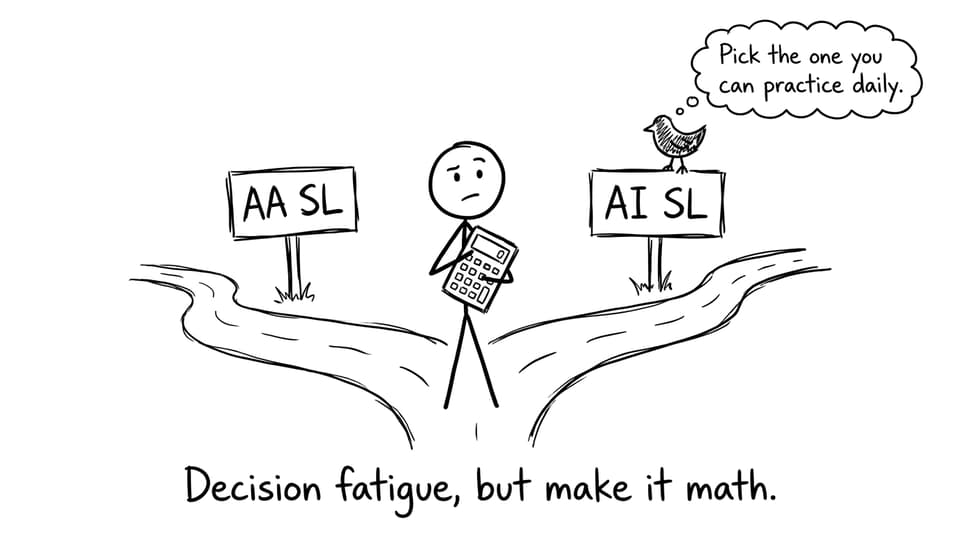
So when someone says “AI SL is easier,” they might mean “I can use my calculator the whole time.” And when someone says “AA SL is easier,” they might mean “I do not have to decode a story problem before I even start.” Both can be true.
A practical way to decide is to ask: Which part of math drains you more: algebraic precision or interpretation? Your answer usually predicts which IB Math pathway will feel easier to score well in.
AA SL vs AI SL: the core difference (in one sentence)
-
AA SL is IB Math that prioritizes algebraic technique, functions, and calculus-style thinking.
-
AI SL is IB Math that prioritizes statistics, modeling, interpretation, and technology-supported problem solving.
If you want a high-level map of AA content, the IB Mathematics Analysis and Approaches Resources hub is a good reference point for topics and practice.
IB Math exam structure: where the pressure comes from
A lot of “easier” is not the syllabus. It is the exam room.
AA SL calculator rules
In IB Math AA SL:
-
Paper 1 is non-calculator
-
Paper 2 allows a calculator
That Paper 1 detail changes everything. It rewards students who can keep algebra tidy, work accurately with exact values, and show steps clearly.
If Paper 1 already worries you, read How to Prepare for IB Math AA SL Paper 1 and How to Master IB Math AA Paper 1: Step-by-Step Strategy and then decide whether the non-calculator style feels like clarity or chaos.
AI SL calculator rules
In IB Math AI SL:
- Both Paper 1 and Paper 2 allow calculators
This often feels easier at first, especially if you like graphing, regression, and using technology to explore. But it also means the exam expects you to use the calculator intelligently, not just punch numbers. Interpretation becomes the real skill.
Question style: direct math vs “math in a story”
This is where many students get surprised.
AA SL tends to feel “clean” under time pressure
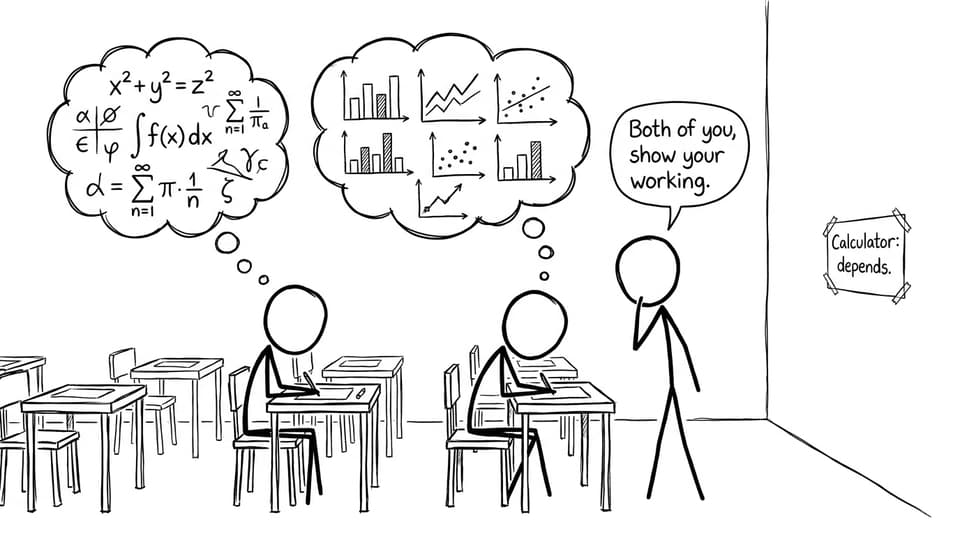
AA SL questions in IB Math are often structured and direct. You are usually told what to find and you can see the pathway: solve, simplify, differentiate, integrate, prove, sketch.
Students who like traditional math often find this easier to score in because there is less ambiguity. You either execute the technique correctly, or you do not.
AI SL can be deceptively demanding
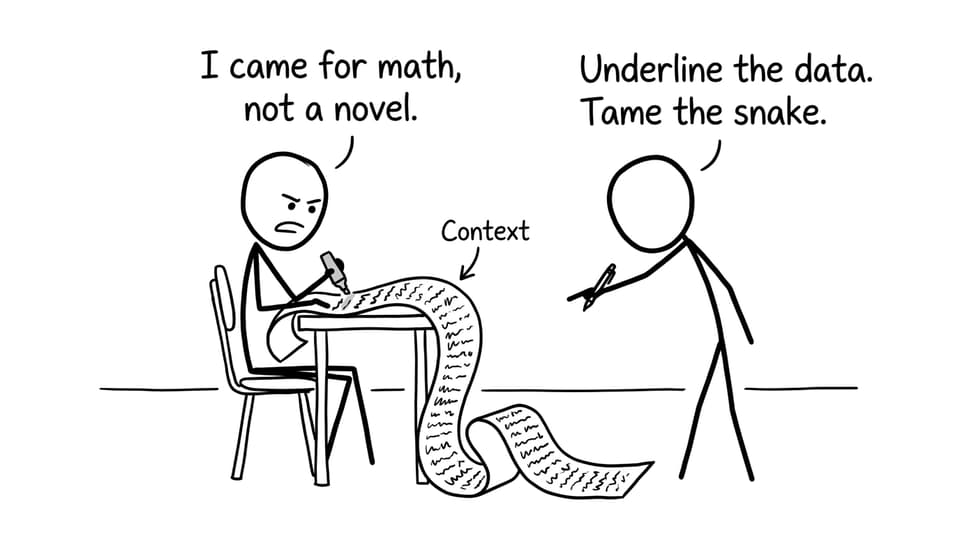
AI SL questions are frequently contextual. The mathematics may be less abstract than AA, but you have to:
-
decide what information matters,
-
translate the words into variables and relationships,
-
justify choices (especially with modeling),
-
and communicate what the result means.
If reading comprehension under stress is a weak spot, AI SL can feel harder than expected, even though the calculator is always there.
Content comparison: what you actually study in IB Math
You do not need a perfect topic list to choose, but you should know the center of gravity.
AA SL focuses more on
-
Algebraic manipulation
-
Functions (quadratic, exponential, logarithmic, trigonometric)
-
Trigonometry and geometry techniques
-
Intro calculus (limits, differentiation, basic integration)
If you want a feel for how AA topics are practiced, explore a focused area like IB Mathematics Analysis and Approaches Calculus or try targeted practice in the AA Calculus Questionbank.
AI SL focuses more on
-
Statistics and probability
-
Data analysis, graphs, and distributions
-
Mathematical modeling and interpretation
-
Technology-driven methods
If you like the “math meets reality” philosophy, Is IB Math AI More Practical or Theoretical? is a helpful framing.
So which IB Math is easier: AA SL or AI SL?
Here is the honest answer: the easier IB Math course is the one that matches your brain.
AA SL often feels easier if you...
-
Prefer symbolic work over long contexts
-
Like predictable procedures and tidy solutions
-
Are comfortable practicing without a calculator
-
Might need flexibility for STEM-ish university options
AA SL can be harder to learn at the beginning, but clearer during exams. Many students say it is “tough, but fair.”
AI SL often feels easier if you...
-
Prefer real-world situations, data, and interpretation
-
Are strong with technology and graphing tools
-
Dislike heavy algebra and calculus techniques
-
Want a course that emphasizes applied quantitative reasoning
AI SL is not “easy.” It just shifts the difficulty toward reading, modeling, and communication.
If you want a broader comparison beyond SL, Math AA vs AI: How to Choose the Best IB Math Course for Your University Goals adds helpful admissions context.
Quick decision checklist (save this)
Use this checklist before you commit to an IB Math pathway:
-
Do I get more marks from clean algebra (AA) or from interpreting graphs and context (AI)?
-
Do I feel calmer in non-calculator practice (AA) or when tech is available (AI)?
-
Do wordy problems usually help me (real context) or slow me down (extra noise)?
-
What does my likely university course prefer or require?
-
Can I commit to consistent practice in the style the exam expects?
If you are already mid-course and thinking about switching, read Can You Switch Between IB Math AI and AA Mid-Course? before you make a rushed decision.
How RevisionDojo makes either IB Math option feel easier
A good course choice helps, but practice is what turns stress into signal. RevisionDojo is built around the reality that IB Math improves when feedback is fast and practice is specific.
On RevisionDojo, students typically combine:
-
Questionbank for topic-by-topic and exam-style practice
-
Study Notes to re-learn concepts quickly when a topic collapses
-
Flashcards for formulas, definitions, and common traps
-
AI Chat when you are stuck and need an explanation that matches your exact step
-
Grading tools to see what examiners reward in method and communication
-
Predicted Papers and Mock Exams to train timing and stamina
-
Coursework Library for IA structure examples and expectations
-
Tutors when you need live help to fix a pattern of mistakes
If you like structured practice habits, Why Online IB Math Practice Platforms Matter explains what to look for and why it changes results.
Closing: pick the IB Math course you can practice consistently
When students ask “Which IB Math is easier: AA SL or AI SL?” they are usually asking a deeper question: Which course will let me feel in control by exam season? Control comes from alignment. Alignment between your strengths and the exam style. Alignment between your university plans and your course choice. Alignment between what you study each week and what the papers actually reward.
If you want the safest next step, do this: pick one AA-style and one AI-style set of questions, time yourself, and track which one produces clearer working and fewer careless errors. Then build a routine with RevisionDojo’s Study Notes, Flashcards, and Questionbank, and pressure-test it with Mock Exams and Predicted Papers. When your practice is consistent, IB Math stops being a rumour about difficulty and becomes a skill you can measure.