A predicted grade can make an ordinary evening feel like a verdict. Parents see a number and wonder whether university plans are slipping away. Students often see something heavier: a judgment about their ability.
Here is the reassuring answer. A good IB score is usually 30 or above, while 35 or above is strong and 40 or above is outstanding. But the right benchmark is not one universal number. It depends on the student's university choices, course requirements, Higher Level subjects, and progress over time.
The May 2025 global average Diploma Programme score was 30.58. That makes a score around 30 or 31 broadly average internationally, not disappointing. A result in the mid-30s is meaningfully above that benchmark, while scores in the 40s represent exceptional academic performance.
Use these ranges as a practical starting point, not as official IB classifications:
Total score
A useful interpretation
24-29
Meets or approaches the diploma threshold, but may limit some university options
30-34
Around or above the recent global average and suitable for many university pathways
35-39
Strong performance and competitive for many selective courses
40-45
Outstanding performance and relevant to highly selective admissions
A parent's next questions should be:
Does the score meet the intended course's total requirement?
Are the required Higher Level grades included?
Is the target based on published university information?
Is the student improving across timed assessments?
Is the study routine sustainable enough to continue?
That final question matters more than it first appears. A target that produces exhausted, inconsistent work may be less useful than a slightly lower target supported by repeatable practice.
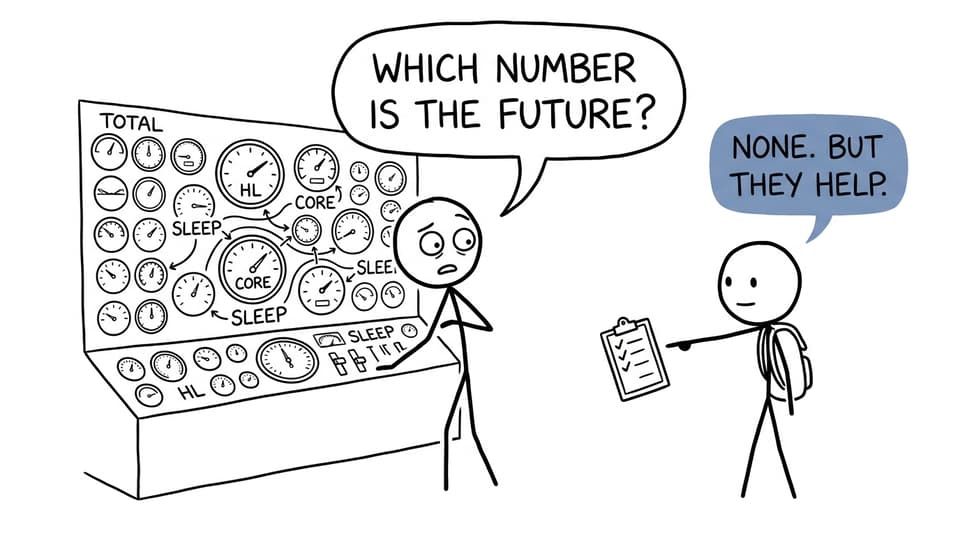
A parent and student discuss which IB numbers can predict the future
How the IB score is calculated
The IB Diploma total is calculated out of 45 points. Each of the six subjects receives a grade from 1 to 7, creating a maximum of 42 subject points. Theory of Knowledge and the Extended Essay can contribute up to three additional core points.
Creativity, Activity, Service does not add points, but its requirements must be completed. Standard Level and Higher Level subjects contribute equally to the numerical total, although universities may place particular importance on Higher Level results.
The minimum total for the diploma is 24 points, subject to the IB's other passing conditions. Those conditions include minimum performance across Higher Level and Standard Level subjects, completion of CAS, and acceptable results in the core. Consequently, 24 is not an automatic pass in every circumstance.
This distinction helps parents avoid a common mistake: treating the total as the whole result. A student could have a respectable total but miss a required Higher Level grade for a university offer. Another could earn a lower total while performing very well in the subjects most relevant to a chosen course.
Whats a good IB score in context?
The word good hides three different questions. Separating them makes the conversation calmer and more useful.
Good for earning the diploma
A score of at least 24 is the starting threshold, provided all additional conditions are satisfied. If a student is currently near this level, the immediate priority should be diploma security rather than comparison with highly selective university applicants.
That means checking low subject grades, Higher Level and Standard Level subtotals, CAS completion, and the status of Theory of Knowledge and the Extended Essay. RevisionDojo's guide to university options and the minimum IB score can help families distinguish passing the diploma from meeting an admissions requirement.
Good compared with international results
The May 2025 global average of 30.58 provides a useful reference point. A score of 30 is therefore close to the worldwide average, while 34 represents a clearly above-average total.
This is why a 30 should not automatically be described as weak. The IB asks students to balance six subjects with coursework and core responsibilities. Context matters, particularly when a student has demanding Higher Level subjects or has improved substantially during the programme.
For a closer look at the mid-30s, the guide to what a 34 in the IB means explains why this result can support a wide range of university plans.
Good for a specific university course
This is the benchmark that should ultimately guide the target. Universities may specify an overall total, a Higher Level points total, individual subject grades, prerequisite subjects, or a combination of these.
For example, Oxford states that its undergraduate courses generally require 38, 39, or 40 points, depending on the course, with 6s and 7s at Higher Level. Cambridge course requirements can be higher; several courses publish minimum offers of 41-42 points with 776 at Higher Level. UCL's published equivalencies range from 34 points with 16 across three Higher Level subjects to 40 points with 20 at Higher Level, depending on the A-level offer being matched.
These examples are illustrations, not a universal admissions table. Requirements change by course and entry year. Families should always check the official course page before setting a target.
The larger lesson is simple: IB university requirements are profiles, not merely totals. A student aiming for engineering may need a particular grade in Higher Level Mathematics and Physics. Raising an unrelated Standard Level subject might improve the total without solving the actual admissions gap.
Why predicted grades are useful but incomplete
Predicted grades matter because universities may use them before final IB exam results are available. Yet a prediction is still an estimate based on available evidence and school procedures. It is neither a guaranteed result nor a permanent label.
For parents, the productive question is not, “Why isn't this score higher?” It is, “What evidence would show that the student is improving?” That evidence might include stronger timed responses, fewer recurring mistakes, improved coursework, or greater consistency across several assessments.
A useful forecast is a range. If recent timed work repeatedly falls near a grade boundary, claiming one precise future score creates false certainty. A range acknowledges normal variation while still showing whether the student is moving toward the target.
How parents can discuss scores without adding pressure
Numbers are useful because they compress information. They are dangerous for the same reason. A total score cannot show whether a student slept properly, misunderstood one assessment format, improved steadily, or faced an unusually difficult week.
A better weekly conversation has three parts:
Target: What total and Higher Level profile does the chosen course require?
Evidence: What do recent timed tasks and teacher feedback indicate?
Next action: Which specific weakness will the student address this week?
Avoid comparing the student with a sibling, classmate, or an anonymous high scorer online. Comparison produces emotion without necessarily producing a plan. Compare current performance with earlier performance instead.
Parents can also protect the conditions that make revision possible: sleep, predictable study time, realistic breaks, and access to appropriate support. This is not lowering expectations. It is building the environment in which expectations can be met.
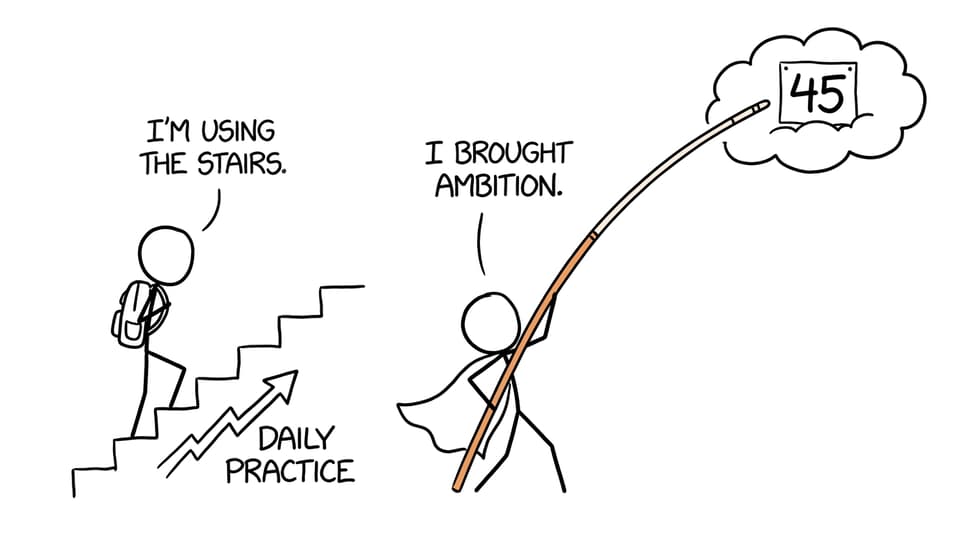
A student chooses daily practice while a parent arrives with ambition
Turn the target score into a revision system
A score target becomes useful only when it changes today's work. “Reach 36” is not an action. “Complete a timed economics response, grade it against the criteria, and correct two evaluation weaknesses” is.
A simple weekly loop looks like this:
Learn and remember
Use concise Study Notes to repair one knowledge gap, then test retrieval with Flashcards. If a concept remains unclear, use AI Chat for a focused explanation rather than rereading an entire chapter.
Apply and diagnose
Move quickly into exam-style work through a Questionbank. Use Grading tools to identify whether lost marks come from knowledge, method, command terms, evidence, or timing. The RevisionDojo IB exam preparation workflow brings these steps into one structured system.
Rehearse under time
Use Predicted Papers and Mock Exams to practise pacing and decision-making under realistic constraints. Predicted Papers should be treated as simulations, not forecasts of exact exam content. RevisionDojo's IB Predicted Papers by examiners are designed for this kind of rehearsal.
Coursework should remain visible in the plan as well. A Coursework Library can clarify expected structure, while Tutors can provide a human diagnosis when a student is working consistently but cannot identify what is holding a subject back.
Progress matters more than score theatre
Families sometimes respond to an uncertain prediction with a dramatic timetable. The plan looks impressive for three days and then disappears. A smaller routine that survives ordinary school weeks is more valuable.
RevisionDojo's published IB tutoring success stories describe students who improved alongside consistent, targeted practice and feedback. These accounts are case studies, not a guarantee that every student will outperform a predicted grade. Still, their recurring lesson is sensible: structured daily revision gives improvement somewhere to come from.
The best target is therefore ambitious enough to open the intended door, but specific enough to guide the next study session. Start with the official university requirement. Check the total, Higher Level profile, and prerequisite subjects. Then build a daily loop of learning, retrieval, application, feedback, and timed rehearsal.
A good IB score is not the highest number another student can achieve. It is the result that supports this student's next step -- and the evidence that they are moving toward it with a system they can sustain. RevisionDojo provides that system in one place, from Study Notes and Flashcards to the Questionbank, AI Chat, Grading tools, Predicted Papers, Mock Exams, Coursework Library, and Tutors.
Nathan holds an MA in Philosophy from Trinity College Dublin and has taught IB Theory of Knowledge and Philosophy for 20 years, including a decade as TOK coordinator. His focus is the IB TOK essay and exhibition, giving students a repeatable way to unpack knowledge questions in a subject with no fixed answers.
Learn whether universities see IB paper and IA component scores, what appears on official transcripts, and when detailed marks may still affect admission.