
Water is the only resource you can’t “cram” at the last minute. Yet many of us revise IB Geography water security like it’s a vocabulary list: desalination, drip irrigation, dams… done. Then an exam question asks you to evaluate strategies, and suddenly the topic feels less like a list and more like a messy argument between farmers, cities, ecosystems, and governments.
In IB Geography, improving water security is really about one calm idea: match the right strategy to the right scale and the right cause (physical scarcity vs economic scarcity), and always show trade-offs.
A quick IB Geography water security checklist
Use this in exams to structure answers quickly:
-
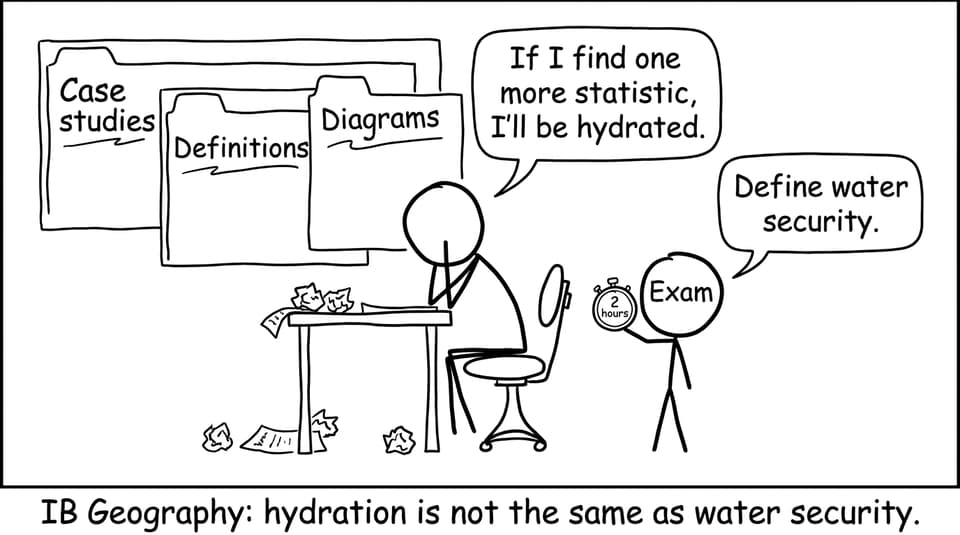
Define water security (quantity, quality, reliable access)
-
Identify the main pressure (climate variability, over-abstraction, pollution, population growth)
-
Categorise strategies: management, technology, demand, ecosystems, governance
-
Add evaluation: cost, energy, equity, sustainability, stakeholder conflict
For broader context, keep the bigger system in view using the IB Geography Option A: Freshwater: Drainage Basins hub and the IB Geography resources page.
Better management: make the drainage basin the “unit of decision”
The most exam-friendly management phrase is integrated water resource management: planning water at the drainage basin scale so that abstraction limits, land use, and competing demands are coordinated. In IB Geography, this works because it connects physical geography (flows and stores) with human geography (stakeholders and governance).
To strengthen your explanation, link management to system thinking from How Do Drainage Basins Function as Systems?. Then add one evaluation line: management plans fail when enforcement is weak or when powerful users capture the resource.
Technology: increase supply or stretch what you already have
Technology can improve water security by either adding supply or reducing losses.
Efficient irrigation and reduced losses
Drip irrigation delivers water directly to roots, reducing evaporation and runoff. That makes it a strong “sustainability” point in IB Geography, especially if you compare it to inefficient flood irrigation.
Recycling, treatment, and desalination
Water recycling and wastewater treatment can create a circular supply for industry and agriculture. Desalination can support arid coastal regions, but it is energy-intensive and expensive, so evaluation matters: it can deepen inequality if only wealthy cities can afford it.
For definitions and crisp phrasing, use Notes for 4.2 Access to fresh water - IB.
Demand management: the quiet strategy examiners love
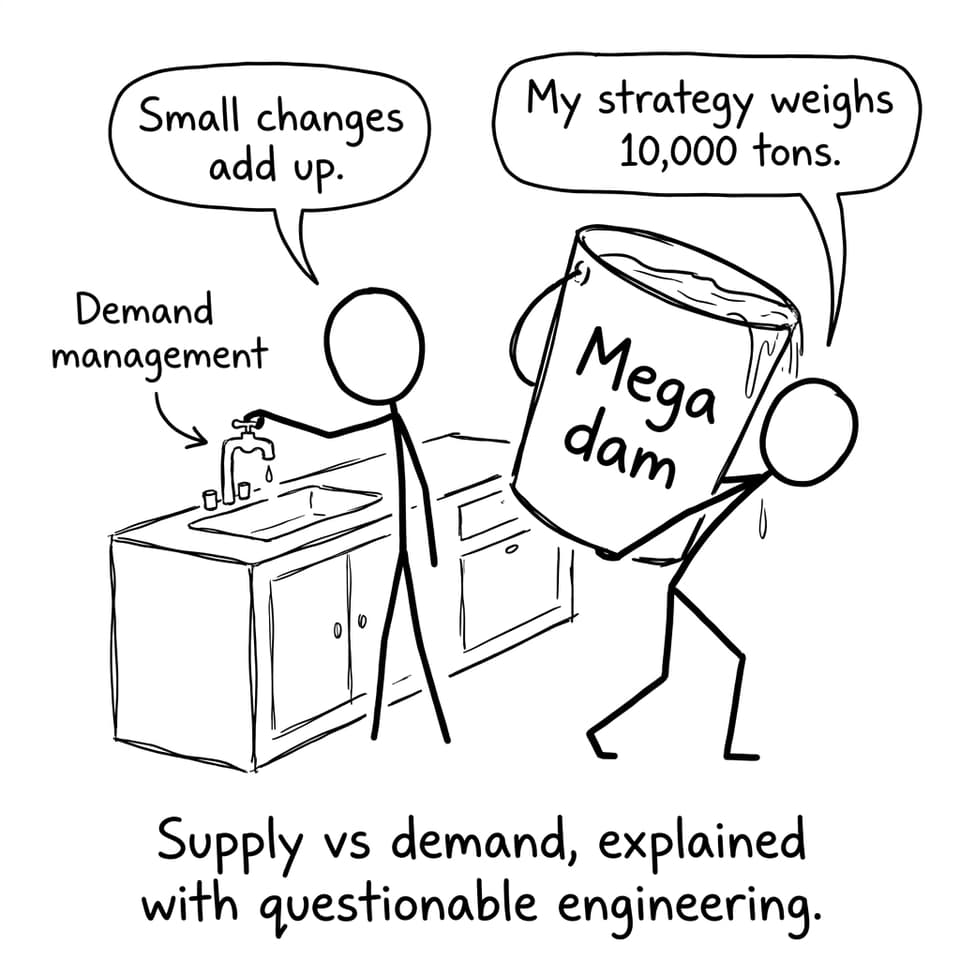
In IB Geography, demand management is often the most “marks-efficient” evaluation point because it tackles overuse directly. Examples include metering, tiered pricing, education campaigns, and water-efficient appliances. In agriculture, switching to less water-intensive crops can reduce demand more than building new supply.
Your evaluation line: demand management can be politically unpopular and may burden low-income households unless pricing is designed with equity in mind.
Ecosystem protection: let nature store, slow, and clean water
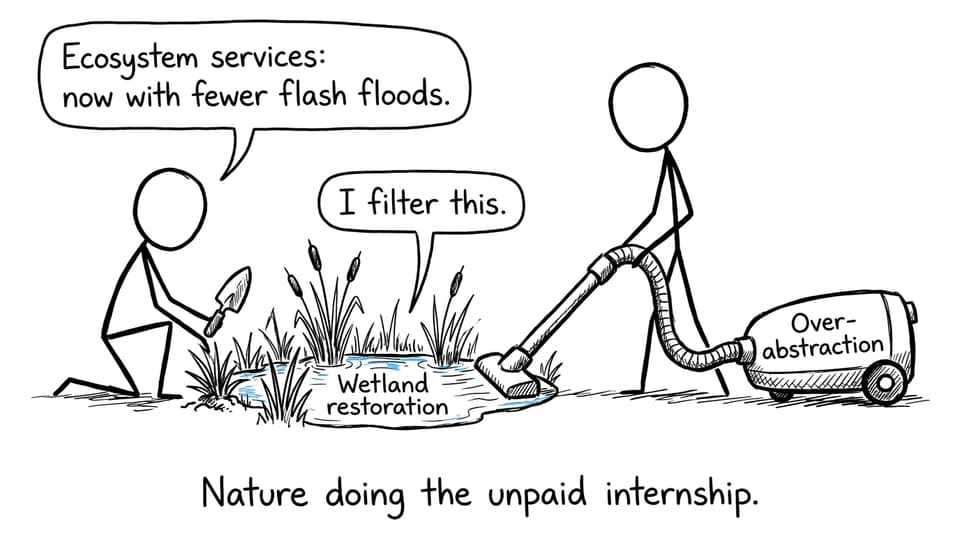
Healthy forests, wetlands, and floodplains regulate river flow, improve water quality, and increase resilience to droughts and floods. Wetlands filter pollutants; floodplains store water during high flow and release it later.
Link this to risk reduction using What Factors Influence Flood Risk in Drainage Basins? or What Strategies Are Used to Manage Flood Risk?.
Governance, equity, and cooperation: who gets water, and who decides?
A high-scoring IB Geography answer separates physical scarcity from economic scarcity. Many places have water, but lack pipes, treatment, storage, and fair distribution. Investment in infrastructure can transform access, but only if institutions are transparent and accountable.
Where rivers cross borders, cooperation matters: agreements, data sharing, and joint management reduce conflict risk. For this angle, revise Notes for A.3.4 Shared Water Resources and Conflict - IB.
Exam practice: turn strategies into evaluation under pressure
RevisionDojo helps you practise water security the way it appears in real IB Geography exams:
-
Use the A.4 Water management futures Questionbank to train strategy + evaluation answers.
-
Build retention with Option A Freshwater flashcards.
-
Consolidate connections via IB Geography: Climate Change, Food and Water Security.
RevisionDojo’s Study Notes, Flashcards, and AI Chat are especially useful for turning “strategy lists” into exam-ready paragraphs. Add Grading tools to check whether your evaluation is actually evaluative, then use the Questionbank and Mock Exams to repeat under time pressure.
Closing: the real strategy is the mix
Water security improves when strategies work together: smarter basin management, targeted technology, serious demand management, restored ecosystems, and governance that is fair enough to last. That combination is exactly what IB Geography examiners reward: not a list, but a balanced judgement.
If you want to turn this into consistent marks, use RevisionDojo’s Questionbank, Study Notes, Flashcards, AI Chat, Grading tools, Predicted Papers, and Mock Exams to practise writing water security evaluations that stay calm under pressure, and still land the evaluation point.