A hook worth revising
A friend once told me their charity project felt “messy” compared with a normal business idea. No clean pricing strategy. No obvious profit target. Just people, needs, and imperfect trade-offs. That messiness is exactly why NGOs matter, and why IB Business Management keeps returning to them when you study business purpose, stakeholders, ethics, and success metrics.
In exam terms, the question is simple: How do NGOs solve social problems differently from for-profit firms? In real life, the answer is nuanced, and it makes your analysis sharper.

Quick checklist: NGO vs for-profit in IB Business Management
-
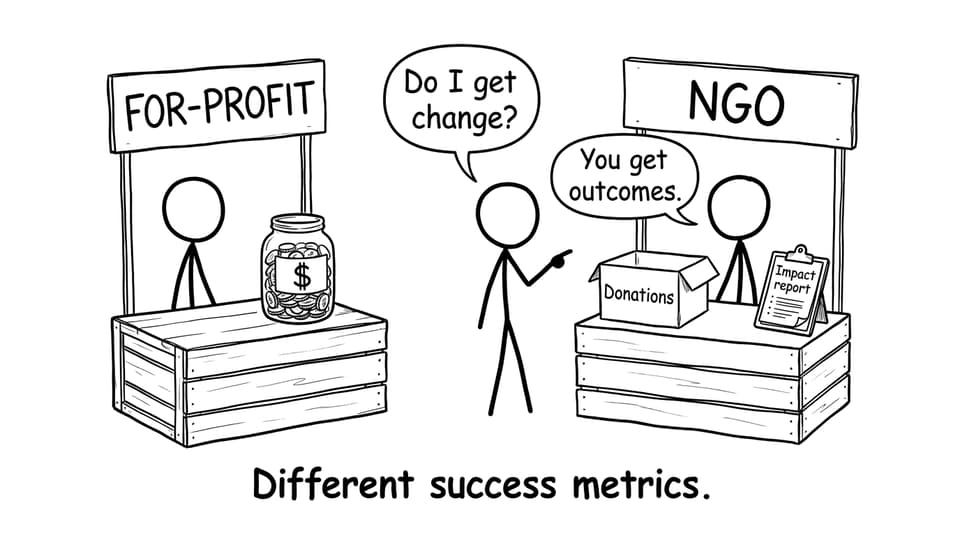
Purpose: mission impact vs profit maximisation
-
Funding: donations/grants vs sales revenue and investment returns
-
Time horizon: patient, long-term change vs faster financial accountability
-
Methods: community-led programmes and advocacy vs market-led solutions
-
Success measures: outcomes (health, education, empowerment) vs profit and cash flow
If you want the syllabus-aligned definitions, start with RevisionDojo’s 1.2.8 Non-Profit Social Enterprises (NGOs) and the supporting NGO notes.
Mission first: why NGOs go where markets don’t
In IB Business Management, you learn that organisational aims shape decisions. For a typical firm, survival often depends on profit, dividends, and growth. An NGO’s “product” is different: it exists to reduce harm or expand opportunity.
That mission focus changes resource allocation. NGOs can pursue problems that are vital but not commercially attractive: rural healthcare access, legal protection for vulnerable groups, or long-term environmental restoration. A for-profit firm might contribute through CSR, but it usually still needs a viable market.
This is where linking concepts helps: pair NGOs with stakeholder thinking using 1.4 Stakeholders and the examiner-friendly Stakeholders notes.
Funding shapes behaviour: donations, grants, and accountability
A for-profit firm is disciplined by customers and investors. An NGO is disciplined by donors, grant conditions, regulators, and public trust. That sounds softer, but it can be stricter: funds may be restricted to specific programmes, timelines, or reporting requirements.
This is also a great evaluation point in IB Business Management: NGOs may face unstable funding, which can limit scaling, staffing, and long-term planning. For-profits can reinvest retained profit, raise prices, or attract investors; NGOs may need to diversify funding to stay resilient.
Advocacy and awareness: changing systems, not just services
For-profits usually optimise within the system: product design, promotion, and efficiency. NGOs often try to change the system itself. They run campaigns, publish reports, and lobby for policy changes. In social problem-solving, that can be the difference between treating symptoms and reducing causes.
For exam application, connect advocacy to ethics and decision-making. RevisionDojo’s piece on Integrity in IB Business Management is a useful reminder: strong answers show balanced reasoning, not slogans.
Community-led solutions: the “bottom-up” advantage
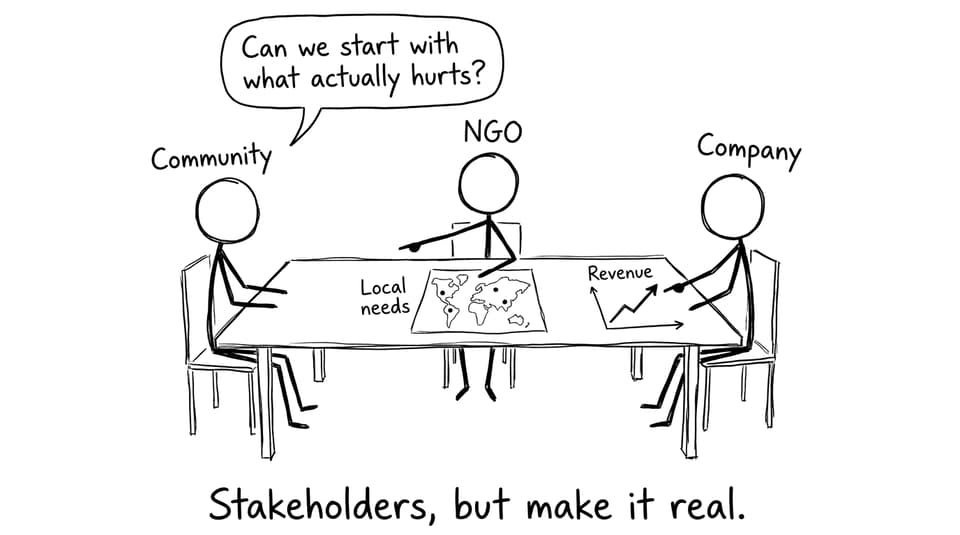
NGOs often work closely with communities, building trust and tailoring solutions to culture and local constraints. That proximity can improve effectiveness: you learn what people actually need, not what looks good on a pitch deck.
Meanwhile, for-profit firms tend to design around market demand and willingness to pay. That can scale brilliantly, but it can also exclude people who need help most.
In IB Business Management, you can frame this as stakeholder prioritisation. Practice it with RevisionDojo’s 1.4 Stakeholders Questionbank and keep your definitions tight via the IB Business Management glossary.
Closing: revise the difference, then apply it
Understanding how NGOs solve social problems differently from for-profit firms is not just theory for IB Business Management. It’s a way to write answers that show purpose, stakeholders, ethics, and measurement all connect.
When you want to turn that understanding into marks, RevisionDojo is the fastest path: use the Study Notes for clarity, the Flashcards for definitions, the AI Chat to test your reasoning, and the Questionbank plus Mock Exams to practise under time pressure. Start from the IB Business Management hub and build a revision system that actually holds up on exam day.

