


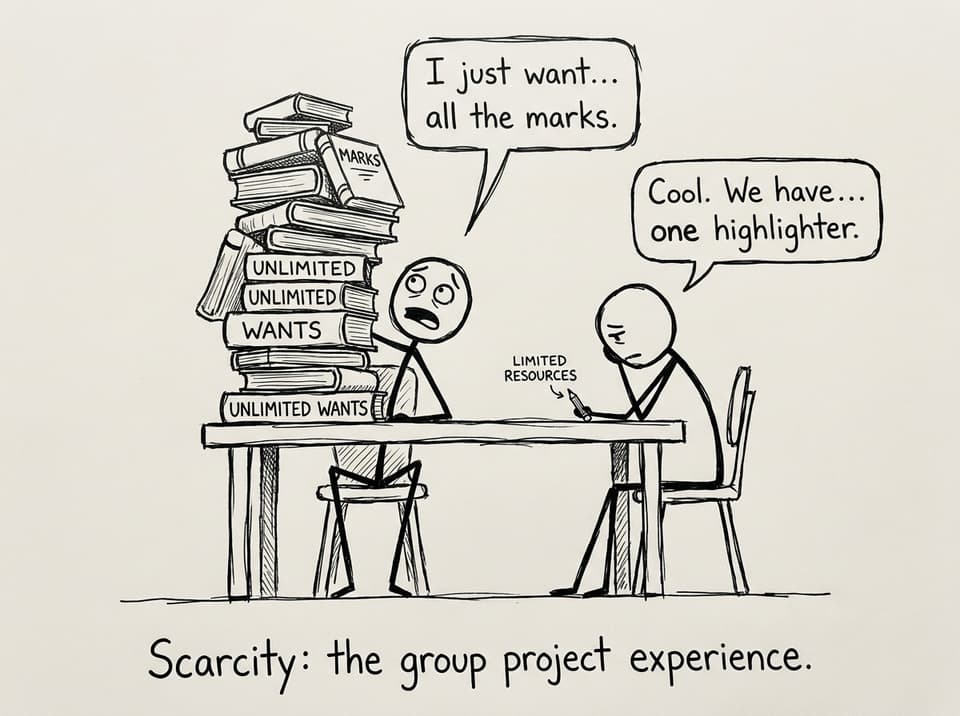
Scarcity is the quiet pressure behind almost every decision you make as a student. You want higher grades, more sleep, better notes, a social life, maybe even a hobby that survives the term. Then reality arrives with a simple limit: time, energy, and money are finite.
That exact tension sits at the core of IB Business Management. Businesses live in the same world you do: limited resources (land, labour, capital, time, information) paired with unlimited wants (growth, profit, market share, ethics, sustainability, innovation). When wants expand faster than resources, problems appear. Predictably. Repeatedly. And very examinably.
A quick scarcity checklist for IB Business Management
Use this whenever you see a “decision” in a case study:
-
What resources are limited (cash, capacity, staff skills, time, raw materials)?
-
What wants are competing (quality, speed, growth, sustainability, stakeholder needs)?
-
What choice must be made right now?
-
What is the opportunity cost?
-
Who wins, who loses, and why?
If you want the vocabulary to sound precise under time pressure, keep the IB Business Management Key Definitions open while you revise.
The main problems caused by limited resources and unlimited wants
Choices become unavoidable
Scarcity forces prioritisation. A business cannot do everything at once: launch a new product, expand overseas, raise wages, improve sustainability, and cut prices. Something has to wait.
In IB Business Management, exam questions reward students who can name the choice clearly and link it to a constraint. If you need a fast syllabus base for this kind of thinking, start at the IB Business Management Resources hub.
Opportunity cost becomes the hidden price tag
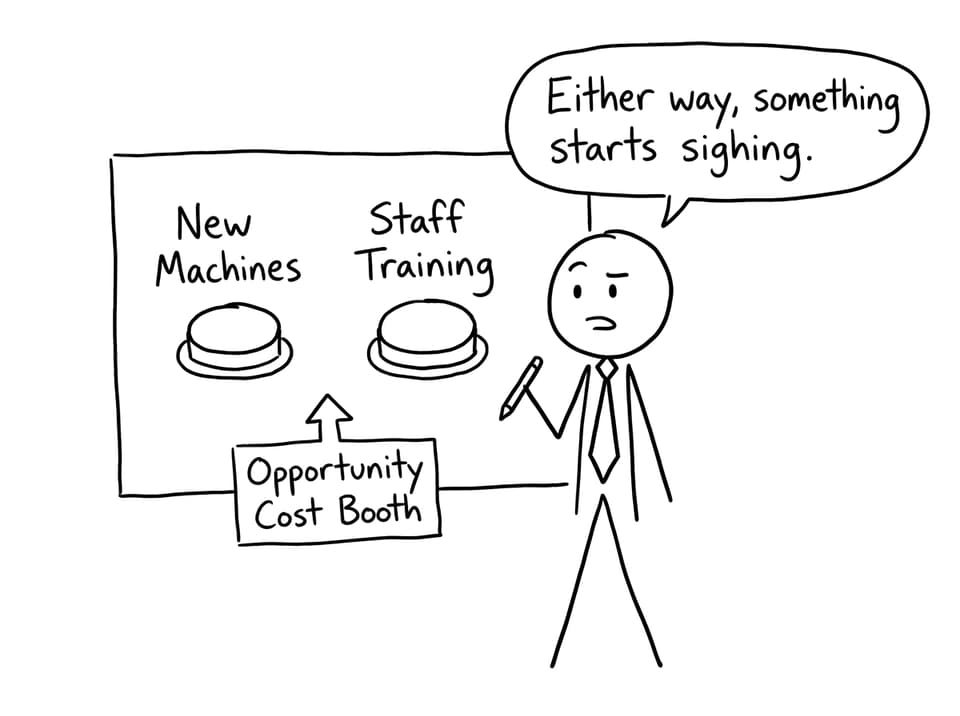
Every decision includes a “next best alternative forgone.” Firms feel this sharply because capital and management attention are scarce.
A simple, exam-friendly example: choosing to invest in new machinery might mean postponing staff training or delaying a marketing campaign. The cost isn’t only the invoice. It’s the benefit you don’t get.
For practice phrasing opportunity cost with clean chains of reasoning, use targeted drills in the IB Business Management Questionbank or go topic-specific via Topic 1.1 Questionbank.
Competition for resources intensifies
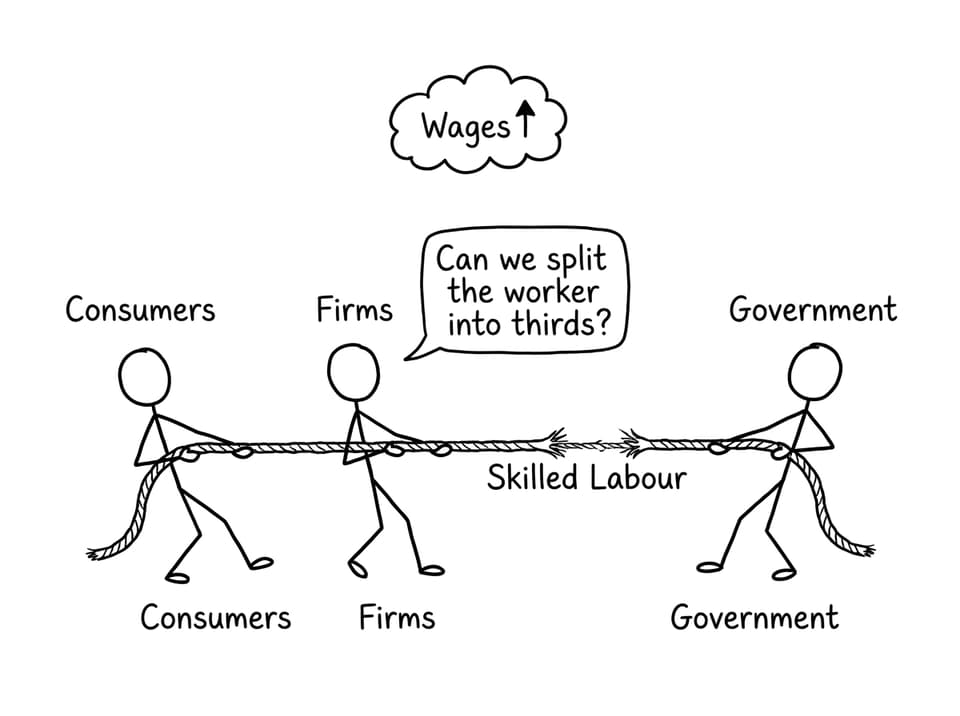
When skilled labour, prime locations, or key materials are limited, stakeholders compete. Firms compete with other firms for talent. Consumers compete through prices. Governments compete through regulation, subsidies, and public spending.
This competition shapes wages and costs, which then shapes pricing decisions and profit margins. It is also where stakeholder conflict becomes real, not theoretical.
Misallocation and inefficiency become costly
Scarcity makes waste feel louder. If a firm allocates limited capital to low-return projects, it sacrifices output, profitability, and resilience. In exam terms, this is where you evaluate whether a decision is “efficient” and what the trade-offs are.
A helpful way to ground this in the syllabus is to review costs thinking through 3.3 Costs and revenues.
Distribution decisions create tension
Scarcity forces the question: who gets what? In firms, this can mean who gets budget, who gets promoted, which product line gets production capacity, or which stakeholder goal gets priority.
This is why IB Business Management often feels like “economics meets people.” Resource allocation is never purely technical. It is political inside organisations.
How to turn scarcity into exam marks
When you revise IB Business Management, practise writing one paragraph that includes: constraint + choice + opportunity cost + stakeholder impact + a justified judgment.
To pressure-test that under timing, combine RevisionDojo’s Questionbank with Mock Exams, Predicted Papers, and Grading tools for fast feedback loops. If a concept still feels fuzzy, use AI Chat to ask for a cleaner example, then lock it in with Flashcards and quick refreshers from Study Notes.
For case-study focused prep, this guide is worth bookmarking: IB Business Management 2026 Case Study: Abraca (ABC).
Conclusion: scarcity is the story under every case study
Limited resources and unlimited wants create scarcity, and scarcity creates the problems that IB examiners love: unavoidable choices, opportunity costs, competition, inefficiency, and tough distribution decisions. If you can spot those quickly, IB Business Management becomes less about memorising definitions and more about seeing the logic beneath the case.
Build that instinct with RevisionDojo: drill with the Questionbank, revise with Study Notes and Flashcards, clarify with AI Chat, and sharpen your evaluation using Mock Exams, Predicted Papers, and Grading tools. When resources are limited, the smartest advantage is a better system.


