


The first time a parent says, “They’re working so hard--why aren’t the grades higher?” it usually sounds like genuine confusion, not criticism.
And if you’re the student living through the MYP, you feel that confusion too.
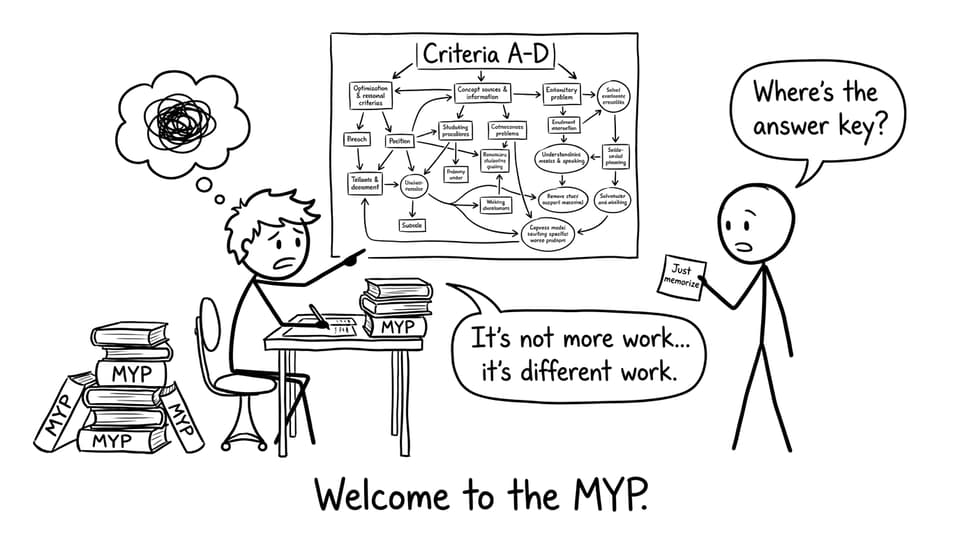
Because the MYP doesn’t always reward the most visible effort. It rewards the right kind of effort: thinking clearly, aiming at criteria, and staying calm when tasks are open-ended. That shift is why the MYP feels harder than most parents expect--especially during exam season.
The real reason the MYP is harder
In many school systems, success is straightforward: learn the content, repeat it accurately, and practice similar questions until the pattern sticks.
The MYP changes the game. It asks you to:
-
Apply knowledge in unfamiliar situations
-
Explain your reasoning (not just your final answer)
-
Reflect on limitations, improvements, and choices
So the programme isn’t always “content-hard.” The MYP is often “thinking-hard.” That’s why students who used to rely on memorisation can suddenly feel like the rules changed overnight.
If you want a central starting point that matches the programme’s structure, begin with the Middle Years Program (MYP) hub.
A quick checklist for MYP exam prep
Use this before any revision session or timed practice:
-
Identify which MYP criteria (A--D) the task is rewarding
-
Translate command terms (analyze, evaluate, justify) into a plan
-
Practice with questions, not just reading
-
Review mistakes using descriptor language
-
Do at least one timed set each week
RevisionDojo makes this loop easier to run because you can move from Study Notes to Flashcards, then straight into the Questionbank with feedback.
Criterion-based marking makes effort feel “invisible”
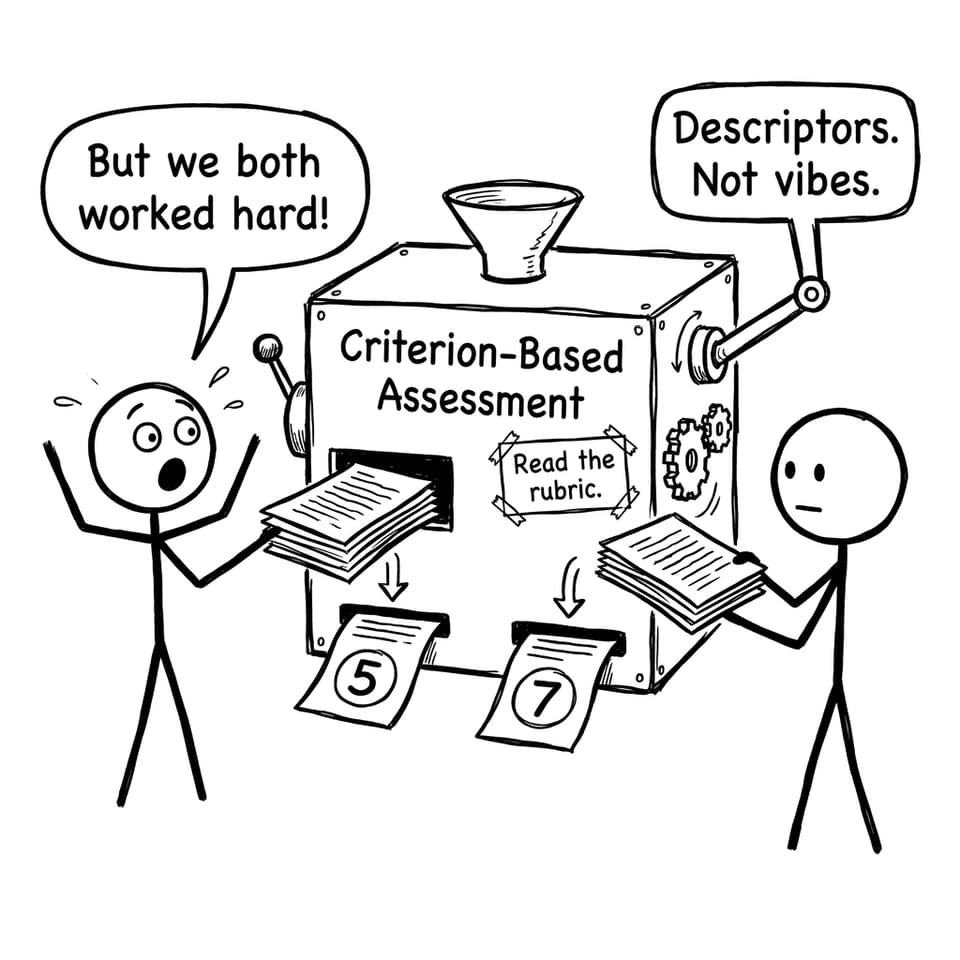
One reason parents underestimate the MYP is that grading is not based on completion or effort.
It’s based on descriptors.
That means two students can hand in work that looks similar, but one hits the criterion language more precisely--so the score jumps.
A useful move is to practice with tools that train rubric alignment. On RevisionDojo, that’s built into the Questionbank feature, where you learn what answers earn marks and why.
Open-ended tasks increase mental load
In the MYP, tasks are often deliberately open.
Instead of “Define X,” you’re more likely to see:
-
“Analyze the impact of…”
-
“Evaluate the reliability of…”
-
“Justify your choice…”
Open-ended tasks create hidden workload: choosing a structure, selecting evidence, and deciding what “good” looks like. If you feel mentally tired after an hour of work, that’s not weakness--it’s cognitive load.
If you want examples of how tasks are designed across subjects, use Sample MYP Assessment Tasks for Every Subject Group.
Independence arrives earlier than people realize
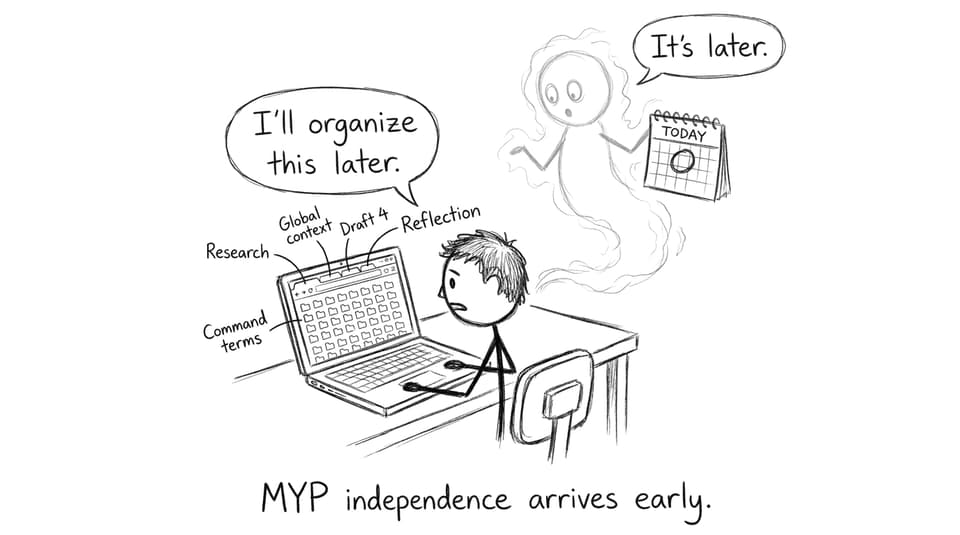
The MYP quietly expects you to act like a mini university student.
You’re meant to manage deadlines, interpret feedback, and self-correct without someone rewriting your plan each week. That independence is powerful long-term, but it can feel brutal short-term.
That’s why structured systems help. A practical starting point is MYP eAssessments: 30-Day Study Plan That Works, then adjust it to your subjects.
Why MYP grades can look inconsistent
A “dip” in MYP performance often means the criteria changed, not that you got worse.
One task might heavily reward analysis, another might reward communication or reflection. So your results can move even when your effort stays steady.
The fix is not to panic-revise everything. The fix is to identify which criteria pulled you down, then train that exact skill with targeted practice and feedback.
For steady weekly habits, follow MYP Revision Guide: Study Tips for Success.
Conclusion: make the MYP difficulty work for you
The MYP feels harder than parents expect because it measures thinking, criteria alignment, and independence--not just effort.
If you’re preparing for exams, don’t just study more. Study more precisely.
Start at the MYP hub, build your loop with Study Notes and the Questionbank, and use RevisionDojo’s Flashcards, AI Chat, Grading tools, Predicted Papers, Mock Exams, Coursework Library, and Tutors to turn “hard” into “trainable.”
When the MYP stops feeling like a mystery, it starts feeling like momentum.