Your first week of MYP revision can feel like trying to read a map while the bus is moving.
Someone says, “Don’t worry, it’s just practice.” Someone else says, “It’s basically pre-IB.” A teacher mentions “criteria” and suddenly everything you did in your old school system feels… slightly irrelevant.
The truth is calmer than the noise. The MYP is structured. It’s just structured differently. And once you stop chasing myths, your revision gets a lot more predictable.
Quick reality-check checklist for MYP students
Use this before you revise a topic or start a task in the MYP:
-
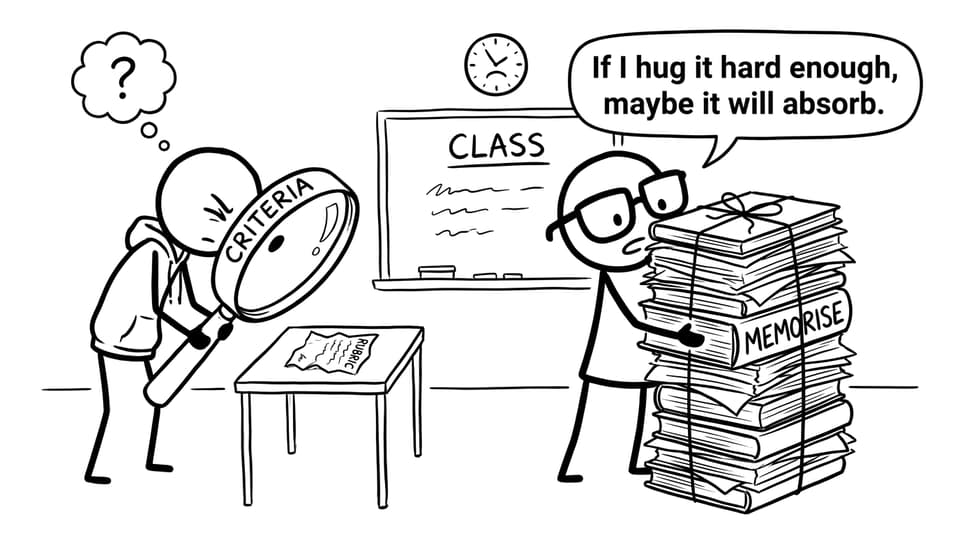
Read the rubric/criteria first, not last
-
Identify the command terms (explain, analyse, evaluate)
-
Practise like you’ll be assessed: short timed sets, then feedback
-
Track mistakes in criteria language (what skill was missing?)
-
Review a little, apply a lot
If you want a structured starting point, begin at the Middle Years Program (MYP) hub and build your routine from there.
Myth: “The MYP is just a pre-IB programme”
This myth sticks because the MYP does connect smoothly into the DP. But it isn’t a waiting room.
In reality, the MYP is its own framework built around conceptual understanding, transfer, and skill growth. You’re learning how to think with knowledge, not just store it. That matters whether you continue into DP or not.
If you want to see what this looks like in real practice, try a subject page like MYP Biology resources or MYP Standard Mathematics resources. The structure is “skills + concepts + application,” over and over.
Myth: “MYP grades don’t matter”
It’s true that universities don’t usually ask for MYP report cards. But dismissing MYP grades as meaningless misses what they really measure.
Your MYP grade is often a proxy for how well you understand criteria-based assessment. It also shapes subject confidence, course choices later, and whether you enter tougher content with momentum or doubt.
If grading feels mysterious, read How Are IB MYP Students Graded? Criteria Explained. It breaks down the A-D criteria model, the 0-8 strands, and how that becomes a 1-7.
Myth: “If I work hard, the grades will follow”
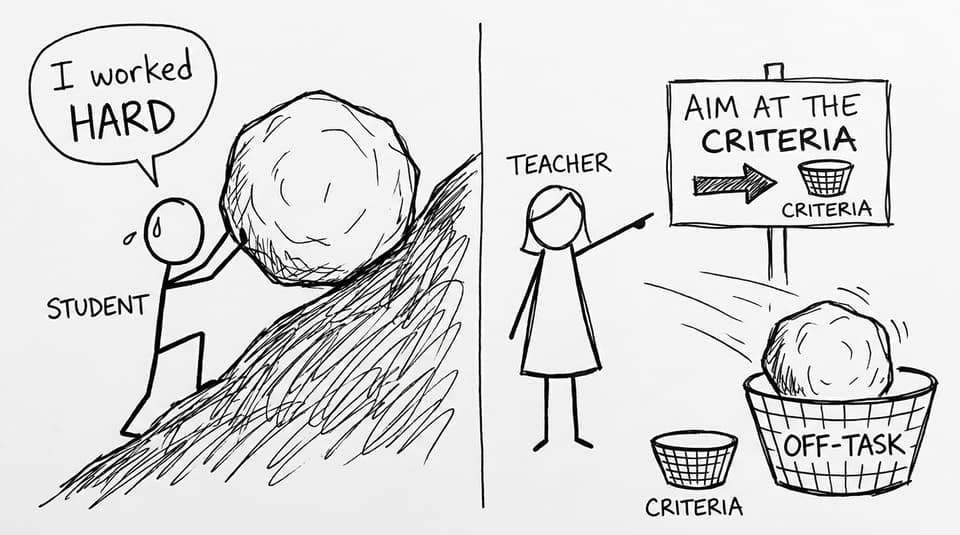
Hard work matters. But in the MYP, un-aimed hard work is expensive.
Two students can spend the same three hours. One improves fast because they’re practising the exact skill the criterion rewards. The other stays stuck because they’re doing more of what feels productive (rewriting notes, highlighting, making pretty summaries).
The fix is simple: aim your effort.
-
Practise with questions (so you can’t hide from gaps)
-
Get feedback fast
-
Rewrite one answer using the rubric wording
RevisionDojo is built around that loop: Questionbank practice, Study Notes for targeted rebuilding, Flashcards for recall, and AI Chat when you need a quick explanation that doesn’t turn into a 40-minute spiral.
Myth: “The MYP is vague”
The MYP can feel vague if you’re used to teachers telling you exactly what to include.
But criteria-based assessment isn’t vague. It’s just less prescriptive. The rubric tells you what performance looks like at different levels, and you prove it with evidence.
If you want to see how tasks align with criteria across subjects, Sample MYP Assessment Tasks for Every Subject Group is a useful reference. And if you want to understand how schools build clarity into the system, Creating Rubrics Aligned with IB Criteria in the MYP helps you decode the language.
Myth: “Memorisation is the key to MYP success”
Memorisation helps you start. It rarely helps you finish.
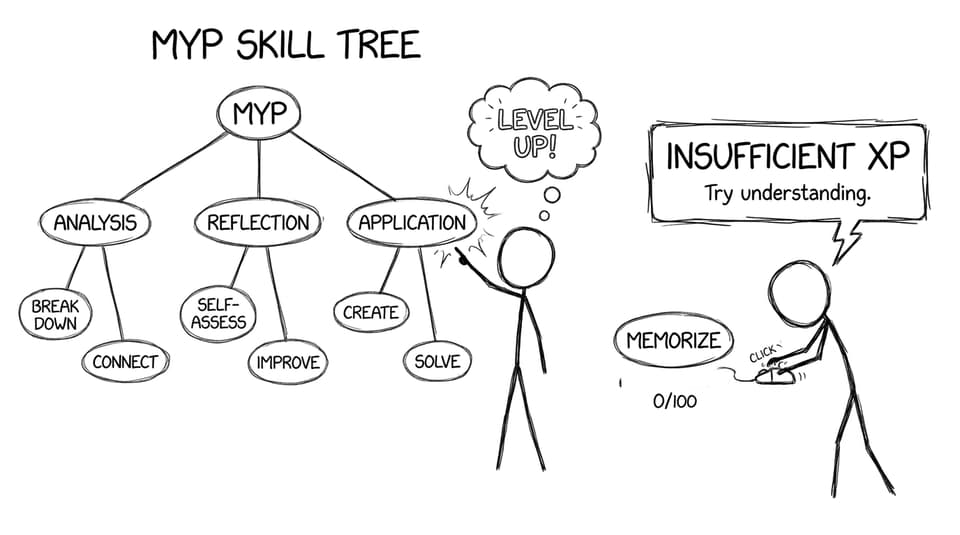
The MYP rewards students who can apply knowledge in unfamiliar contexts, explain reasoning, and reflect on limits. That’s why rereading notes often hits a ceiling.
A better formula is: understand briefly, then apply repeatedly.
-
Use Study Notes to get clear fast
-
Lock essentials with Flashcards
-
Prove it with Questionbank practice
-
Use Grading tools for rubric-aligned improvements on written tasks
Myth: “Only naturally academic students do well in the MYP”
The MYP tends to reward students who iterate.
If you respond to feedback, track patterns, and improve one criterion strand at a time, you often outperform someone who “gets it” quickly but never refines. Growth beats talent when assessment is skills-based.
That’s also why support tools matter. A Coursework Library can show what strong structure looks like. Mock Exams build stamina. Predicted Papers can sharpen readiness without guessing. And Tutors help when your bottleneck is method, not motivation.
A calmer way to think about MYP
The MYP doesn’t have a “reputation problem” because it’s messy. It has a reputation problem because it asks you to play a different game: prove skills with evidence, guided by criteria.
If you want that game to feel simpler, build your prep around a loop you can repeat: Study Notes to get clear, Flashcards to retain, Questionbank to apply, AI Chat to unblock confusion, and Grading tools, Mock Exams, Predicted Papers, the Coursework Library, and Tutors to keep improvement measurable.
Start at the RevisionDojo MYP hub, pick one subject, and practise the skill the rubric actually rewards. That’s how MYP confidence is built.

