


A finance manager once told a nervous intern, “The spreadsheet doesn’t choose the project. The question you ask does.”
In IB Business Management, that question often sounds like: Which investment is actually better? The Average Rate of Return (ARR) is one of the fastest ways to turn messy forecasts into a clear percentage you can compare. It’s not perfect. But in an exam, it’s a simple tool that helps you argue, evaluate, and recommend.
What is ARR in IB Business Management?
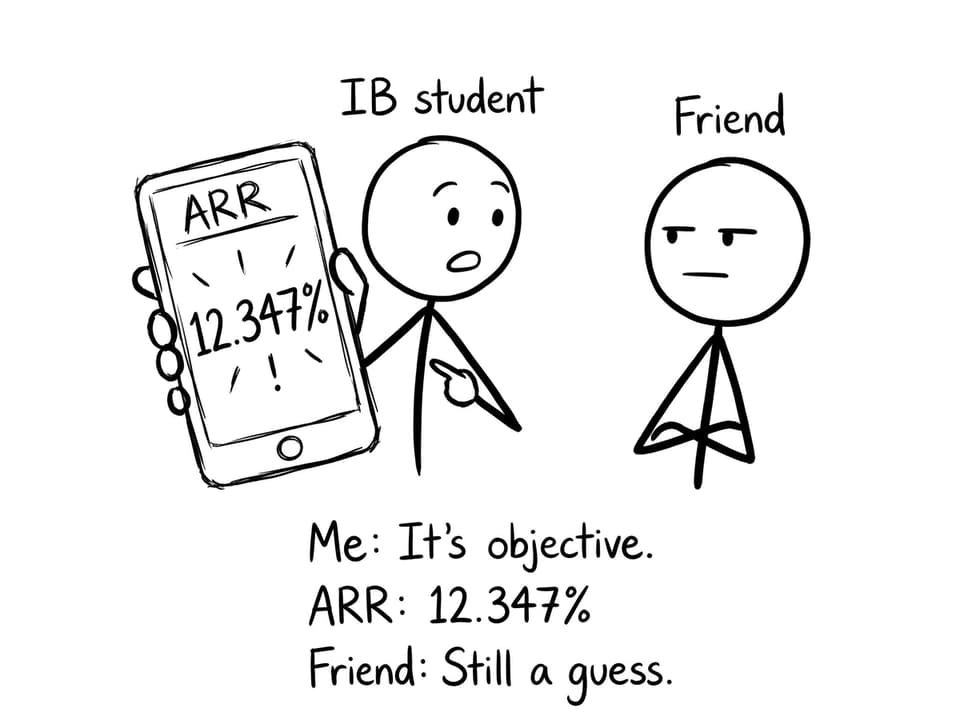
ARR (also called Accounting Rate of Return) is an investment appraisal method that measures average profit as a percentage of the initial (or sometimes average) investment.
In IB Business Management, ARR helps you compare two projects even when they have different price tags. It answers: “For every unit of money invested, how much profit do we expect per year, on average?”
If you want the syllabus-aligned version, see Investment Appraisal Techniques (3.8.1) Notes and the broader 3.8 Investment Appraisal hub.
Quick checklist: ARR in one exam-ready box
-
Find total profit over the project’s life.
-
Divide by years to get average annual profit.
-
Use the ARR formula.
-
Compare to another project or a cut-off rate.
-
Evaluate with at least two limitations.
Revision tip: keep the formula close using the IB Business Management Data Booklet.
ARR formula and how to use it
A common exam format is:
ARR = (Average annual profit / Initial investment) x 100
ARR is especially useful in IB Business Management answers because it’s easy to interpret quickly:
-
Higher ARR = higher average profitability relative to cost.
-
Lower ARR = weaker profitability, even if total profit looks impressive.
That clarity is why ARR is often used as an early “screening” method before deeper analysis like NPV. If you want to connect those methods in evaluation, see Why some businesses prefer NPV and NPV (3.8.2 HL) Notes.
How ARR helps compare investment options
ARR shines when your case study offers two options and you need a clean comparison in IB Business Management:
Percentage comparison (even with different sizes)
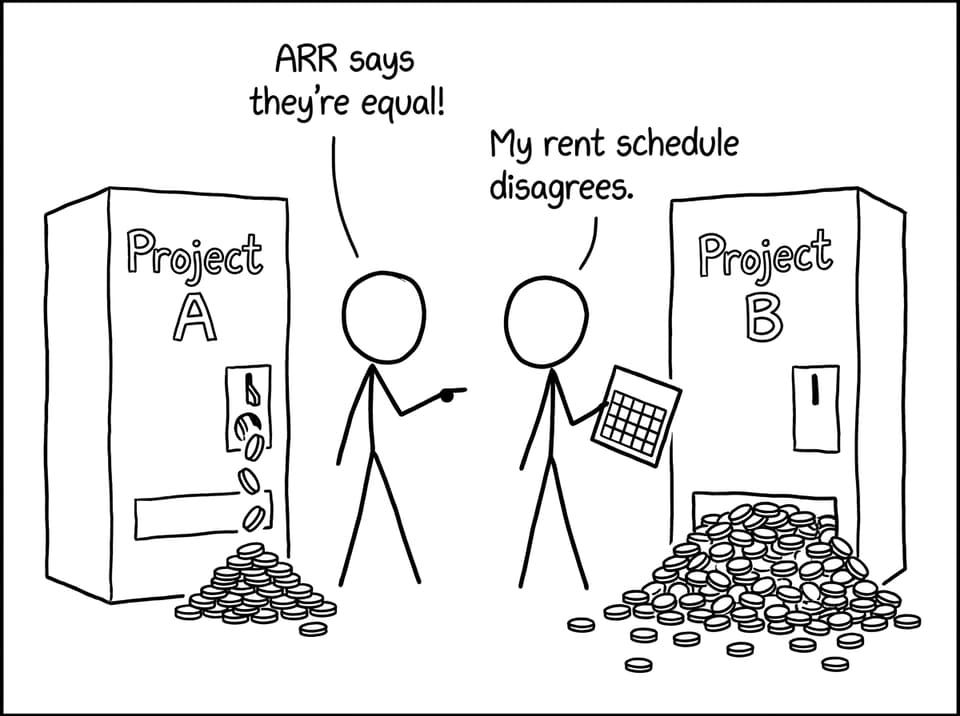
Because ARR is a percentage, you can compare a small investment and a large one fairly. One project might generate more total profit, but the other may deliver better “value for money.” This is a common Paper 2 style decision point.
Long-term focus
ARR considers profit across the entire life of the investment. That encourages students to discuss sustainability and long-run performance, not just quick wins.
To practise making those comparisons under time pressure, use the Investment Appraisal Questionbank or the wider IB Business Management Questionbank.
Limitations you should always evaluate
ARR is helpful, but it has two classic weaknesses that examiners love:
ARR ignores the time value of money
A profit in Year 5 is treated the same as profit in Year 1. In real business, money later is usually worth less (and riskier).
ARR ignores cash flow timing
Two projects can have the same ARR but completely different cash flow patterns. That matters for liquidity, risk, and survival.
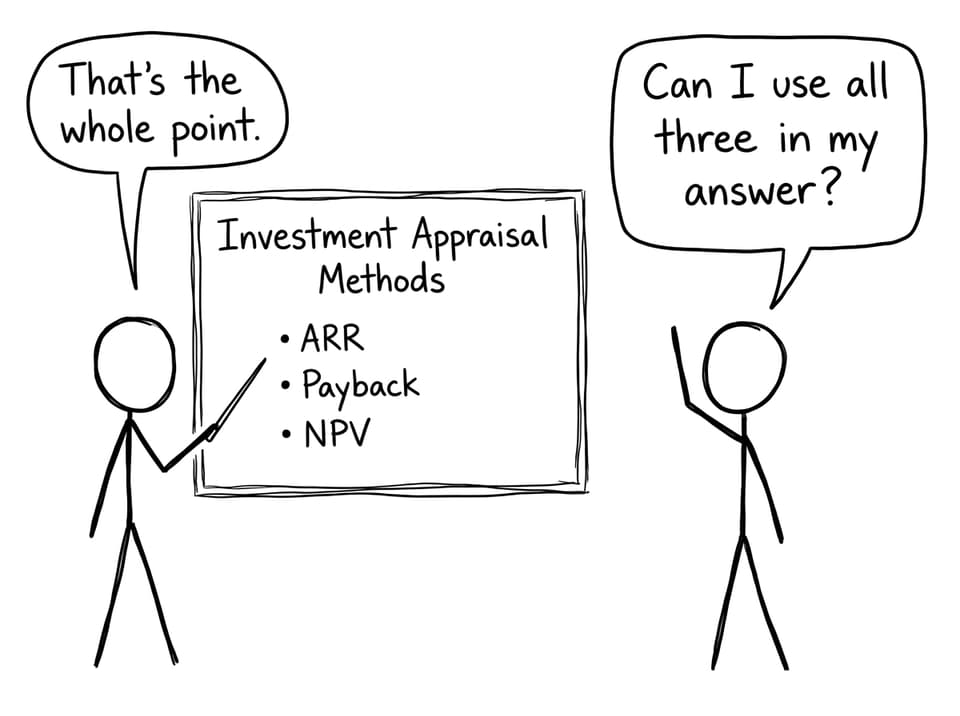
In IB Business Management, this is where you show judgment: recommend ARR with another method. A good pairing is payback (risk and liquidity) plus NPV (realistic value). Start from the foundations in 3.1 Introduction to Finance and build out your vocabulary using the Business Management Glossary.
Conclusion: ARR is a shortcut, not a verdict
ARR gives IB Business Management students a clean way to compare investment options: average profitability as a percentage. Use it to rank choices quickly, then earn top marks by evaluating its blind spots and recommending another method alongside it.
If you want to turn this into exam performance, RevisionDojo makes it easier: study notes for clarity, flashcards for definitions, Questionbank for timed practice, AI Chat for feedback, grading tools for structure, predicted papers and mock exams for pressure training, plus a coursework library and tutors when you need a human check. Explore the full IB Business Management resources and sharpen your investment appraisal answers before the exam clock starts.