
A new language can look deceptively simple on an IB subject form. Then the questions arrive. Is Spanish ab initio genuinely suitable for a beginner? How quickly does it move? Will a student be expected to speak fluently after two years?
The short answer is reassuring: IB Spanish ab initio is a beginner-focused Standard Level course that develops practical reading, writing, listening, and speaking skills. Students do not need to arrive fluent. They do, however, need to practise consistently, because the course progresses from introductory vocabulary to assessed communication across everyday and global themes.
For parents wondering what is IB ab initio Spanish like, it is best understood not as an easy language option, but as a structured route from little or no Spanish toward functional communication. The challenge is breadth rather than advanced literary analysis. Students must learn to understand Spanish, produce it themselves, and respond in real time.
Spanish ab initio at a glance
Here is the parent-friendly overview:
- It is intended for students with no previous Spanish experience or only very limited exposure.
- It is offered only at Standard Level, not Higher Level.
- The IB recommends 150 teaching hours.
- Students study five prescribed themes containing 20 required topics.
- Reading, listening, writing, and speaking are all assessed.
- External examinations account for 75% of the result.
- An individual oral assessment accounts for the remaining 25%.
- Regular short practice is usually more productive than occasional intensive revision.
The word beginner describes the starting point, not the final expectations. A student may begin with greetings and personal information, but eventually needs to interpret unfamiliar material, select suitable vocabulary, write for a stated audience, and sustain a short conversation.
Who is the course actually designed for?
Language ab initio belongs to the IB Diploma Programme's language acquisition group, often called Group 2. The IB defines it as a course for students who have no prior experience of the chosen language or only very limited previous experience.
Placement matters. A student who has studied Spanish substantially before entering the Diploma Programme may be better suited to Spanish B, depending on the school's evaluation and placement policy. RevisionDojo's comparison of IB Language B and language ab initio explains how the starting expectations differ.
This also resolves a common misunderstanding about IB HL and SL subjects. Spanish ab initio is SL only. There is no ab initio HL course. Language B, by contrast, can be available at SL or HL and assumes an existing foundation in the language.
Parents should therefore ask the school two practical questions before enrolment:
- Does my child's previous language experience meet the school's eligibility rules?
- Does this course fit alongside the student's three or four HL choices and wider Diploma workload?
The best choice is not necessarily the language course that appears easiest. It is the course aligned with the student's actual starting level.
What students study from week to week
Spanish ab initio is organised around five prescribed themes:
| Theme | Typical areas of communication |
|---|---|
| Identities | Personal qualities, relationships, food, and wellbeing |
| Experiences | Daily routines, leisure, holidays, and celebrations |
| Human ingenuity | Transport, entertainment, media, and technology |
| Social organization | Neighbourhoods, education, work, and social issues |
| Sharing the planet | Climate, geography, the environment, and global issues |
These themes give vocabulary and grammar a purpose. A student might learn the past tense while discussing a holiday, comparison structures while describing places, or persuasive language while considering an environmental issue.
Lessons may combine vocabulary retrieval, grammar, short texts, audio extracts, conversation, cultural material, and writing. RevisionDojo's Spanish ab initio Experiences notes show how one theme connects course content with questions, flashcards, and supporting lessons.
Cultural understanding is woven through this work. Students are not simply translating isolated English sentences into Spanish. They learn to communicate appropriately across contexts and engage with perspectives from Spanish-speaking communities.
What the assessments feel like
The current course distributes assessment across four skill areas. Each contributes 25% of the final subject result.
Paper 1: writing
Students complete two required written tasks. Each task is selected from a choice of prompts and requires an appropriate text type, audience, purpose, and register.
That last point matters. Knowing relevant vocabulary is not enough if a student ignores whether the task calls for an email, blog entry, invitation, article, or another form. Strong preparation therefore combines grammar and vocabulary with decisions about format and communication.
Paper 2: listening and reading
The receptive assessment has separate listening and reading sections. Students answer comprehension questions based on three audio passages and three written texts drawn from the prescribed themes.
Listening often feels demanding because students cannot control the speaker's pace. Reading presents a different challenge: unfamiliar words can distract students from meaning that could have been inferred through context. The Spanish ab initio Paper 2 reading resources help students become familiar with exam-style comprehension rather than relying on translation alone.
The individual oral
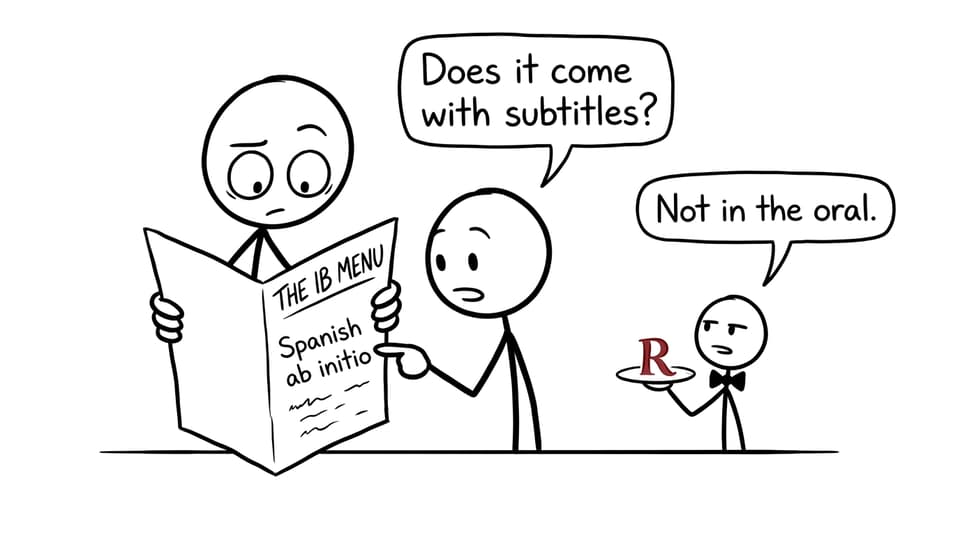
The internally assessed oral is a one-to-one interaction with the teacher, marked by the teacher and externally moderated by the IB. It begins with a presentation based on a visual stimulus connected to a prescribed theme. The teacher then asks follow-up questions before moving to a wider conversation involving at least one additional theme.
For many families, this is the least familiar component. Yet its purpose is straightforward: can the student communicate ideas, respond to another speaker, and keep the exchange moving in Spanish?
RevisionDojo's guide to language ab initio assessment and coursework provides a fuller view of how the components fit together.
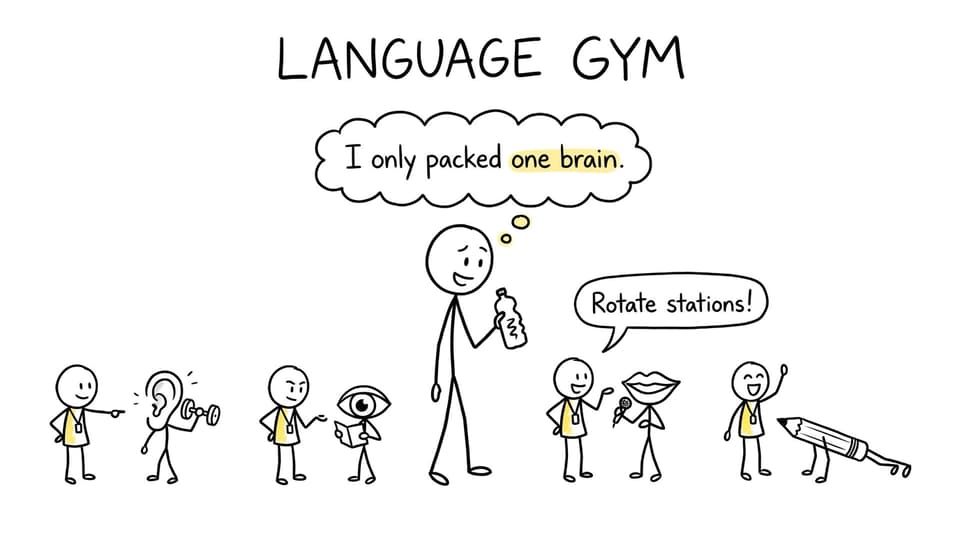
Is Spanish ab initio difficult?
It is accessible, but not effortless.
The course begins at an introductory level, which makes it suitable for genuine beginners. The difficulty comes from having to develop several abilities at once. A student who enjoys vocabulary exercises may still hesitate in conversation. Another may speak confidently but lose marks through inaccurate writing or weak comprehension.
Progress can also feel uneven. Language learning often produces long stretches where improvement is hard to notice, followed by a moment when a recording becomes understandable or a conversation lasts longer than expected. That pattern is normal. What matters is whether the student continues meeting the language regularly.
Warning signs include:
- revising vocabulary only before tests;
- avoiding speaking because mistakes feel embarrassing;
- translating every sentence word by word;
- neglecting listening until examination season;
- memorising scripts without practising spontaneous answers;
- learning content without reviewing text-type conventions.
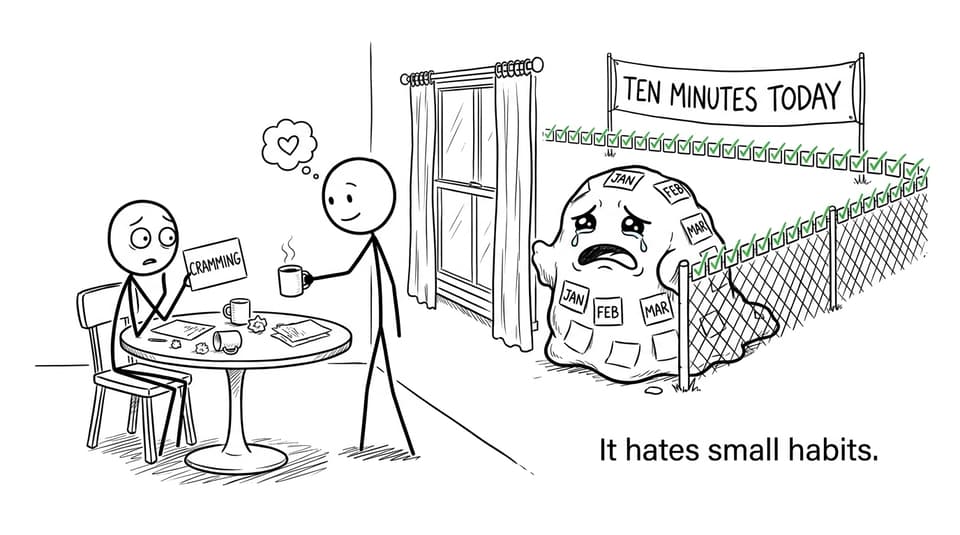
The most useful IB revision tip is therefore unremarkable but powerful: distribute practice. Ten focused minutes on several days is often more useful than one exhausted session at the end of the week.
What good support looks like at home
Parents do not need to speak Spanish to help. In fact, trying to become an additional teacher can create more pressure than progress. The more valuable role is to make consistent practice visible and manageable.
A sensible weekly routine might include:
- two short vocabulary retrieval sessions;
- one listening activity with a brief summary afterward;
- one timed reading passage;
- one short written response in an appropriate text type;
- one spoken description or conversation rehearsal;
- a review of recurring errors and uncertain grammar.
Ask process questions rather than testing random translations. Useful prompts include: Which skill did you practise today? What mistake keeps returning? Can you answer that question without a prepared script? These questions reveal whether the student is studying actively.
The strategies for learning an ab initio language offer further ways to build balanced habits without turning every evening into a language lesson.
What parents can preview before committing
A course description tells you what students study. Seeing the materials makes the experience more concrete.
Parents and students can open RevisionDojo's IB Spanish ab initio resource collection to preview how syllabus themes, Study Notes, Flashcards, lessons, and practice questions connect. The Spanish ab initio flashcard collection shows what active vocabulary review can look like, while the complete Spanish ab initio course guide provides a broader orientation.
As the course advances, RevisionDojo can support the full revision cycle: understand a topic through Study Notes, retrieve vocabulary with Flashcards, apply it in the Questionbank, and use AI Chat or Grading tools to identify gaps. Predicted Papers and Mock Exams help students rehearse under realistic conditions, while Tutors offer human guidance when independent study is not resolving a persistent problem. The wider Coursework Library can also help families understand how disciplined IB work is structured across subjects.
The value is not in having more material. It is in having the next useful task clearly available.
A reassuring final perspective
Spanish ab initio is not designed to catch beginners out. It is designed to turn beginners into increasingly capable communicators through structured, repeated exposure to Spanish.
A suitable student does not need exceptional linguistic talent. They need an appropriate starting level, willingness to speak imperfectly, and a routine that includes all four skills. Parents can help most by checking placement carefully, encouraging small habits, and noticing whether one skill is quietly being avoided.
Before committing, explore RevisionDojo's Spanish ab initio notes, flashcards, and practice questions together. A ten-minute preview often answers the parent question more clearly than a page of course terminology: this is what the student will learn, this is how they will practise, and this is how progress can become visible.