


When a business is “winning” but still can’t pay
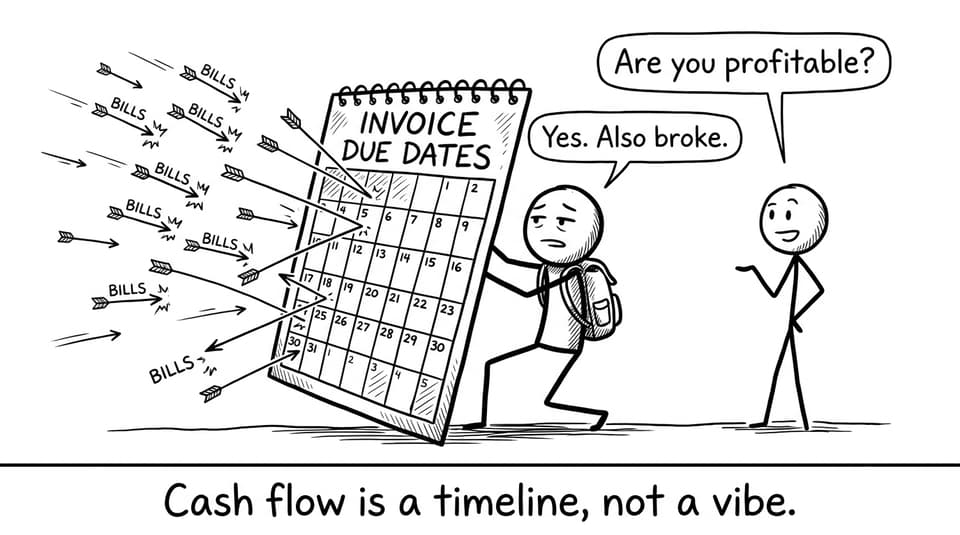
A strange thing happens in IB Business Management case studies: the firm posts a profit, the brand is growing, and yet the manager can’t pay suppliers next week. That moment is your clue that the exam isn’t really testing whether you can spot “bad performance”; it’s testing whether you understand timing. Cash flow problems appear when cash leaves faster than it arrives, even if the business looks healthy on paper.
If you can explain why that timing mismatch happens, you can usually unlock analysis marks fast in IB Business Management Paper questions.
Quick checklist: common cash flow triggers
Use this mini-checklist when you see “liquidity issues” in IB Business Management:
-
Customers pay late (weak credit control)
-
Spending rises without forecasting (no cash flow forecast)
-
High overheads (large fixed costs)
-
Too much inventory (cash tied up in stock)
-
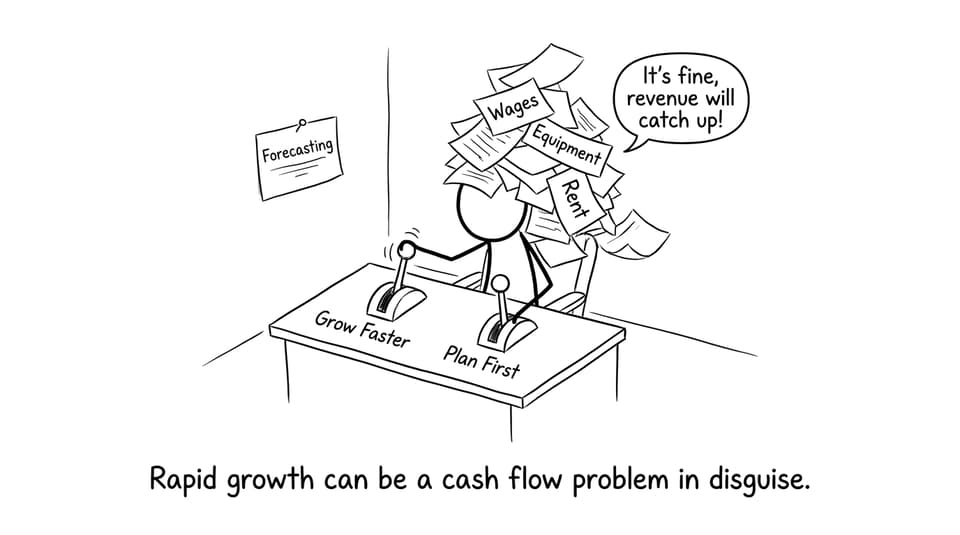
Growth happens faster than cash arrives
-
One-off payments (tax, repairs, equipment)
To revise the syllabus point directly, keep the 3.7 Cash flow hub open: IB Business Management 3.7 Cash Flow.
What causes cash flow problems (and the story behind each)
Late customer payments: profit that arrives too late
A business can record revenue today but receive the cash in 30, 60, or 90 days. In IB Business Management, this is often framed as “selling on credit.” The sale boosts the income statement, but wages and rent still need paying now. Late payments are especially dangerous for small firms with little buffer.
If you want exam-style practice on this exact skill, drill it with: IB Business Management 3.7 Cash Flow Questionbank.
Poor budgeting: the month you forget exists
Cash shortages rarely feel dramatic until they are. Without a cash flow forecast, managers spend confidently in high-sales periods and then hit a slow month with the same bills. This is why IB Business Management loves forecasting as a “prevention” strategy.
For a clean, syllabus-aligned walkthrough, use: 3.7.4 Cash Flow Forecasts Notes.
High overhead costs: fixed costs don’t negotiate
Rent, salaries, insurance, and loan repayments are due whether sales are high or low. A business with high fixed costs can become cash constrained quickly after even a small drop in revenue. In IB Business Management, this is a great moment to evaluate risk and recommend cost control.
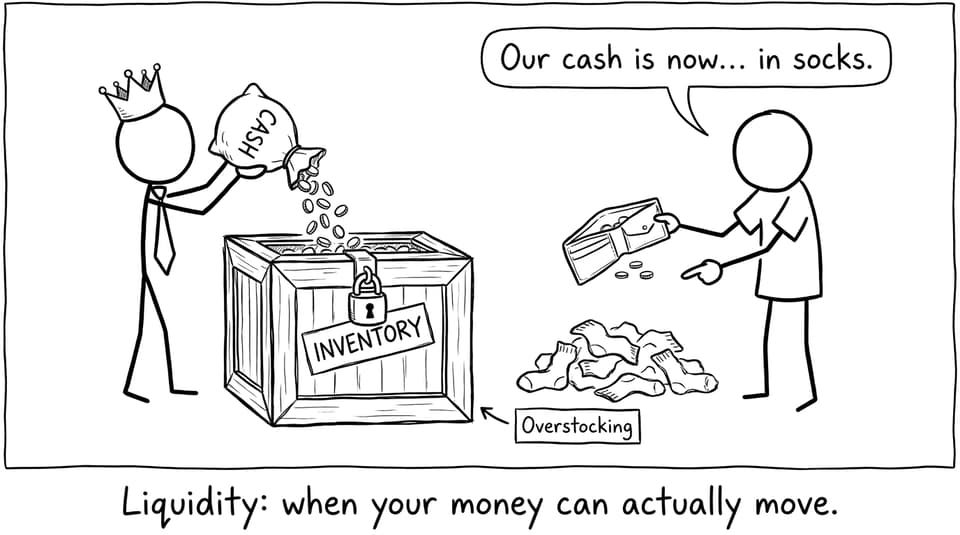
Inventory mistakes: cash locked in a storeroom
Overstocking ties up cash in goods that may take weeks to sell, raising storage costs too. Understocking can also hurt cash flow by causing lost sales. Either way, liquidity suffers.
How businesses prevent cash flow problems (exam-ready strategies)
Build and update a cash flow forecast
Forecasting turns surprises into decisions. Managers can spot a future shortfall and delay spending, arrange finance, or renegotiate payment timings. This is central in IB Business Management finance.
Revise the finance foundations here: 3.1 Introduction to Finance.
Speed up inflows, slow down outflows (ethically)
Common tactics include stricter credit terms, invoice reminders, and early payment incentives. On the outflow side, negotiating longer supplier payment terms can ease pressure.
Manage growth like a cash project
Growth consumes cash first (staff, marketing, equipment) and pays back later. Good answers in IB Business Management explicitly state that rapid growth can create liquidity problems even when long-run prospects are strong.
Use RevisionDojo to revise this fast
If you’re revising IB Business Management, RevisionDojo helps you switch from “I kind of get it” to exam confidence:
-
Target weak spots with the IB Business Management Questionbank
-
Learn concepts quickly from IB Business Management Revision Notes and the Study Notes feature
-
Memorise definitions with Flashcards for 3.7 Cash flow
-
Train application using Lessons for 3.7 Cash flow
-
Use AI Chat and Grading tools to improve explanations, then validate with Mock Exams and Predicted Papers (without guessing what examiners want)
Conclusion: the exam wants timing, not just totals
Cash flow problems are usually not about a business “failing”; they’re about cash being trapped in the wrong place at the wrong time. For IB Business Management exams, train yourself to diagnose the cause (late payments, inventory, fixed costs, poor planning, fast growth) and then recommend prevention (forecasting, credit control, cost discipline, and a cash buffer). If you want to practise these chains of reasoning with mark-scheme precision, start with RevisionDojo’s IB Business Management notes, flashcards, and Questionbank, then use AI Chat and Grading tools to sharpen your evaluation under timed conditions.


