
Service learning is one of those IB ideas that sounds warm and inspiring until you are staring at a calendar packed with exams, coursework, and deadlines.
Then something surprising happens.
You join a community project, expecting it to steal time from revision, and instead it clarifies a concept you have been dragging around for weeks. Not because the project is magical, but because real life is a ruthless examiner: it forces you to define terms, use data, communicate clearly, and justify decisions.
That is why IB service learning can be more than “doing good.” Done intentionally, it becomes a high-quality rehearsal for the exact thinking your exams reward.
The quick IB checklist (so service learning helps your exams)
Use this as your fast filter before you commit to any project in the IB:
-
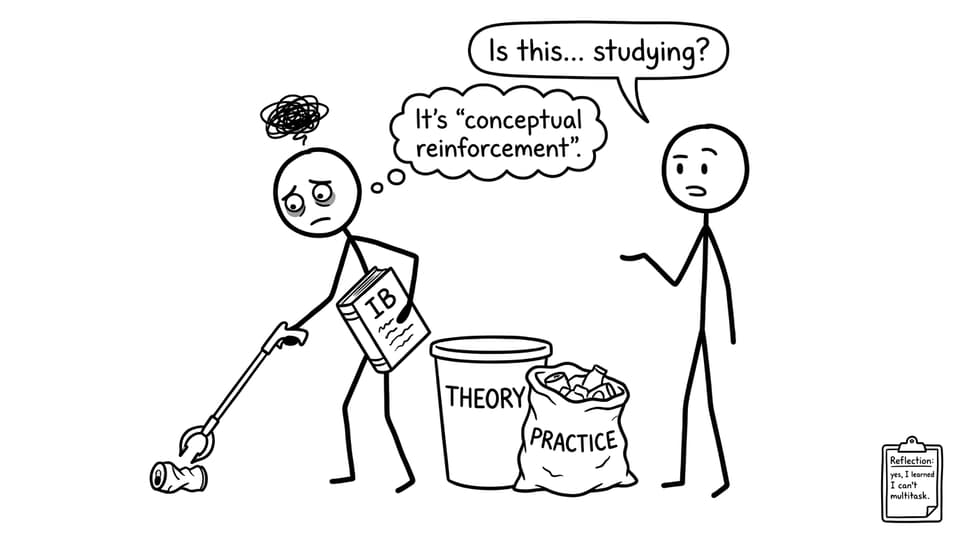
Pick one classroom concept you want to reinforce (not an entire unit).
-
Choose a service activity that naturally produces evidence (data, drafts, feedback, outcomes).
-
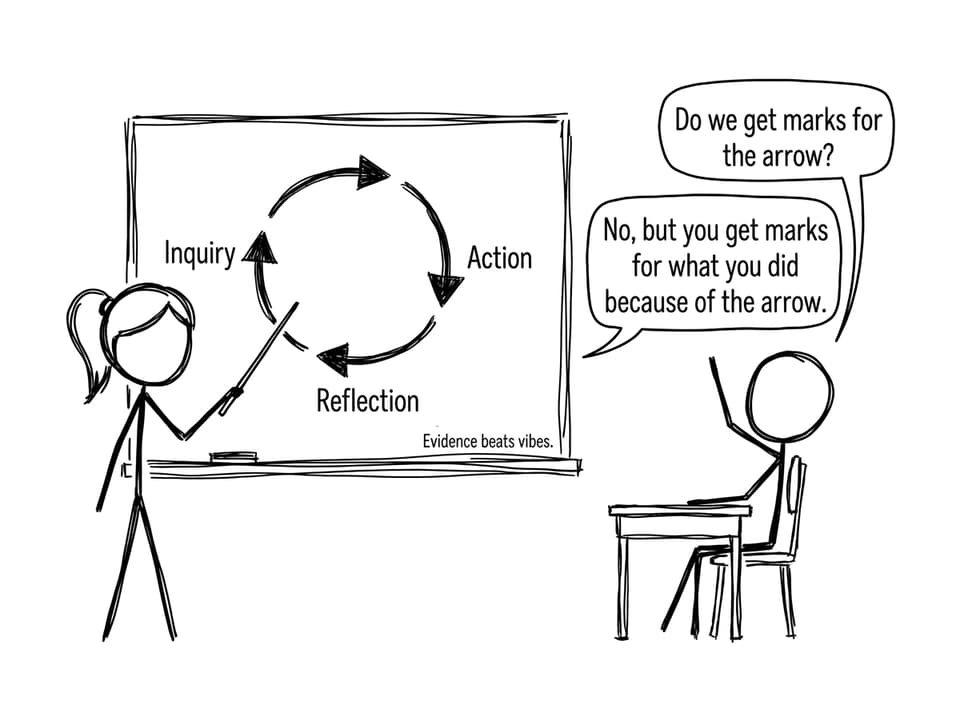
Follow the cycle: inquiry, action, reflection, then adjust.
-
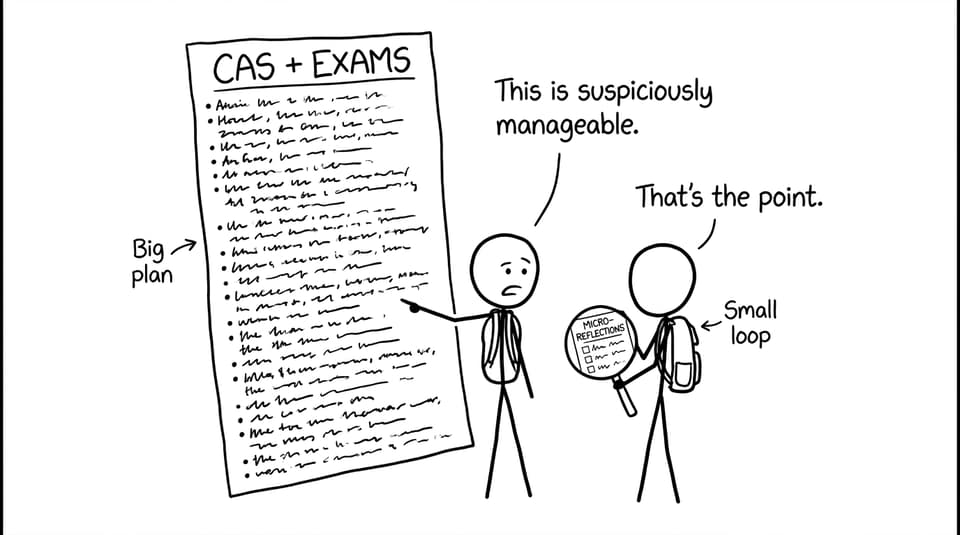
Build micro-reflections you can write in 10--15 minutes.
-
Translate the experience back into exam language: definitions, case studies, evaluation.
-
Use one study hub to keep revision moving (notes, questions, feedback, and tracking in one place).
If you want a broader framework for sustainable service in school systems, keep Using Service Learning to Reinforce Classroom Concepts bookmarked while you plan.
Why service learning matters for IB exam performance
The IB does not only test what you know. It tests what you can do with what you know, under constraints.
Service learning trains that skill quietly.
When you work with real people and real needs, you are pushed into the habits that separate a good student from a high-scoring student:
-
Transfer: taking an abstract idea and applying it in a new setting.
-
Precision: explaining concepts without hiding behind vague phrases.
-
Evaluation: seeing trade-offs, not just describing actions.
-
Communication: writing, presenting, persuading, and listening.
-
Reflection: improving because you noticed what failed.
Those are essentially the IB Approaches to Learning in motion. If you want to build those skills in a more exam-shaped way, pair service work with targeted practice like Embedding ATL Skills Seamlessly in Daily Lessons and then test yourself with exam-style questions.
The IB service learning cycle (and how to make it exam-shaped)
Most service projects fail students in one simple way: they generate activity, but not learning.
The fix is to treat service learning like a study system. In the IB, that means using a repeatable cycle.
Inquiry: pick a concept, then hunt for a real-world “question”
Start with a classroom concept you already know will show up in assessments: sustainability, inequality, identity, systems, change, measurement, rhetoric, and so on.
Then ask one guiding question that forces thinking:
-
What is causing this problem (not only what is happening)?
-
Who benefits, who is harmed, and who decides?
-
What would count as improvement, and what evidence would prove it?
This is where students accidentally build great exam resources: you end up with a mini case study, vocabulary in context, and examples you can adapt in essays.
Action: choose a service type that produces evidence
Action can be direct, indirect, advocacy-based, or research-led. The IB does not need the biggest project. It needs the clearest learning.
Choose actions that produce outputs you can point to:
-
a dataset (before/after)
-
a campaign draft and revisions
-
interview notes and themes
-
a lesson plan you taught
-
feedback from stakeholders
If you are also doing CAS, you can align these outputs with your portfolio expectations. For structure and sanity, use What Counts as a CAS Project vs. a CAS Experience? so you do not overbuild.
Reflection: turn experience into marks
Reflection is where service becomes IB learning.
A good reflection does three things:
-
names one moment that mattered
-
connects it to a concept or skill
-
states what you will do differently next
If you want your reflections to sound analytical instead of sentimental, use the tactics in 10 Powerful Tips to Write a CAS Reflection That Stands Out in 2025.
Demonstration: “show the learning,” not just the impact
In the IB, demonstration is not bragging. It is communication.
Present the project in a way that makes thinking visible:
-
a short report with evidence and limitations
-
a brief presentation with one key insight and one trade-off
-
an annotated portfolio entry that links action to outcomes
The story matters, but the logic matters more.
Practical examples: linking IB subjects to service learning
Service learning reinforces classroom concepts best when the link is specific. Here are realistic pairings that work in the IB exam mindset.
Sciences: systems, data, and evaluation
A local environmental audit (waste, water, biodiversity) reinforces systems thinking and data handling. The exam win is not the clean-up itself. The exam win is being able to interpret trends, discuss limitations, and justify conclusions.
After each service session, run a short practice set from a Questionbank to keep the concept exam-ready. RevisionDojo’s Questionbank is useful here because you can target the exact skill you just used in real life.
Individuals and Societies: perspectives and consequences
Working with a community organization can turn “inequality” from a paragraph into a real set of stakeholders and constraints. That gives you richer evaluation in essays and stronger examples for long responses.
To keep the content tight during exam season, use the rhythm from Balancing CAS With Real Life (Without Burning Out) so service stays sustainable.
Language and Literature: audience, purpose, and rhetoric
Any advocacy campaign is secretly an applied Paper 1 training ground. You are forced to choose tone, structure, and persuasive devices for a real audience. That makes rhetorical techniques easier to spot and analyze later.
When you want fast feedback on writing quality, RevisionDojo’s AI Chat and Grading tools can help you diagnose what is missing (clarity, evaluation, evidence) and fix it before the habit hardens.
Mathematics: modeling and decision-making
Many service projects need math: budgeting, trend analysis, sampling, error, projections.
The difference between “I did math” and IB math is communication: stating assumptions, showing method, and interpreting results.
If you are using technology in math, keep your workflow honest and exam-aligned using How to Use CAS in IB Math Effectively: A Complete Student Guide.
A simple weekly routine: make service learning support IB revision
Here is a schedule that keeps service learning from eating your revision.
Two short loops (during the week)
-
30--45 minutes: service task (or planning)
-
10--15 minutes: micro-reflection (same day)
-
20--30 minutes: exam-shaped practice on the related concept
One longer loop (weekend)
-
60--120 minutes: action block
-
20 minutes: organize evidence (photos, notes, data)
-
30--45 minutes: targeted practice and review
This is where an all-in-one platform matters. RevisionDojo is designed as a connected IB loop: Study Notes for clarity, Flashcards for recall, a Questionbank for exam-style application, AI Chat for fast unblocking, Grading tools for feedback, plus Predicted Papers, Mock Exams, a Coursework Library, and Tutors when you need a human reset.
If your overall study method feels scattered, the workflow in RevisionDojo App: The Smarter Way to Prep for IB Exams shows how to keep everything in one system.
Closing: make IB service learning your unfair advantage
A lot of IB students treat service learning like a parallel life: meaningful, exhausting, and separate from “real studying.”
But the students who gain the most treat it differently.
They use service learning as a pressure-free place to practise the exact skills exams demand: inquiry, evidence, communication, evaluation, and reflection. They keep the scope small, the reflections honest, and the link to classroom concepts explicit. Then they translate what happened back into exam practice while the memory is still warm.
If you want service learning to reinforce classroom concepts and improve exam performance, build one connected routine in RevisionDojo: learn fast with Study Notes, retain with Flashcards, prove it with the Questionbank, tighten answers with AI Chat and Grading tools, and rehearse under time with Mock Exams and Predicted Papers. Keep your evidence organized, your reflection consistent, and your IB preparation will feel less like juggling and more like compounding.
