


Real learning rarely arrives with a neat label.
Sometimes it starts with something small: a news headline about water shortages, a school policy debate, or a lab result that does not match the textbook. In the MYP, those moments are not distractions. They are invitations. Real-world case studies turn the Middle Years Programme into what it is meant to be: a framework for thinking, not just a schedule for covering content.
For IB students preparing for exams, this matters more than it sounds. Examiners reward students who can transfer understanding into unfamiliar contexts. Case studies train that exact skill. They help you practise applying concepts, interpreting evidence, and writing with purpose under time pressure.
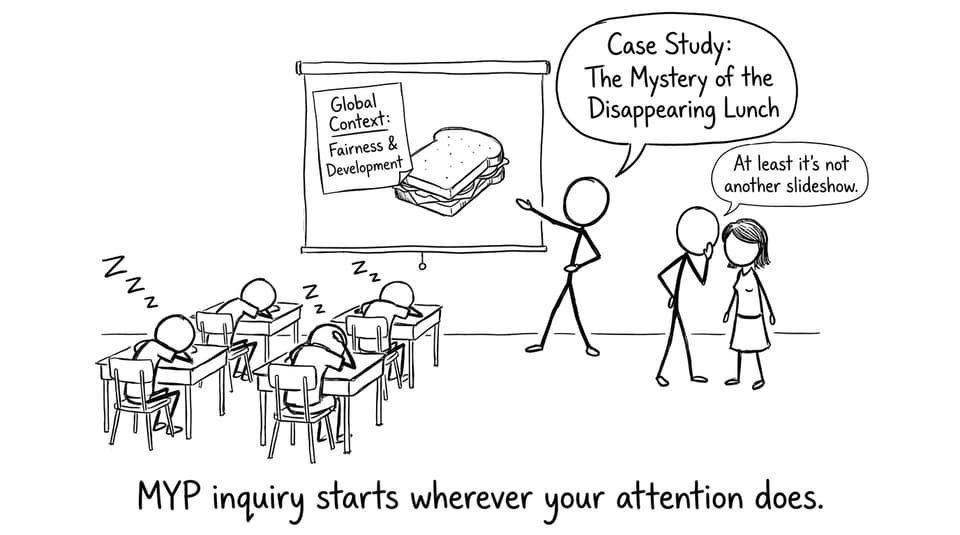
Quick checklist: a strong MYP case study lesson
Use this short checklist to keep your MYP case studies both meaningful and exam-useful:
-
Anchor the case in a key concept and a clear global context
-
Provide at least two perspectives (stakeholders, data sets, or interpretations)
-
Build one inquiry thread: a question you can actually answer with evidence
-
Make the outcome visible: a claim, a product, or an action plan
-
End with reflection: what changed in your thinking and why
If you want a simple hub to organise your work across subjects, start with the Middle Years Program (MYP) hub on RevisionDojo.
Why real-world case studies work in the MYP
A good MYP case study does something subtle: it forces you to decide what matters.
Textbooks often feel complete. Case studies feel unfinished. They contain noise, trade-offs, and human choices. That is exactly why they strengthen IB thinking. In practice, case studies build:
-
Conceptual understanding: you stop memorising definitions and start using them.
-
ATL skills: research, collaboration, media literacy, and communication become necessary, not optional.
-
Critical thinking: you learn to justify claims with evidence, not confidence.
-
Learner Profile habits: being open-minded is easier when you can see real stakeholders.
For exam prep, this is gold. Case studies naturally train you to move beyond description into explanation and evaluation. If you recognise yourself slipping into “telling the story” instead of answering the question, read Common Errors in MYP Geography and History Responses and notice how often weak answers fail to use evidence strategically.
Choosing case studies that actually improve exam performance
Not every interesting story makes a good MYP case study. The best ones have “exam energy”: they contain tension, data, and multiple defensible viewpoints.
When picking a case, ask:
-
Is it authentic? Real events, real decisions, real consequences.
-
Is it arguable? If everyone agrees, there is nothing to analyse.
-
Can I access evidence? Articles, graphs, interviews, policies, images.
-
Can I connect it to my unit? Statement of Inquiry, concepts, context.
Examples that work well across subject groups:
-
Urban heat islands and inequality (Sciences, Individuals and Societies)
-
Digital privacy and surveillance (Design, Language and Literature)
-
The ethics of fast fashion supply chains (Arts, Individuals and Societies)
-
Renewable energy trade-offs in local communities (Sciences, Mathematics)
And if you want to see how top students ground projects in real contexts, the Real examples of IB MYP Personal Projects for inspiration article is a practical model for turning a “topic” into a focused inquiry.
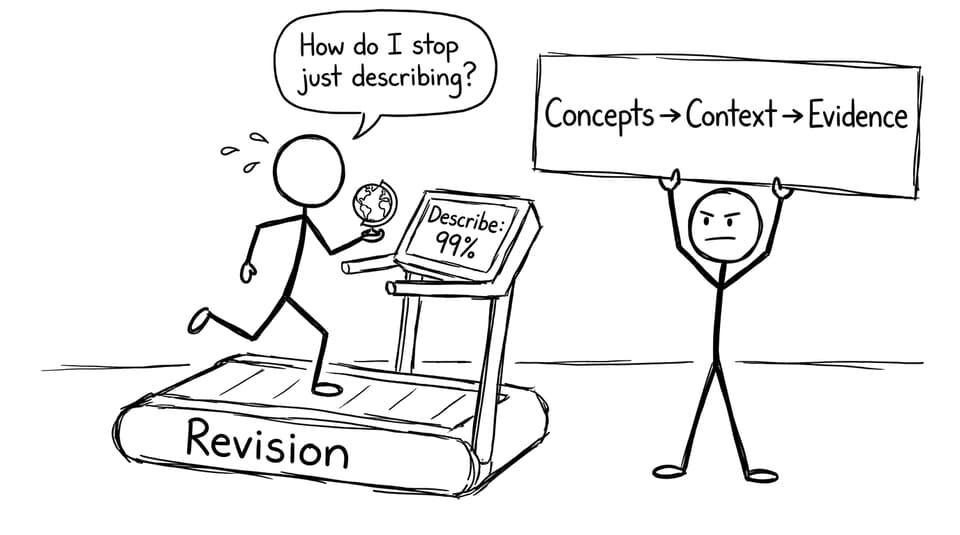
A simple MYP structure: concept, context, evidence, judgement
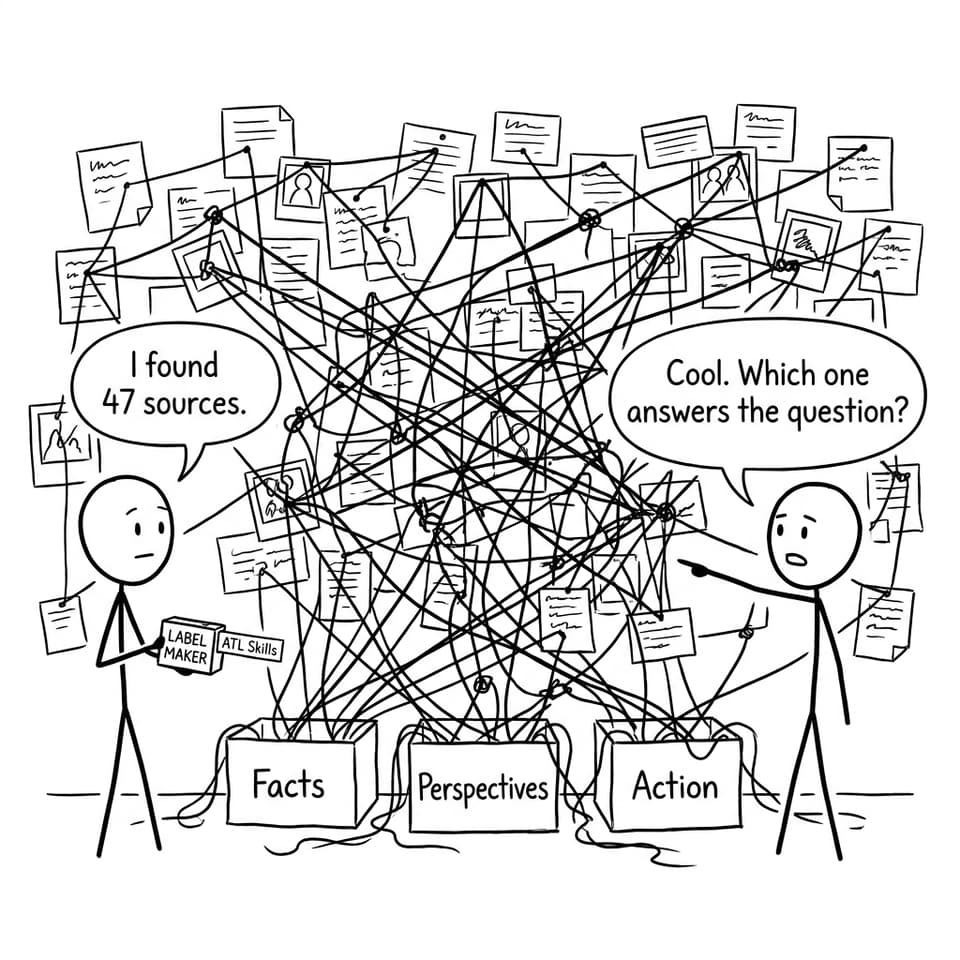
When MYP case studies feel overwhelming, it is usually because students collect information before they decide what they are trying to prove.
Try this structure instead:
Start with the concept (not the story)
Name the key concept you are learning (change, systems, relationships, identity, global interactions). Then define it in your own words. This is how you avoid “random facts” later.
If you need quick, exam-friendly explanations for core ideas, build your foundation using RevisionDojo Study Notes.
Set the global context as a lens
The global context is not decoration. It is the reason the case matters. A lens helps you choose evidence and ignore the rest.
Select evidence like an examiner
Pick two to four details that do a job: a statistic, a quotation, a policy decision, a timeline shift. Then explain significance: what does this evidence show, and why does it matter?
To practise this in an exam-style way, use the RevisionDojo Questionbank and filter questions that force application rather than recall.
Finish with a judgement
Your conclusion should be more than a summary. Make a defensible judgement, acknowledge limitations, and link back to the concept and context.
For a deeper look at using evidence for marks (not just effort), see MYP Case Studies: How to Use Them for Higher Marks.
Making case studies interdisciplinary (without making them messy)
The MYP is designed to connect subject groups, but the trick is to keep the connection purposeful.
A clean method:
-
One shared case study (example: microplastics in local water)
-
Two subject angles (science tests + design solution prototype)
-
One common output (a report, infographic, presentation, or proposal)
Then, for your own revision, turn the output into exam practice: write a short response that uses the same evidence but answers a different command term.
RevisionDojo makes this loop easier because your learning can stay in one place: quick understanding in Study Notes, retention through Flashcards, and application through the Questionbank. If you want motivation, the patterns in Achieving Top Marks in IB MYP: Real-Life Student Stories show how consistency beats intensity.
Conclusion: turn the real world into your revision advantage
In the MYP, case studies are not an “extra.” They are a shortcut to the kind of understanding that survives pressure. They teach you to choose evidence, to argue clearly, and to see how concepts live outside the classroom.
If you want to turn that skill into exam confidence, build a simple routine on RevisionDojo: learn fast with Study Notes, lock in recall with Flashcards, and practise application with the Questionbank. The real world will keep changing. Your job in the MYP is to get good at thinking inside it.


