

Reflection usually fails in the IB for one quiet reason: it gets scheduled like homework.
You do a test. You get the mark. You feel something (panic, relief, annoyance). Then you write a few lines because you were told to. The words are polite. They are vague. They do not change what you do tomorrow.
But the students who improve fastest treat reflection differently. In the IB, reflection isn’t a journal. It’s a steering wheel. It’s how you turn effort into direction.
Below is a simple way to build reflection as a habit--small enough to repeat during exam season, strong enough to change your outcomes.
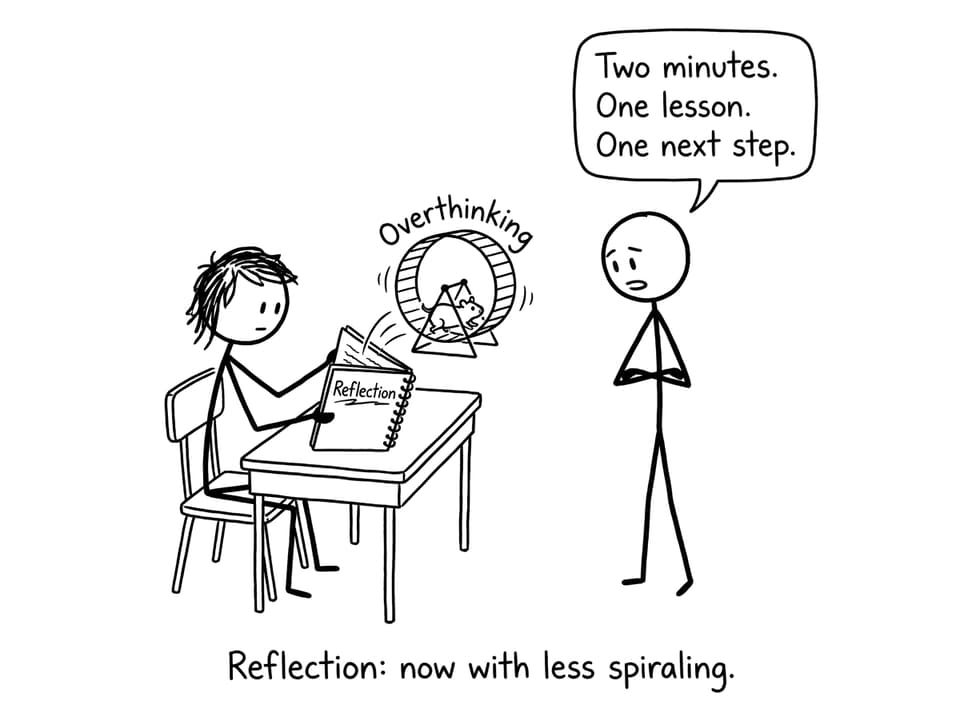
The IB reflection habit checklist (2 minutes)
If you’re preparing for IB exams, reflection has to be brief, specific, and usable. Use this after any practice block (a timed response, topic questions, or a mock):
-
Evidence: What did I do? (paper, topic, question numbers, time taken)
-
Error: What went wrong most? (content gap, command term, structure, timing, careless)
-
Reason: Why did it happen? (no recall, weak concept model, rushed plan, misread)
-
Repair: What is the next action--today? (notes section, flashcards set, 10 similar questions)
-
Repeat date: When will I retest this exact skill?
This is the IB version of being honest without being dramatic.
Why IB reflection works when it’s a habit
Most IB students don’t lack motivation. They lack feedback loops.
A task-based reflection asks, “How do you feel about your performance?” That can be useful, but it’s rarely actionable. A habit-based reflection asks, “What will you do differently next time, and how soon will you prove it?”
When reflection becomes habitual:
-
You stop treating mistakes like personality flaws and start treating them like data.
-
You study less randomly because you can see patterns (timing, command terms, topic gaps).
-
You build calm, because you can name the next step.
If you want a structured ecosystem that supports this loop, start at RevisionDojo for IB and keep everything--practice, feedback, and review--in one place.
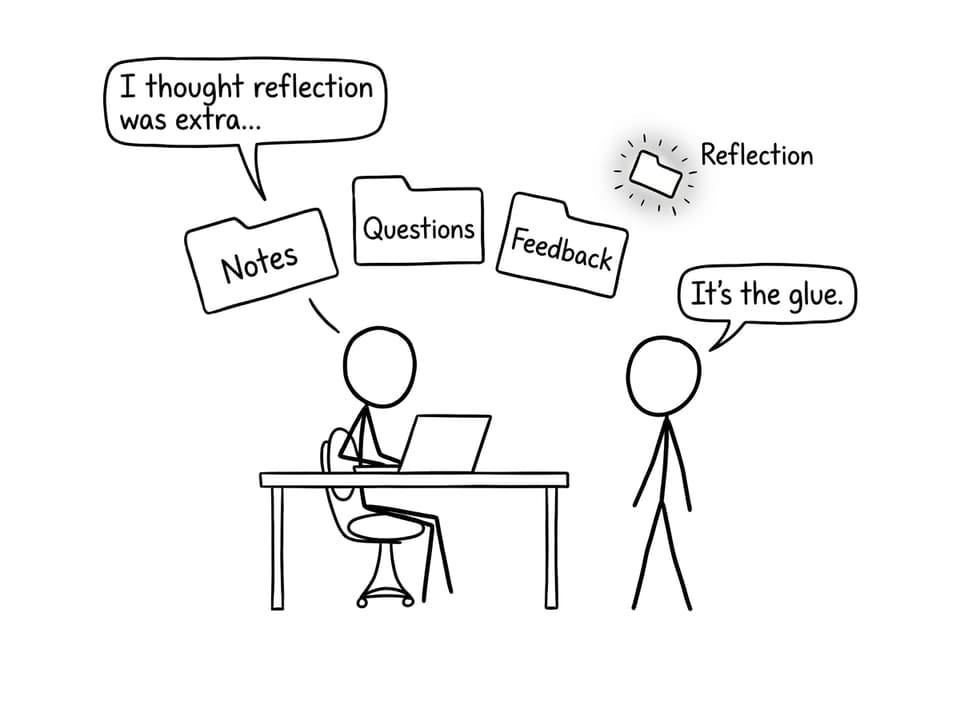
Micro-reflection for IB exams: what to do after practice
A reflection habit only sticks if it attaches to something you already do. For IB exam prep, the best attachment point is practice questions.
Use IB-style practice as your trigger
Do a short set first, then reflect. Not the other way around.
-
Run targeted sets using the RevisionDojo Questionbank (timed if possible).
-
Then write a 2-minute reflection using the checklist above.
If you’re not sure how to use a question bank strategically, this guide helps: IB Question Bank: How to Use It Effectively.
Turn reflection into a single “repair action”
The most common IB reflection mistake is choosing five next steps. That feels productive. It isn’t.
Pick one repair action you can complete immediately:
-
Patch a concept using IB Study Notes
-
Lock recall with IB Flashcards with Spaced Repetition
-
Ask one precise question using RevisionDojo’s AI Chat (Jojo) when you’re stuck
Your reflection should end with a sentence that creates motion: “Next, I will redo questions on X under Y minutes.”
Add one retest date (this is the habit)
Reflection without retesting becomes philosophy. Reflection with retesting becomes improvement.
A simple IB rhythm:
-
Same day: repair action
-
24--72 hours: retest the same skill with a short set
-
One week: retest again under time pressure
You can build this loop more formally using the workflow in Actionable Reflection Prompts for IB Students.
Making reflection feel real (not performative) in IB
Students often write reflections that sound “mature” but do nothing. The fix is to make your reflection concrete enough that a stranger could coach you from it.
Try these IB reflection stems:
-
“I lost marks because I misread the command term. Next time I will… and I’ll prove it by…”
-
“My answer had the right idea but weak structure. My new structure will be…”
-
“I ran out of time because I planned too late. Next time I will plan for exactly…”
If you’re doing longer work alongside exam prep (coursework, IAs, or extended writing), RevisionDojo’s Grading tools and Coursework Library can make feedback clearer and easier to act on. Reflection becomes less emotional when the criteria are visible.
Reflection at scale: the IB exam-season loop
A habit needs a home. For most IB students, that home is a single dashboard where you can practice, review, and track patterns.
RevisionDojo is built around exactly this exam loop:
-
Study Notes to clarify concepts efficiently
-
Flashcards to keep daily recall alive
-
Questionbank for exam-style drills and error tagging
-
AI Chat to unblock confusion fast
-
Predicted Papers and Mock Exams to rehearse stamina and pacing
-
Tutors when you need a human plan and accountability
To see how the tools fit together in one workflow, read RevisionDojo App: The Smarter Way to Prep for IB Exams.
Closing: make IB reflection small enough to repeat
The most powerful change you can make in IB exam prep is not a new resource. It’s a new rhythm.
Practice creates evidence. Reflection turns evidence into a decision. Retesting turns the decision into progress.
If you want that loop to be easy to sustain, build it inside RevisionDojo: start with the Questionbank, patch gaps with study notes and flashcards, then pressure-test yourself with predicted papers and mock exams. Keep reflection tiny. Keep it honest. Keep it moving.
That’s how reflection stops being a task and becomes an IB habit.